Inoculating squash plants with a consortium of arbuscular mycorrhizal fungi substantially eased cadmium toxicity in a greenhouse pot experiment, according to a study published on 13 October 2026 in Chemical and Biological Technologies in Agriculture.
Cadmium is one of the most hazardous heavy metal pollutants in agricultural soils. Because it is highly mobile, non-biodegradable and persistent, it poses a lasting risk to crop production and food safety. Plants absorb it readily through their roots and move it upward through the xylem to shoots, seeds and other aerial tissues, where it disrupts nutrient uptake, membrane integrity, photosynthesis and cellular redox balance. The metal also triggers overproduction of reactive oxygen species, damaging proteins, lipids, nucleic acids, chlorophyll pigments and cellular membranes.
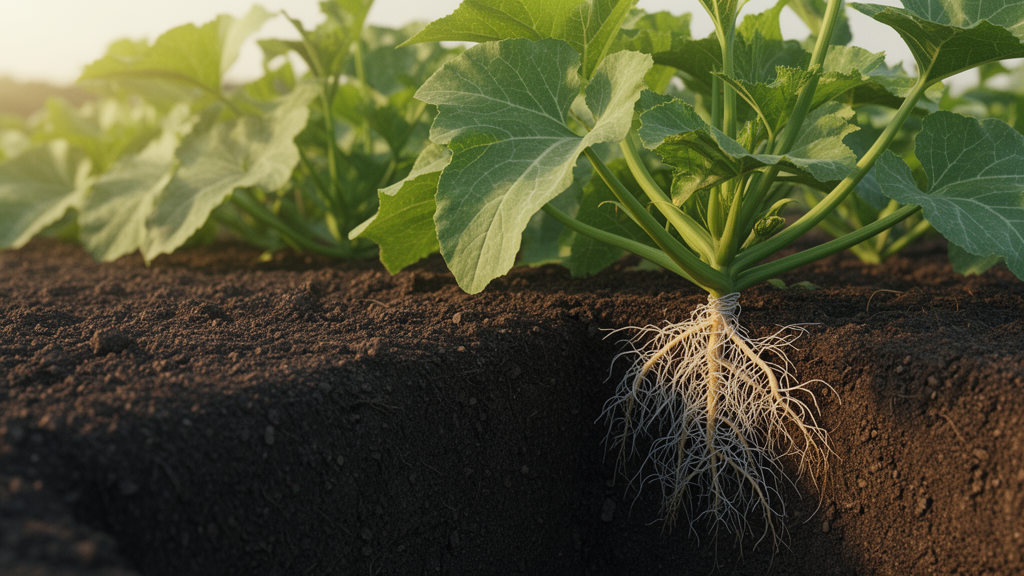
The research team, led by Reda E. Abdelhameed, Rania S. Shehata and Rabab A. Metwally, grew squash (Cucurbita pepo L.) in pots of sandy clay soil under four conditions: untreated control, cadmium stress alone, fungi alone, and fungi plus cadmium. Cadmium stress was imposed with cadmium chloride at a final concentration of 100 µM, applied in irrigation water starting fifteen days after sowing at three-day intervals for three weeks — seven applications totaling roughly 31.5 mg of cadmium per pot, equivalent to about 15.7 mg per kilogram of soil. The researchers designed this repeated-irrigation protocol to mimic the gradual cadmium accumulation seen in farmland irrigated with contaminated water, a realistic scenario in regions affected by wastewater reuse or industrial pollution.
The metal took a clear toll on the unstressed plants. Compared with the control, cadmium reduced shoot height by 11.3 percent, root length by 12.3 percent, shoot and root fresh weights by 7.6 and 18.2 percent, and shoot and root dry weights by 9.4 and 20.9 percent. Chlorophyll and carotenoid contents fell as well, with total chlorophyll declining by 12.7 percent and carotenoids by 19.3 percent. The stressed plants also accumulated more hydrogen peroxide, a reactive oxygen species, with levels rising 19.2 percent above the control — a signature of oxidative damage.
Mycorrhizal inoculation reversed much of this damage. Plants given both the fungi and cadmium showed significantly better growth than plants exposed to cadmium alone, and the fungi alone outperformed the untreated control, raising shoot height by 13.2 percent, root length by 9.0 percent, and shoot and root fresh biomass by 19.8 and 23.6 percent, with dry biomass up 18.8 and 25.1 percent respectively. Under cadmium stress, the combined treatment lifted total photosynthetic pigments by 13.1 percent relative to cadmium-stressed plants, and the chlorophyll stability index under stress reached 90.2 percent in inoculated plants versus 87.3 percent in uninoculated, cadmium-stressed ones.
The metal-sequestration results are central to the study’s food-safety implications. Cadmium accumulated in the roots of stressed plants at 70.72 mg per kilogram of dry weight, versus 50.88 mg per kilogram in shoots, indicating naturally limited translocation to aerial parts. With mycorrhizal inoculation, root cadmium dropped to 30.76 mg per kilogram and shoot cadmium to 20.12 mg per kilogram — a more pronounced reduction in the shoots. The authors attribute this to cadmium immobilization within fungal structures such as spores, vesicles, intraradical hyphae and extraradical mycelia, which reduce metal mobility and bioavailability in the rhizosphere, along with metal-binding compounds including metallothioneins and glomalin-related soil proteins.
Notably, the cadmium treatment did not weaken the symbiosis. Colonization frequency reached 100 percent in inoculated plants under both normal and cadmium-stressed conditions, and cadmium actually increased colonization intensity to 91.93 percent and arbuscular abundance to 74.98 percent, compared with 85.67 and 68.93 percent in inoculated control plants. This suggests the fungi tolerated the metal level and even expanded their presence within the roots, consistent with earlier reports of enhanced colonization under low cadmium concentrations in other species, though excessive cadmium is known to suppress colonization in some contexts.
Biochemically, the fungi reprogrammed the plants’ stress responses. Cadmium stress alone raised proline and total soluble protein contents, and inoculation amplified these increases further, with proline up 36.4 percent and protein up 34.9 percent under combined treatment relative to the control. Proline acts as an osmolyte, metal chelator, protein stabilizer and free-radical scavenger, helping protect cellular structures under heavy metal stress. Secondary metabolites followed a similar pattern: cadmium raised total phenolic content by 28.9 percent, while the combined treatment reached 35.9 percent above the control — the highest level recorded. Flavonoids responded even more dramatically, increasing 111 percent under cadmium alone and 122 percent under the combined treatment. These compounds chelate metal ions and scavenge reactive oxygen species, and mycorrhizal colonization is reported to upregulate phenylpropanoid pathway genes such as phenylalanine ammonia-lyase and chalcone synthase that drive their biosynthesis.
The enzymatic antioxidant system was strengthened as well. Cadmium exposure increased catalase activity by 54.5 percent and peroxidase by 58.8 percent relative to the control, with smaller rises in ascorbate peroxidase (4.5 percent) and polyphenol oxidase (25.1 percent), and total antioxidant capacity up 18.7 percent. Adding the fungi pushed these defenses higher still: compared with cadmium-treated plants, inoculated plants showed further increases in catalase (44.6 percent), peroxidase (19.4 percent), ascorbate peroxidase (12.9 percent), polyphenol oxidase (9.8 percent) and total antioxidant capacity (23.4 percent). Meanwhile, hydrogen peroxide levels fell by 12.3 percent in inoculated, cadmium-stressed plants relative to those stressed without the fungi, indicating that the reinforced defense system actually reduced oxidative pressure rather than merely responding to it.
A hierarchical clustering analysis underscored the integrated nature of these effects: the combined fungi-plus-cadmium treatment clustered closer to the healthy control than to the cadmium-only treatment, suggesting the symbiosis shifted the overall physiological state of stressed plants back toward normal. The authors conclude that the fungi mitigate cadmium phytotoxicity through several coordinated mechanisms — restricted metal uptake and translocation, enhanced antioxidant defense, osmolyte accumulation and secondary metabolite biosynthesis — and propose mycorrhizal inoculation as an eco-friendly biostimulant for cropping cadmium-contaminated soils. The study has limits: it was a 40-day greenhouse pot trial with five biological replicates, and the authors note that residual soil cadmium was not measured at the end of the experiment. Field-scale validation and molecular work to unravel the underlying regulatory mechanisms remain future priorities.
Subject of Research: Mycorrhizal fungi mitigating cadmium toxicity in squash plants through antioxidant defense and restricted metal uptake
Article Title: Mycorrhiza-induced cadmium tolerance in squash: roles of antioxidant defense, secondary metabolites, and restricted metal uptake and translocation
Article References: Abdelhameed, R. E., Shehata, R. S., & Metwally, R. A. (2026). Mycorrhiza-induced cadmium tolerance in squash: roles of antioxidant defense, secondary metabolites, and restricted metal uptake and translocation. Chemical and Biological Technologies in Agriculture, 13(1), Article 141. https://doi.org/10.1186/s40538-026-01093-w
Image Credits: AI Generated
DOI: 10.1186/s40538-026-01093-w
Keywords: arbuscular mycorrhizal fungi, cadmium, squash, heavy metal stress, antioxidant enzymes, proline, phenolics, flavonoids, cadmium translocation, plant physiology, soil contamination, food safety
News Source: Alan Morgan. (October 29, 2026). Soil Fungi Help Squash Endure Cadmium by Locking the Metal in Roots. Scienmag.