• HOME
  • NEWS
  • EXPLORE
    • CAREER
      • Companies
      • Jobs
    • EVENTS
    • iGEM
      • News
      • Team
    • PHOTOS
    • VIDEO
    • WIKI
  • BLOG
  • COMMUNITY
    • FACEBOOK
    • INSTAGRAM
    • TWITTER
Wednesday, May 13, 2026
BIOENGINEER.ORG
No Result
View All Result
  • Login
  • HOME
  • NEWS
  • EXPLORE
    • CAREER
      • Companies
      • Jobs
        • Lecturer
        • PhD Studentship
        • Postdoc
        • Research Assistant
    • EVENTS
    • iGEM
      • News
      • Team
    • PHOTOS
    • VIDEO
    • WIKI
  • BLOG
  • COMMUNITY
    • FACEBOOK
    • INSTAGRAM
    • TWITTER
  • HOME
  • NEWS
  • EXPLORE
    • CAREER
      • Companies
      • Jobs
        • Lecturer
        • PhD Studentship
        • Postdoc
        • Research Assistant
    • EVENTS
    • iGEM
      • News
      • Team
    • PHOTOS
    • VIDEO
    • WIKI
  • BLOG
  • COMMUNITY
    • FACEBOOK
    • INSTAGRAM
    • TWITTER
No Result
View All Result
Bioengineer.org
No Result
View All Result
Home NEWS Science News Biology

Soil carbon and nitrogen mineralization after the initial flush of CO2

Bioengineer by Bioengineer
April 16, 2020
in Biology
Reading Time: 2 mins read
0
IMAGE
Share on FacebookShare on TwitterShare on LinkedinShare on RedditShare on Telegram

IMAGE

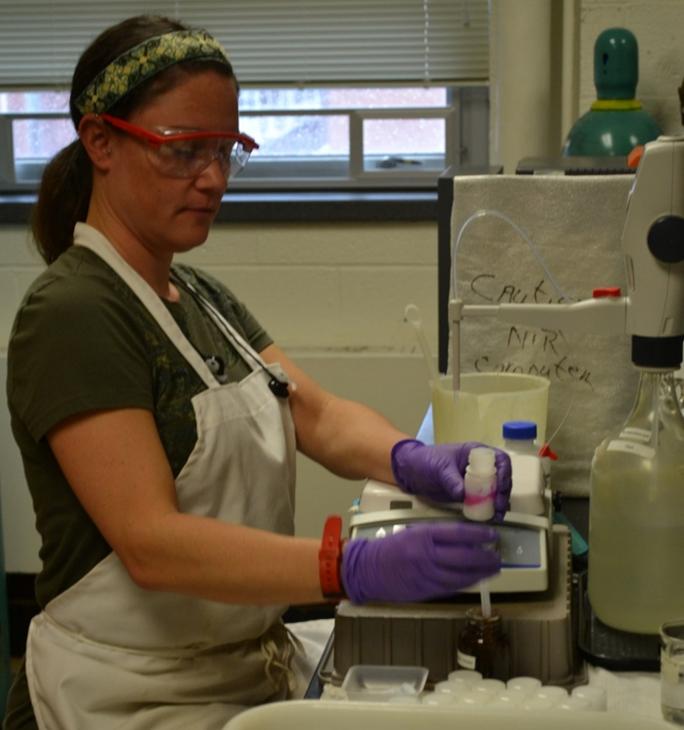
Credit: Alan Franzluebbers

Healthy soil should have abundant nitrogen to supply plant growth needs, but it should not all be in the inorganic fraction. Rather, organic nitrogen is the preferred storage warehouse from which soil microorganisms can decompose and release inorganic nitrogen to soil and then to plants. This system avoids leaching and volatile losses of nitrogen. Historically, scientists have had difficulty predicting how much nitrogen is made available to plants by soil biological activity due to time and resource constraints.

In an article in Agricultural and Environmental Letters, an experiment on five different soils determined the short-and long-term release of carbon and nitrogen via mineralization by soil microorganisms. Inorganic nitrogen accumulated rapidly in all soils during the first month, but at different rates. The total amount of inorganic nitrogen released for plant uptake during five months was different among soils, but the quantity was highly related to the short-term burst of microbial activity during the first three days of incubation, as determined from carbon dioxide production.

Soil-test biological activity (3 days) offers a simple, rapid, and robust indication of forthcoming soil nitrogen mineralization. The test will inform farmers of the important role that biologically active organic matter plays in soil health development, as well as increase their profitability.

###

Adapted from Franzluebbers, AJ. Soil carbon and nitrogen mineralization after the initial flush of CO2. Agric Environ Lett. 2020; 5:e20006. https://doi.org/10.1002/ael2.20006

Media Contact
Rachel Leege
[email protected]

Related Journal Article

http://dx.doi.org/10.1002/ael2.20006

Tags: AgricultureBiochemistryEcology/EnvironmentFertilizers/Pest ManagementGeology/SoilMicrobiologyPlant Sciences
Share12Tweet8Share2ShareShareShare2

Related Posts

Cutting-Edge Genomic Techniques Reveal Unexpected Cellular Changes in the Aging Brain — Biology

Cutting-Edge Genomic Techniques Reveal Unexpected Cellular Changes in the Aging Brain

May 12, 2026
USC Researchers Initiate Study on the Most Advanced Lab-Grown Kidney Structures — Biology

USC Researchers Initiate Study on the Most Advanced Lab-Grown Kidney Structures

May 12, 2026

Childbirth in Humans Is Not Uniquely Challenging Among Mammals, New Research Shows

May 12, 2026

From Complexity to Clarity: Unraveling the “Topological Laws” Governing Cell Death

May 11, 2026
Please login to join discussion

POPULAR NEWS

  • Research Indicates Potential Connection Between Prenatal Medication Exposure and Elevated Autism Risk

    842 shares
    Share 337 Tweet 211
  • New Study Reveals Plants Can Detect the Sound of Rain

    728 shares
    Share 290 Tweet 182
  • Salmonella Haem Blocks Macrophages, Boosts Infection

    62 shares
    Share 25 Tweet 16
  • Breastmilk Balances E. coli and Beneficial Bacteria in Infant Gut Microbiomes

    57 shares
    Share 23 Tweet 14

About

We bring you the latest biotechnology news from best research centers and universities around the world. Check our website.

Follow us

Recent News

New Study Uncovers Rigorous Selection Patterns in Social Relationships

Bridging Healthcare and Social Care in Dementia Support

Enhancing Carbon Capture Efficiency Using Laser-Engineered MOFs!

Subscribe to Blog via Email

Enter your email address to subscribe to this blog and receive notifications of new posts by email.

Join 82 other subscribers
  • Contact Us

Bioengineer.org © Copyright 2023 All Rights Reserved.

Welcome Back!

Login to your account below

Forgotten Password?

Retrieve your password

Please enter your username or email address to reset your password.

Log In
No Result
View All Result
  • Homepages
    • Home Page 1
    • Home Page 2
  • News
  • National
  • Business
  • Health
  • Lifestyle
  • Science

Bioengineer.org © Copyright 2023 All Rights Reserved.