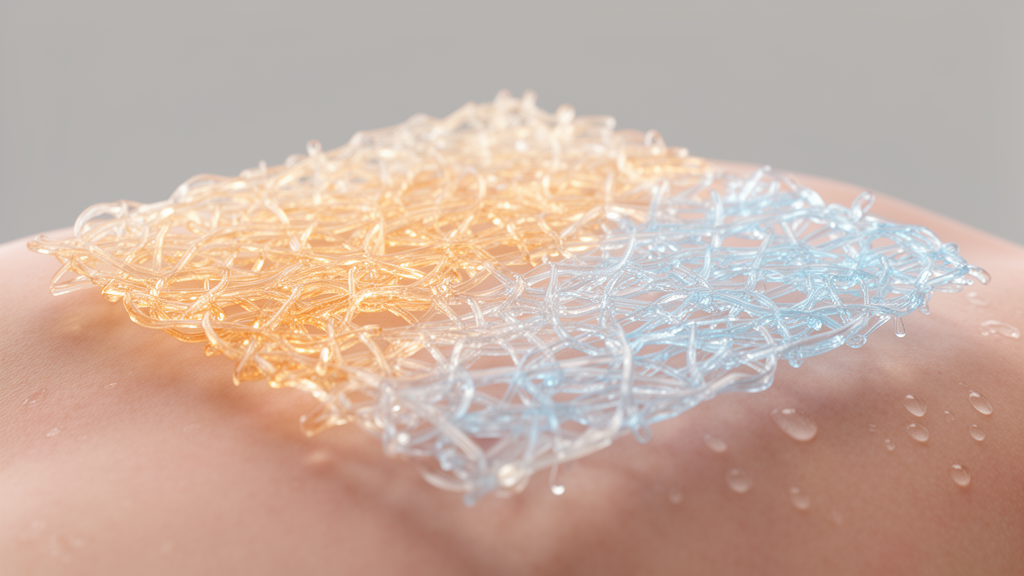
Electrospun nanofibers loaded with an extract of Cotinus coggygria Scop., the smoke tree, together with hyaluronic acid have shown favorable material properties, cytocompatibility and antibacterial activity in a new in vitro study, positioning them as candidate materials for wound dressings. The work, published in Frontiers in Pharmacology in the section of Ethnopharmacology, combined polymer science with cell culture and microbiology assays to evaluate the fibers under laboratory conditions.
Cotinus coggygria, a member of the Anacardiaceae family, is reported to possess antibacterial, antioxidant, anticancer and wound-healing properties. Hyaluronic acid, a key component of the extracellular matrix, supports tissue regeneration, which made it a natural partner for the plant extract in a dressing designed to sit against healing skin. The researchers incorporated both into polycaprolactone, a biocompatible polymer widely used in electrospinning, and optimized the polymer solutions and electrospinning parameters according to the composition of each material formulation.
The resulting fibers were characterized using scanning electron microscopy, contact angle measurements, texture analysis and in vitro cell culture assays.
Wettability proved to be one of the clearest effects of the additive incorporation. The water contact angle decreased to 65.3 degrees, indicating improved hydrophilicity attributable to the hyaluronic acid and the C. coggygria extract.
Mechanical performance also improved with the combined additives. The formulation containing both the extract and hyaluronic acid achieved a maximum tensile strength of 2.40 megapascals, suggesting that the additions did not compromise, and in fact enhanced, the structural integrity of the nanofibrous mats.
Biocompatibility was assessed with L929 mouse fibroblast cells. After 24 hours of exposure, the formulation designated F5 maintained fibroblast viability above 80 percent across the entire tested concentration range of 0.062 to 1 milligram per milliliter. At 48 hours and at the highest concentration of 1 milligram per milliliter, F5 produced the lowest apoptotic index, 6 percent plus or minus 1 percent, and the lowest necrotic index, 10 percent plus or minus 1 percent, among the extract-containing fibers. The authors interpret these results as indicating cytocompatibility towards L929 fibroblasts under the conditions tested.
Antibacterial testing revealed a pronounced asymmetry between the two bacterial species examined. The fibers produced inhibition zones of 21 plus or minus 0 millimeters against Staphylococcus aureus, a Gram-positive bacterium, compared with only 6 plus or minus 1 millimeter against Escherichia coli, a Gram-negative species.
Overall, the study concludes that polycaprolactone nanofibers incorporating C. coggygria extract and hyaluronic acid demonstrate promising potential for wound healing applications owing to their favorable mechanical properties, high biocompatibility and notable antibacterial activity. The findings are strictly in vitro: the fibers were evaluated in cell culture and microbial assays rather than in animal models or human wounds, so their performance in a clinical setting remains to be established. The authors describe the material as a candidate wound dressing, and further preclinical work would be needed before any translation towards actual wound care.
Subject of Research: Electrospun PCL nanofibers loaded with smoke tree extract and hyaluronic acid as candidate wound dressings
Article Title: Cotinus coggygria Scop. extract-loaded polycaprolactone/hyaluronic acid nanofibers as candidate wound dressings: in vitro characterization, cytocompatibility and antibacterial evaluation
Article References: Saral-Acarca, E. S., Tort, S., Türk, M., Senol Deniz, F. S., Orhan, I. E., & Ilbasmis-Tamer, S. (2026). Cotinus coggygria Scop. extract-loaded polycaprolactone/hyaluronic acid nanofibers as candidate wound dressings: in vitro characterization, cytocompatibility and antibacterial evaluation. Frontiers in Pharmacology, 17, Article 1948812. https://doi.org/10.3389/fphar.2026.1948812
Image Credits: AI Generated
DOI: 10.3389/fphar.2026.1948812
Keywords: Cotinus coggygria, nanofibers, electrospinning, polycaprolactone, hyaluronic acid, wound dressing, L929 fibroblasts, antibacterial, cytocompatibility, tissue regeneration, Cotinus, coggygria
News Source: Ophelia Keating. (October 29, 2026). Smoke Tree Extract and Hyaluronic Acid Loaded Nanofibers Show Promise as Wound Dressings. Scienmag.