


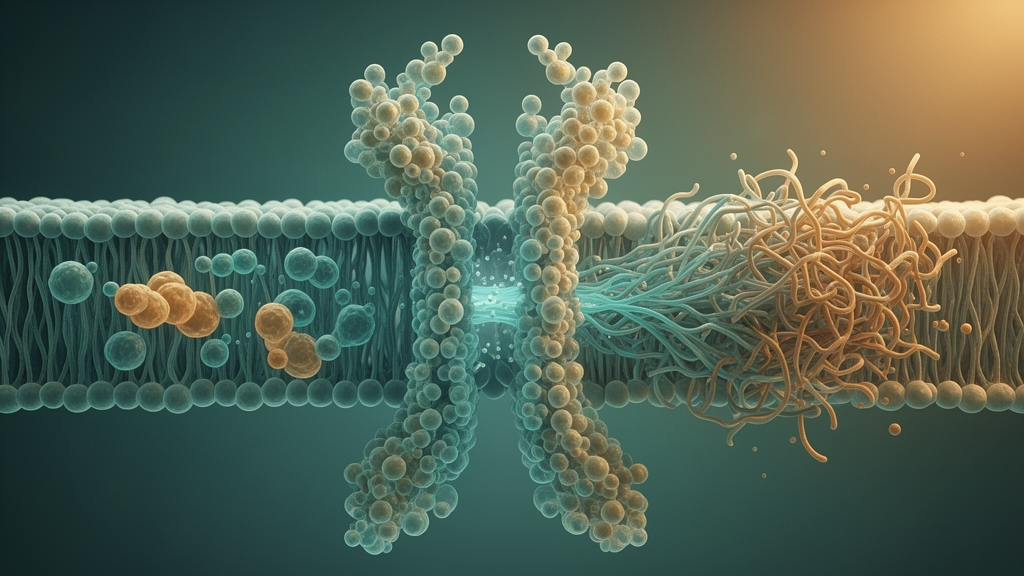
Inside every cell, the endoplasmic reticulum works as a factory where secreted and membrane proteins are built and folded into their final shapes. When folding fails, misfolded proteins can accumulate and damage the cell, so eukaryotes evolved a dedicated disposal system called endoplasmic reticulum-associated degradation, or ERAD. A new systematic review published in Experimental Biology and Medicine argues that one ER membrane protein, SEL1L, acts as a central gatekeeper of this system, and that its dysfunction is implicated in disorders ranging from Alzheimer’s disease and Parkinson’s disease to cancer, diabetes and immune dysregulation.
SEL1L, short for suppressor/enhancer of lin-12-like, was first isolated from human chromosomes in 1997 by Biunno and colleagues. Sequence analysis revealed significant homology between human SEL1L and the Sel-1 gene of the roundworm Caenorhabditis elegans, placing it in an evolutionarily conserved family of ER protein quality-control factors. The gene sits on human chromosome 14q24.3-q31, contains 21 exons and generates multiple alternatively spliced transcripts encoding distinct protein isoforms. The full-length protein is an ER-resident transmembrane molecule built from four segments: an N-terminal signal peptide that directs it to the ER, a large luminal region containing a fibronectin type II domain followed by tandem SEL1L-like repeats that form the primary substrate-binding interface, a single transmembrane alpha-helix, and a short proline-rich cytoplasmic tail.
The review, led by Zhenxuan Shen and Yiting Niu of Guilin Medical University, emphasizes that SEL1L rarely acts alone. Its functional partner is HRD1, an E3 ubiquitin ligase encoded by the SYVN1 gene. Together they form the SEL1L-HRD1 complex, a major ERAD pathway for misfolded luminal proteins. SEL1L recruits and stabilizes HRD1, recognizes misfolded substrates and ensures their accurate delivery into the HRD1 transport machinery. HRD1 then attaches ubiquitin molecules to the targets, labeling them for destruction. Cytoplasmic ATPases help pull the marked proteins out of the ER membrane, and the 26S proteasome degrades them into small fragments, relieving ER stress before it can trigger cell death.
This adaptor-ligase architecture has deep evolutionary roots. In baker’s yeast, the corresponding Hrd3p-Hrd1p module handles substrate selection and recruitment of the Cdc48p extraction machinery, and structural studies have shown that Hrd3p and Yos9p recognize glycosylated luminal substrates while Hrd1p and Der1p mediate retrotranslocation. In C. elegans, the HRD-1/SEL-1 counterpart participates in ERAD, the unfolded protein response and developmental growth. The authors stress that the mammalian SEL1L-HRD1 complex is a functional counterpart, rather than an identical orthologue, of the yeast module, with its own tissue-specific substrate repertoire and accessory components.
The strongest direct evidence that this pathway matters for human health comes from rare genetic disease. Wang and colleagues identified three biallelic missense variants in six children from three unrelated families who presented with developmental delay, intellectual disability, microcephaly, facial dysmorphism, hypotonia and ataxia. The variant SEL1L p.Gly585Asp impaired substrate recruitment, SEL1L p.Met528Arg disrupted complex formation and stability, and HRD1 p.Pro398Leu reduced HRD1 activity. A more severe phenotype emerged in five patients from two consanguineous Slovakian families carrying the biallelic SEL1L p.Cys141Tyr variant, which disrupts a disulfide bond in the luminal fibronectin domain. These children developed early-onset neurodevelopmental abnormalities, agammaglobulinemia, recurrent infections and premature death, a condition designated ENDI with agammaglobulinemia. Clinically unaffected heterozygous relatives support autosomal-recessive inheritance, suggesting one functional allele may be enough to prevent an overt phenotype.
Therapeutic exploration is already under way at the preclinical stage. In knock-in mice and patient-derived fibroblasts carrying the p.Cys141Tyr defect, an antisense oligonucleotide strategy induced exon skipping that generated a truncated but functional SEL1L isoform, partially restoring ERAD activity and rescuing developmental and B-cell abnormalities. The authors describe this as proof of concept for RNA-splicing modulation in SEL1L-related ERAD deficiency, while noting that the contribution of loss-of-function, splice-altering or structural variants to human disease remains unclear and that further genotype-phenotype studies are needed.
In neurodegeneration, the picture is more tentative. In a 6-hydroxydopamine-induced cellular model of Parkinson’s disease, suppression of SEL1L enhanced neuronal cell death and was accompanied by reduced HRD1 protein levels, and inhibition of miR-101 protected SH-SY5Y cells by preserving SEL1L expression. HRD1 has been shown to promote the ubiquitination and degradation of Pael-R, a Parkin substrate whose accumulation is linked to dopaminergic neuronal toxicity, and HRD1-mediated degradation of amyloid precursor protein has also been demonstrated. However, the review is careful to distinguish validated substrates from candidates: increased Sel1l expression in alpha-synuclein transgenic mice provides only associative evidence, so alpha-synuclein and amyloid-beta should be regarded as candidate or indirectly affected proteins rather than confirmed SEL1L-HRD1 substrates. In ALS, the IRE1alpha-XBP1 and ATF6 branches of the unfolded protein response are strongly activated, with upregulation of ERAD genes including SEL1L, and the HRD1-SEL1L complex has been reported to maintain stress granule homeostasis through p97 and PERK-eIF2alpha signaling.
Cancer research reveals a striking tissue specificity. SEL1L expression is generally low in normal adult tissues except pancreatic cells, but it is downregulated in breast, pancreatic and gastric cancers while showing high expression in malignant gliomas. In breast, lung, esophageal and prostate cancers, SEL1L protein levels increase during the transition from benign lesions to malignant tumors, and immunohistochemical analysis suggests it could serve as a biomarker of cellular malignant transformation. In the liver, the story is clearer: hepatocyte-specific loss of SEL1L or HRD1 in mice promotes misfolding of WNT5A, hepatocyte hyperproliferation and liver tumorigenesis, while higher SEL1L-HRD1 expression correlates with more favorable survival in an analyzed clinical cohort of hepatocellular carcinoma patients. In pancreatic ductal adenocarcinoma, SEL1L overexpression reduced clonogenicity, anchorage-independent growth and xenograft tumor growth in experimental models, and the SEL1L rs12435998 variant was associated with age at diagnosis and survival in selected patient subgroups.
Metabolic disease links emerge through specific substrates. SEL1L facilitates the transport of lipoprotein lipase from the ER to the Golgi and its secretion, so SEL1L deficiency causes LPL retention and aggregation within the organelle, impairing lipid metabolism. In pancreatic beta cells, SEL1L deficiency disrupts ER homeostasis, causing misfolded protein accumulation, ER stress, apoptosis and impaired insulin secretion, and beta-cell-specific Sel1l deficiency causes loss of beta-cell identity through dysregulated TGF-beta signaling, with the SEL1L-HRD1 complex promoting degradation of TGF-beta receptor 1. In kidney podocytes, the complex promotes nephrin maturation, and podocyte-specific Sel1l deficiency causes nephrin misprocessing, glomerular filtration defects and a congenital nephrotic syndrome-like phenotype. In renal tubular epithelial cells, SEL1L directly mediates clearance of extracellular collagen, limiting tubulointerstitial fibrosis. In hepatocytes, the pathway regulates FGF21 levels through CREBH and maintains iron homeostasis by controlling ceruloplasmin turnover.
Immunity adds another layer. The SEL1L-HRD1 complex continuously recognizes and ubiquitinates newly synthesized STING protein, degrading it through the proteasome and thereby limiting the pool of activatable STING. In macrophages, deletion of either component elevates STING protein levels and enhances cytokine production, and excessive STING signaling is implicated in disorders including SAVI, Aicardi-Goutieres syndrome and systemic lupus erythematosus. SEL1L also sustains CD8+ T cell survival through the PERK pathway and the IL-15 receptor-mediated mTORC1 axis, is essential for thymic beta-selection, and in flavivirus infection a Derlin-2/SEL1L-dependent ERAD pathway selectively degrades excess membrane-anchored viral nonstructural proteins, maintaining viral protein homeostasis and supporting genome replication. The authors conclude that targeting the SEL1L-HRD1 complex remains a largely untapped therapeutic strategy, though they caution that many mechanisms, particularly its tissue-specific roles, remain to be fully elucidated.
Subject of Research: The role of the SEL1L-HRD1 endoplasmic reticulum protein quality control complex in human disease
Article Title: SEL1L: molecular gatekeeper of the endoplasmic reticulum quality control network
Article References: Shen, Z., Niu, Y., Chen, H., Pan, M., Yang, F., Li, M., Zhang, C., Zhou, Y., & Yan, J. (2026). SEL1L: molecular gatekeeper of the endoplasmic reticulum quality control network. Experimental Biology and Medicine, 251, Article 11350. https://doi.org/10.3389/ebm.2026.11350
Image Credits: AI Generated
Keywords: SEL1L, HRD1, ERAD, endoplasmic reticulum, protein quality control, neurodegenerative disease, cancer, metabolic disease, immunity, STING, biomarker, therapeutic target
News Source: Ophelia Keating. (October 30, 2026). SEL1L emerges as a molecular gatekeeper of cellular protein quality control. Scienmag.



