• HOME
  • NEWS
  • EXPLORE
    • CAREER
      • Companies
      • Jobs
    • EVENTS
    • iGEM
      • News
      • Team
    • PHOTOS
    • VIDEO
    • WIKI
  • BLOG
  • COMMUNITY
    • FACEBOOK
    • INSTAGRAM
    • TWITTER
Sunday, June 28, 2026
BIOENGINEER.ORG
No Result
View All Result
  • Login
  • HOME
  • NEWS
  • EXPLORE
    • CAREER
      • Companies
      • Jobs
        • Lecturer
        • PhD Studentship
        • Postdoc
        • Research Assistant
    • EVENTS
    • iGEM
      • News
      • Team
    • PHOTOS
    • VIDEO
    • WIKI
  • BLOG
  • COMMUNITY
    • FACEBOOK
    • INSTAGRAM
    • TWITTER
  • HOME
  • NEWS
  • EXPLORE
    • CAREER
      • Companies
      • Jobs
        • Lecturer
        • PhD Studentship
        • Postdoc
        • Research Assistant
    • EVENTS
    • iGEM
      • News
      • Team
    • PHOTOS
    • VIDEO
    • WIKI
  • BLOG
  • COMMUNITY
    • FACEBOOK
    • INSTAGRAM
    • TWITTER
No Result
View All Result
Bioengineer.org
No Result
View All Result
Home NEWS Science News Biology

Sea snakes that can't drink seawater

Bioengineer by Bioengineer
February 8, 2019
in Biology
Reading Time: 2 mins read
0
IMAGE
Share on FacebookShare on TwitterShare on LinkedinShare on RedditShare on Telegram

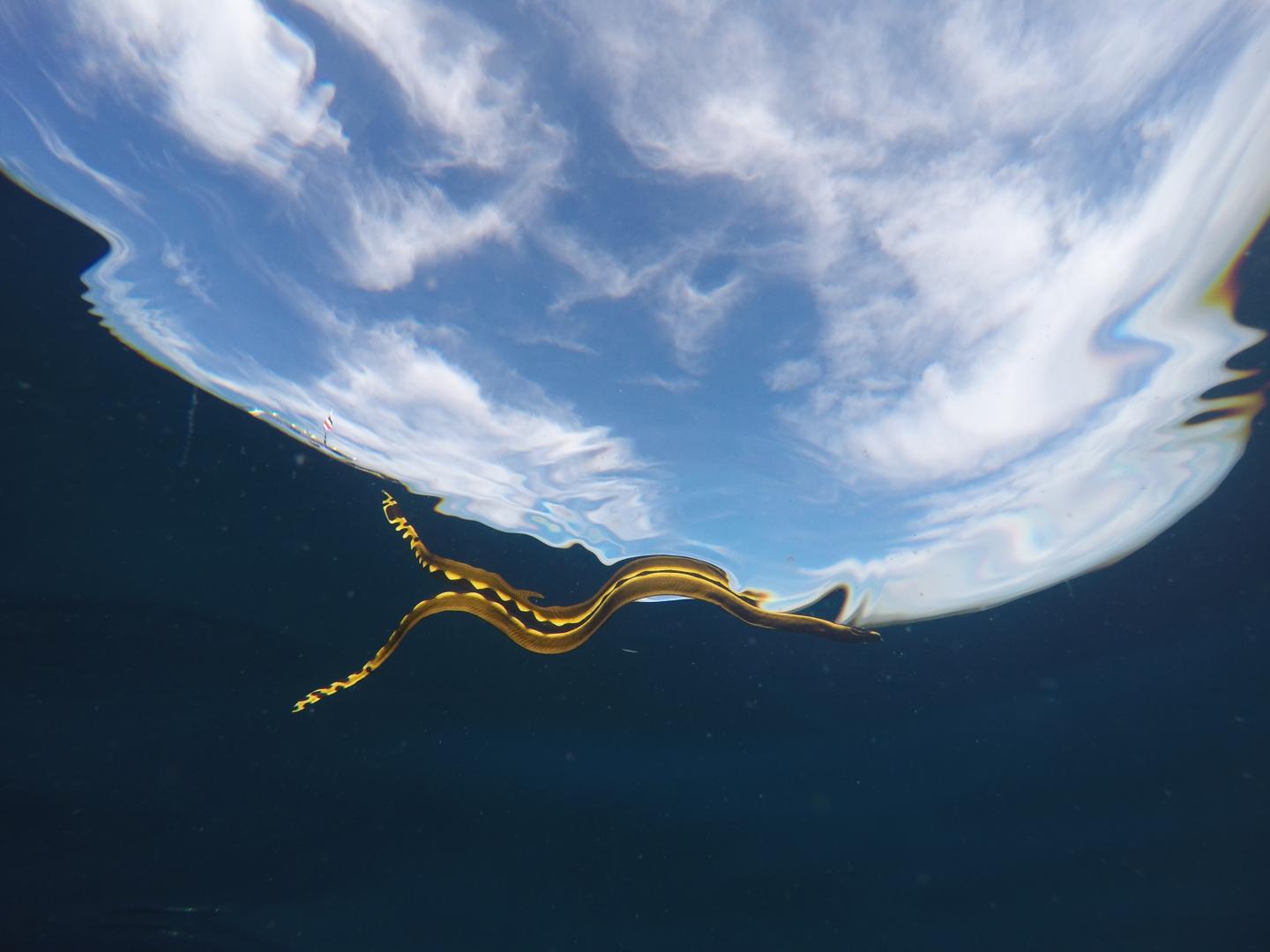
UF zoology researchers solve mystery of how sea snakes quench their thirst
IMAGE

Credit: Mark Sandfoss, University of Florida


Surrounded by salty water, sea snakes sometimes live a thirsty existence. Previously, scientists thought that they were able to drink seawater, but recent research has shown that they need to access freshwater. A new study published in PLOS ONE on Feb. 7 and led by Harvey Lillywhite, professor of biology of the University of Florida, shows that sea snakes living where there is drought relieve their dehydration as soon as the wet season hits, and do so by obtaining freshwater from “lenses” that form on the surface of the ocean during heavy rain–events in which the salinity at the surface decreases enough for the water to be drinkable.

The yellow-bellied sea snake (Hydrophis platurus) is the only reptile in the order Squamata that lives on the open sea. It has one of the largest geographic ranges of any vertebrate species. Given its broad range and seafaring existence, during the dry season (6-7 months at the study site in Costa Rica) it has no access to freshwater. How they survive in regions of drought seems to hinge upon access to freshwater lenses, but little is known about how marine vertebrates react to or consume rainfall. “This study contributes to a fuller understanding of how pelagic sea snakes, and possibly other marine animals, avoid desiccation following seasonal drought at sea,” said Lillywhite.

The researchers captured 99 sea snakes off the coast of Costa Rica (interestingly, the snakes have never been observed in estuaries) and offered them freshwater in a laboratory environment. The team happened to be there just as six months of drought broke and the rainy season began. They found that only 13 percent of snakes captured after the rainfall began accepted the offer, compared to 80 percent of those captured before. The rainfall must have quenched their thirst.

The study continues many years of work by Lillywhite. The present paper was coauthored by Mark Sandfoss, Lillywhite’s current PhD student, Coleman Sheehy, his former student who is now the Collections Manager in Herpetology at the Florida Museum of Natural History, and then-Fulbright visiting scholar Jenna Crowe-Riddell.

“How these animals locate and harvest precipitation is important in view of the recent declines and extinctions of some species of sea snakes,” said Lillywhite. The question remains: How will climate change and its effects on precipitation impact the sea snakes?

###

Media Contact
Harvey Lillywhite
[email protected]

Original Source

https://publications.clas.ufl.edu/college-news/college-news-faculty/sea-snakes-that-cant-drink-seawater/

Related Journal Article

http://dx.doi.org/10.1371/journal.pone.0212099

Tags: BiologyEcology/EnvironmentMarine/Freshwater BiologyZoology/Veterinary Science
Share12Tweet8Share2ShareShareShare2

Related Posts

Natural Hallucinogens: Evolution’s Ecological Tools, Not Mere Chemical Byproducts

June 25, 2026

This Famous Butterfly Revealed: Three Distinct Species Hidden in One

June 25, 2026

Scientists Attack Soybean Cyst Nematode by Starving Its Food Source

June 25, 2026

Decoding the Secret Code of a Crucial Immune Sensor

June 24, 2026
Please login to join discussion

POPULAR NEWS

  • Saying Goodbye to PGY-6: Pediatric Fellowship Realities

    103 shares
    Share 41 Tweet 26
  • Multi-Hospital Study Reveals Long Covid Burden Is Twice as High as Current Estimates

    92 shares
    Share 36 Tweet 23
  • Detection of EDCs in Breast Milk and Infant Urine Up to Six Months Highlights Early Exposure Risks

    77 shares
    Share 31 Tweet 19
  • New Drug Candidate Developed at McMaster Shows Potential for Treating Brain Cancer

    58 shares
    Share 23 Tweet 15

About

We bring you the latest biotechnology news from best research centers and universities around the world. Check our website.

Follow us

Recent News

Tracking Lanthanide-Labeled Microplastics in Plants

POSTECH Researchers Slash Cost of Reconstituted Cell-Free Systems by 95%

AI and Physics Collaborate to Design Advanced Hydrogen Storage Materials

Subscribe to Blog via Email

Success! An email was just sent to confirm your subscription. Please find the email now and click 'Confirm' to start subscribing.

Join 82 other subscribers
  • Contact Us

Bioengineer.org © Copyright 2023 All Rights Reserved.

Welcome Back!

Login to your account below

Forgotten Password?

Retrieve your password

Please enter your username or email address to reset your password.

Log In
No Result
View All Result
  • Homepages
    • Home Page 1
    • Home Page 2
  • News
  • National
  • Business
  • Health
  • Lifestyle
  • Science

Bioengineer.org © Copyright 2023 All Rights Reserved.