• HOME
  • NEWS
  • EXPLORE
    • CAREER
      • Companies
      • Jobs
    • EVENTS
    • iGEM
      • News
      • Team
    • PHOTOS
    • VIDEO
    • WIKI
  • BLOG
  • COMMUNITY
    • FACEBOOK
    • INSTAGRAM
    • TWITTER
Tuesday, May 12, 2026
BIOENGINEER.ORG
No Result
View All Result
  • Login
  • HOME
  • NEWS
  • EXPLORE
    • CAREER
      • Companies
      • Jobs
        • Lecturer
        • PhD Studentship
        • Postdoc
        • Research Assistant
    • EVENTS
    • iGEM
      • News
      • Team
    • PHOTOS
    • VIDEO
    • WIKI
  • BLOG
  • COMMUNITY
    • FACEBOOK
    • INSTAGRAM
    • TWITTER
  • HOME
  • NEWS
  • EXPLORE
    • CAREER
      • Companies
      • Jobs
        • Lecturer
        • PhD Studentship
        • Postdoc
        • Research Assistant
    • EVENTS
    • iGEM
      • News
      • Team
    • PHOTOS
    • VIDEO
    • WIKI
  • BLOG
  • COMMUNITY
    • FACEBOOK
    • INSTAGRAM
    • TWITTER
No Result
View All Result
Bioengineer.org
No Result
View All Result
Home NEWS Science News Biology

Sea-level rise projections can improve with state-of-the-art model

Bioengineer by Bioengineer
October 7, 2020
in Biology
Reading Time: 3 mins read
0
IMAGE
Share on FacebookShare on TwitterShare on LinkedinShare on RedditShare on Telegram

New ice-sheet ’emulator’ focuses on Antarctica, Rutgers research shows
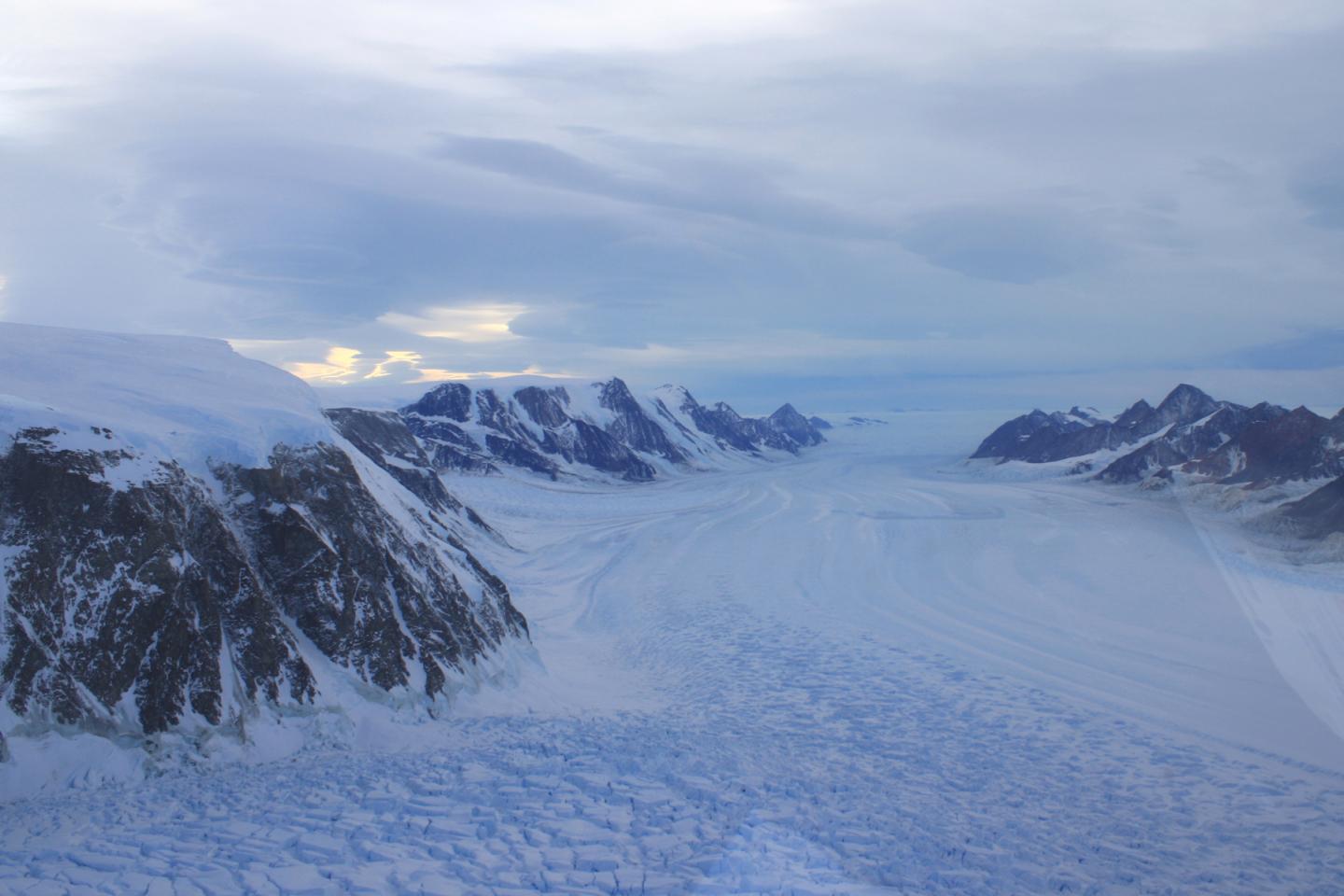
IMAGE

Credit: Ted Scambos/NSIDC

Projections of potentially dramatic sea-level rise from ice-sheet melting in Antarctica have been wide-ranging, but a Rutgers-led team has created a model that enables improved projections and could help better address climate change threats.

A major source of sea-level rise could come from melting of large swaths of the vast Antarctic ice sheet. Fossil coral reefs jutting above the ocean’s surface show evidence that sea levels were more than 20 feet higher about 125,000 years ago during the warm Last Interglacial (Eemian) period.

“Evidence of sea-level rise in warm climates long ago can tell us a lot about how sea levels could rise in the future,” said lead author Daniel M. Gilford, a post-doctoral associate in the lab of co-author Robert E. Kopp, a professor in the Department of Earth and Planetary Sciences within the School of Arts and Sciences at Rutgers University-New Brunswick. “This evidence suggests that as climate change drives warming in the atmosphere and oceans, future global sea-level rise could reach considerable heights.”

The study, published in the journal JGR: Earth Surface, delves into how paleoclimate evidence from about 125,000 years ago can be used to improve computer model projections of Antarctic ice-sheet collapse and sea-level rise. Such evidence is increasingly effective for improving projections, providing valuable insights into ice sheet vulnerability through at least 2150.

The study takes advantage of the similarities between past and potential future sea levels to train a statistical ice-sheet model, using artificial intelligence. The fast, simple, less expensive “emulator” – a form of machine learning software – is taught to mimic the behavior of a complex model that focuses on ice-sheet physics, enabling many more simulations than could be explored with the complex model alone. This avoids the costly run times of the complex ice-sheet model, which considers such phenomena as ice-sheet fractures due to surface melting and the collapse of tall seaside ice cliffs.

What may happen to the Antarctic ice sheet as the climate warms is the biggest uncertainty when it comes to global sea-level rise this century, the study notes. When combined with evidence of past sea levels, the new model can boost confidence in sea-level rise projections through at least 2150.

“If big swaths of the Antarctic ice sheet melted and collapsed about 125,000 years ago, when the polar regions were warmer than today, parts of the ice sheet may be similarly prone to collapse in the future as the climate warms, affecting our expectations of sea-level rise and coastline flooding over the next 130 years,” Gilford said.

New estimates of sea levels about 125,000 years ago could be used to indicate whether, 75 years from now, Hurricane Sandy-like flooding (about 9 feet above ground level in New York City) is likely to occur once a century or annually along parts of the Northeast U.S. coastline. Improved projections could also be included in reports such as the Intergovernmental Panel on Climate Change’s upcoming Sixth Assessment Report, likely helping officials and others decide how to address climate change threats.

Co-authors include Erica L. Ashe, a post-doctoral scientist in Kopp’s lab, along with scientists at the University of Massachusetts Amherst, Pennsylvania State University and the University of Bremen.

###

Media Contact
Todd Bates
[email protected]

Original Source

https://www.rutgers.edu/news/sea-level-rise-projections-can-improve-state-art-model

Related Journal Article

http://dx.doi.org/10.1029/2019JF005418

Tags: Climate ChangeComputer ScienceEarth ScienceEcology/EnvironmentHydrology/Water ResourcesOceanographyPublic HealthSoftware EngineeringTemperature-Dependent Phenomena
Share12Tweet8Share2ShareShareShare2

Related Posts

From Complexity to Clarity: Unraveling the “Topological Laws” Governing Cell Death — Biology

From Complexity to Clarity: Unraveling the “Topological Laws” Governing Cell Death

May 11, 2026
New Classification Framework Identifies Tumor-Associated Bacterial Effectors as Crucial Drivers of Tumor Biology and Immune Response — Biology

New Classification Framework Identifies Tumor-Associated Bacterial Effectors as Crucial Drivers of Tumor Biology and Immune Response

May 11, 2026

HIV-1 Strains Reveal Varied Paths to Antibody Escape

May 11, 2026

CRISPRi Screening Identifies Fungal-Specific Drug Targets

May 11, 2026
Please login to join discussion

POPULAR NEWS

  • Research Indicates Potential Connection Between Prenatal Medication Exposure and Elevated Autism Risk

    841 shares
    Share 336 Tweet 210
  • New Study Reveals Plants Can Detect the Sound of Rain

    728 shares
    Share 290 Tweet 182
  • Salmonella Haem Blocks Macrophages, Boosts Infection

    62 shares
    Share 25 Tweet 16
  • Breastmilk Balances E. coli and Beneficial Bacteria in Infant Gut Microbiomes

    57 shares
    Share 23 Tweet 14

About

We bring you the latest biotechnology news from best research centers and universities around the world. Check our website.

Follow us

Recent News

Humans and Zebra Finches Share Similar Speech Learning Techniques #ASA190

New Study Uncovers How Fungal Parasites Attack Strawberries and Raspberries

City of Hope Researchers to Present Groundbreaking Immunotherapy and Precision Medicine Advances Across Multiple Cancer Types at ASCO 2026

Subscribe to Blog via Email

Enter your email address to subscribe to this blog and receive notifications of new posts by email.

Join 82 other subscribers
  • Contact Us

Bioengineer.org © Copyright 2023 All Rights Reserved.

Welcome Back!

Login to your account below

Forgotten Password?

Retrieve your password

Please enter your username or email address to reset your password.

Log In
No Result
View All Result
  • Homepages
    • Home Page 1
    • Home Page 2
  • News
  • National
  • Business
  • Health
  • Lifestyle
  • Science

Bioengineer.org © Copyright 2023 All Rights Reserved.