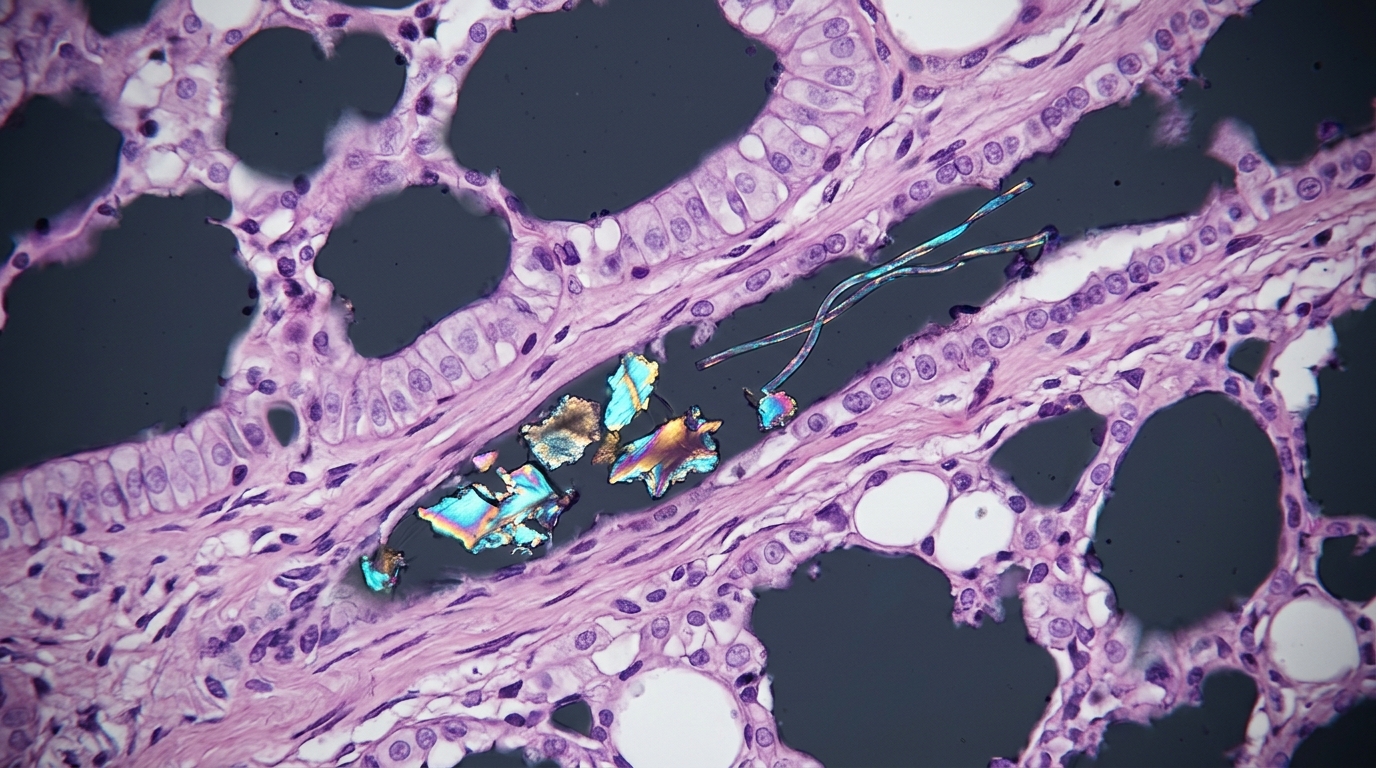
A scoping review examining five years of published research has mapped reports of microplastics and nanoplastics across 13 human organ systems, while revealing substantial unevenness in analytical rigor and contamination controls. Their evaluation identified detections spanning compartments once thought inaccessible to environmental particles, including the brain, cerebrospinal fluid, placenta, amniotic fluid, bone marrow, vitreous humour, and intervertebral discs.
The review set out to address a rapidly expanding body of literature that has become difficult to interpret as a whole due to divergent analytical tools, contamination prevention protocols, and reporting units. Following the Joanna Briggs Institute methodology and the PRISMA extension for Scoping Reviews within a Population–Concept–Context framework, the authors searched PubMed, Web of Science, and Scopus through 1 January 2026. The search focused exclusively on primary studies reporting chemically or spectroscopically confirmed micro- and nanoplastic presence in human solid tissues, surface samples, biological fluids, or excreta.
Among the 110 included studies, anatomical coverage proved heavily skewed toward a small number of systems. The digestive and female reproductive systems were the focus of 30 studies each, representing more than half of the total published research. Solid tissues or surface samples alone were evaluated in 50 studies, biological fluids or excreta alone in 46 studies, and both sample types in 14 studies. By contrast, several major anatomical regions remain sparse in primary literature: the auditory, ocular, endocrine, lymphatic, musculoskeletal, and integumentary systems were each investigated by three or fewer studies.
Methodological analysis showed that particle detection and quantification depended heavily on the specific analytical approaches used by different research teams. Particle identification relied entirely on spectroscopy in 73 studies, representing 66.4% of the dataset, while 14 studies (12.7%) quantified polymer mass using thermal or chromatographic methods alone. Both spectroscopic identification and mass quantification techniques were deployed in 23 studies (20.9%).
Procedural blanks were documented in 102 studies (92.7%), yet explicit blank correction was carried out in only 23 studies (20.9%).
Across the evaluated literature, recurring observations included particulate detection within physiological compartments protected by the blood–brain, blood–retinal, and placental barriers, as well as in samples ranging from early gestation through infancy. In comparative oncological tissue analyses, five distinct cancer types exhibited higher reported microplastic burdens in tumour samples than in non-tumour comparison tissues, although no difference was observed between tissue types in lung adenocarcinoma.
The authors emphasised critical constraints regarding reported concentrations and physiological interpretation. Several reported mass concentrations, particularly within human brain tissue, are difficult to reconcile with established scientific understanding of particle uptake and translocation pathways, highlighting the necessity of independent verification. Because particle sizes, concentrations, and detection rates varied substantially by analytical method, the reported burdens cannot yet be treated as uniform or directly comparable across cohorts.
Concluding their assessment, the authors stressed that all observed disease associations in the reviewed studies were cross-sectional in design. Consequently, these findings generate biological hypotheses but do not demonstrate causal relationships between particle presence and clinical disease. Moving forward, the research team highlighted standardised measurement frameworks, rigorous contamination controls, transparent reporting, and dedicated longitudinal and mechanistic studies as essential requirements for the field.
Subject of Research: Scoping review of microplastic and nanoplastic detection and methodological robustness across human biological specimens
Article Title: Microplastics and nanoplastics in human biological specimens: a scoping review of anatomical distribution, detection methods and evidence robustness
Article References: Ahmed, S., Mendes, A., Worlikar, H., Thompson, K., Dockery, P., McCabe, I., Morrison, L., & O’Keeffe, D. (2026). Microplastics and nanoplastics in human biological specimens: a scoping review of anatomical distribution, detection methods and evidence robustness. Microplastics and Nanoplastics. https://doi.org/10.1186/s43591-026-00256-8
Image Credits: AI Generated
DOI: 10.1186/s43591-026-00256-8
Keywords: microplastics, nanoplastics, scoping review, human tissues, biological fluids, spectroscopy, contamination control, procedural blanks, blank correction, digestive system, female reproductive system, blood-brain barrier, placental barrier, infrared methods, mass concentration, analytical methods, cross-sectional studies
News Source: Bethany Barker. (November 20, 2026). Scoping Review Maps Microplastics Across Human Organs While Highlighting Evidence Gaps. Scienmag.