• HOME
  • NEWS
  • EXPLORE
    • CAREER
      • Companies
      • Jobs
    • EVENTS
    • iGEM
      • News
      • Team
    • PHOTOS
    • VIDEO
    • WIKI
  • BLOG
  • COMMUNITY
    • FACEBOOK
    • INSTAGRAM
    • TWITTER
Saturday, July 4, 2026
BIOENGINEER.ORG
No Result
View All Result
  • Login
  • HOME
  • NEWS
  • EXPLORE
    • CAREER
      • Companies
      • Jobs
        • Lecturer
        • PhD Studentship
        • Postdoc
        • Research Assistant
    • EVENTS
    • iGEM
      • News
      • Team
    • PHOTOS
    • VIDEO
    • WIKI
  • BLOG
  • COMMUNITY
    • FACEBOOK
    • INSTAGRAM
    • TWITTER
  • HOME
  • NEWS
  • EXPLORE
    • CAREER
      • Companies
      • Jobs
        • Lecturer
        • PhD Studentship
        • Postdoc
        • Research Assistant
    • EVENTS
    • iGEM
      • News
      • Team
    • PHOTOS
    • VIDEO
    • WIKI
  • BLOG
  • COMMUNITY
    • FACEBOOK
    • INSTAGRAM
    • TWITTER
No Result
View All Result
Bioengineer.org
No Result
View All Result
Home NEWS Science News Biology

Scientists from TU Dresden search for new methods to cure neurodegenerative diseases

Bioengineer by Bioengineer
January 17, 2019
in Biology
Reading Time: 3 mins read
0
IMAGE
Share on FacebookShare on TwitterShare on LinkedinShare on RedditShare on Telegram

IMAGE

Credit: CRTD


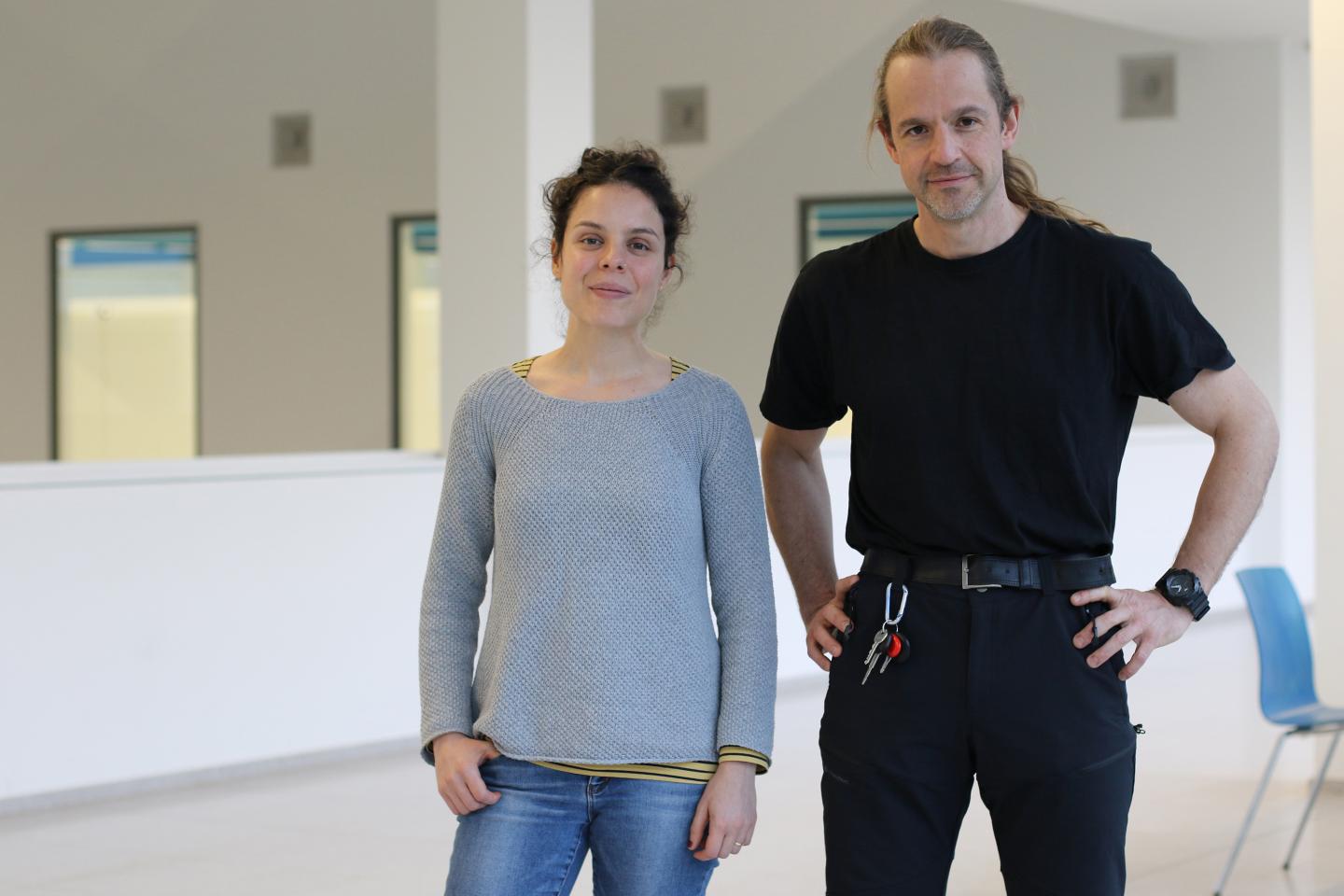
Most neurons in the human brain are generated from neural stem cells during embryonic development. After birth, a small reservoir of stem cells remains in the brain that keeps on producing new neurons throughout life. However, the question arises as to whether these new neurons really support brain function? And if so, can we improve brain capacity by increasing the number of neurons? The research group of Prof. Federico Calegari at the Center for Regenerative Therapies Dresden (CRTD) of TU Dresden has answered these questions, now published in the renowned EMBO Journal.

In their latest study, the scientists analysed healthy adult mice in which the small reservoir of stem cells was manipulated in order to increase in number. As a result, the number of neurons, generated from these stem cells, also increased. In mice, these neurons mainly populate the brain area responsible for interpreting odours. In fact, olfaction is one to the most powerful senses in mice, fundamental for finding food and escape from predators. As powerful as the sense of smell naturally is in mice, in the following behavioural experiments the scientists found that mice with more neurons were able to distinguish extremely similar odours that normal mice failed to. Hence, this study is fundamental in proving that stem cells can be used to improve brain function.

“Evolution gave mice an extremely sensitive olfactory system. It is amazing that by adding few neurons we could improve something that seemed already close to perfection”, states Prof. Federico Calegari. “This study sets the basis for our research, which now is focused on finding out whether we could apply our strategy as a therapeutic approach in neurodegenerative models.”

The CRTD at TU Dresden is the academic home for scientists from more than 30 nations. Their mission is to discover the principles of cell and tissue regeneration and leveraging this for recognition, treatment and reversal of diseases. The CRTD links the bench to the clinic, scientists to clinicians to bring expertise in stem cells, gene-editing and regeneration towards innovative therapies for neurodegenerative diseases such as Alzheimer’s and Parkinson’s disease, haematological diseases such as leukaemia, metabolic diseases such as diabetes, retina and bone diseases. The group of Prof. Federico Calegari focusses on mammalian neural stem cells in the context of development, evolution and cognitive functions.

###

This study was financed by TU Dresden / CRTD, DFG German Research Foundation and the Human Frontiers Science Program. It was performed in collaboration with the Heidelberg University, Gutenberg University Mainz and King’s College London and was supported by the Center for Molecular and Cellular Bioengineering (CMCB) of TU Dresden.

Publication: http://emboj.embopress.org/content/early/2019/01/03/embj.201798791

Media Contact
Dr. Sara Bragado Alonso
[email protected]
49-351-463-82231

Original Source

http://emboj.embopress.org/content/early/2019/01/03/embj.201798791

Related Journal Article

http://dx.doi.org/10.15252/embj.201798791

Tags: BiologyCell BiologyMedicine/Healthneurobiology
Share12Tweet8Share2ShareShareShare2

Related Posts

Evolution-Inspired Biosensors Revolutionize Lipid Tracking in Real Time — Biology

Evolution-Inspired Biosensors Revolutionize Lipid Tracking in Real Time

July 2, 2026
New Study Reveals How to Reduce Risk of Dangerous Wildlife Encounters This Summer — Biology

New Study Reveals How to Reduce Risk of Dangerous Wildlife Encounters This Summer

July 2, 2026

Hepatic IFRD1 Alleviates Metabolic Dysfunction-Linked Steatohepatitis Through the GLUD1/α-KG Pathway

July 2, 2026

Intricate Food Webs Support Ecosystem Health and Stability

July 2, 2026
Please login to join discussion

POPULAR NEWS

  • Detection of EDCs in Breast Milk and Infant Urine Up to Six Months Highlights Early Exposure Risks

    77 shares
    Share 31 Tweet 19
  • Saying Goodbye to PGY-6: Pediatric Fellowship Realities

    103 shares
    Share 41 Tweet 26
  • New Drug Candidate Developed at McMaster Shows Potential for Treating Brain Cancer

    58 shares
    Share 23 Tweet 15
  • KTU Researchers Explore Ultrasound’s Role in Enhancing Blood Flow Beyond Diagnostics

    53 shares
    Share 21 Tweet 13

About

We bring you the latest biotechnology news from best research centers and universities around the world. Check our website.

Follow us

Recent News

Quasi-Bound States Boost Quantum Well Photoresponse

Lysine Pyruvylation Links Glycolysis to Epigenetics

Multiphysics Coupling: Single vs. Multiple DeepONet Branches

Subscribe to Blog via Email

Success! An email was just sent to confirm your subscription. Please find the email now and click 'Confirm' to start subscribing.

Join 83 other subscribers
  • Contact Us

Bioengineer.org © Copyright 2023 All Rights Reserved.

Welcome Back!

Login to your account below

Forgotten Password?

Retrieve your password

Please enter your username or email address to reset your password.

Log In
No Result
View All Result
  • Homepages
    • Home Page 1
    • Home Page 2
  • News
  • National
  • Business
  • Health
  • Lifestyle
  • Science

Bioengineer.org © Copyright 2023 All Rights Reserved.