• HOME
  • NEWS
  • EXPLORE
    • CAREER
      • Companies
      • Jobs
    • EVENTS
    • iGEM
      • News
      • Team
    • PHOTOS
    • VIDEO
    • WIKI
  • BLOG
  • COMMUNITY
    • FACEBOOK
    • INSTAGRAM
    • TWITTER
Friday, July 10, 2026
BIOENGINEER.ORG
No Result
View All Result
  • Login
  • HOME
  • NEWS
  • EXPLORE
    • CAREER
      • Companies
      • Jobs
        • Lecturer
        • PhD Studentship
        • Postdoc
        • Research Assistant
    • EVENTS
    • iGEM
      • News
      • Team
    • PHOTOS
    • VIDEO
    • WIKI
  • BLOG
  • COMMUNITY
    • FACEBOOK
    • INSTAGRAM
    • TWITTER
  • HOME
  • NEWS
  • EXPLORE
    • CAREER
      • Companies
      • Jobs
        • Lecturer
        • PhD Studentship
        • Postdoc
        • Research Assistant
    • EVENTS
    • iGEM
      • News
      • Team
    • PHOTOS
    • VIDEO
    • WIKI
  • BLOG
  • COMMUNITY
    • FACEBOOK
    • INSTAGRAM
    • TWITTER
No Result
View All Result
Bioengineer.org
No Result
View All Result
Home NEWS Science News Chemistry

Scientists develop enzyme produced from agricultural waste for use as laundry detergent

Bioengineer by Bioengineer
February 25, 2020
in Chemistry
Reading Time: 2 mins read
0
IMAGE
Share on FacebookShare on TwitterShare on LinkedinShare on RedditShare on Telegram

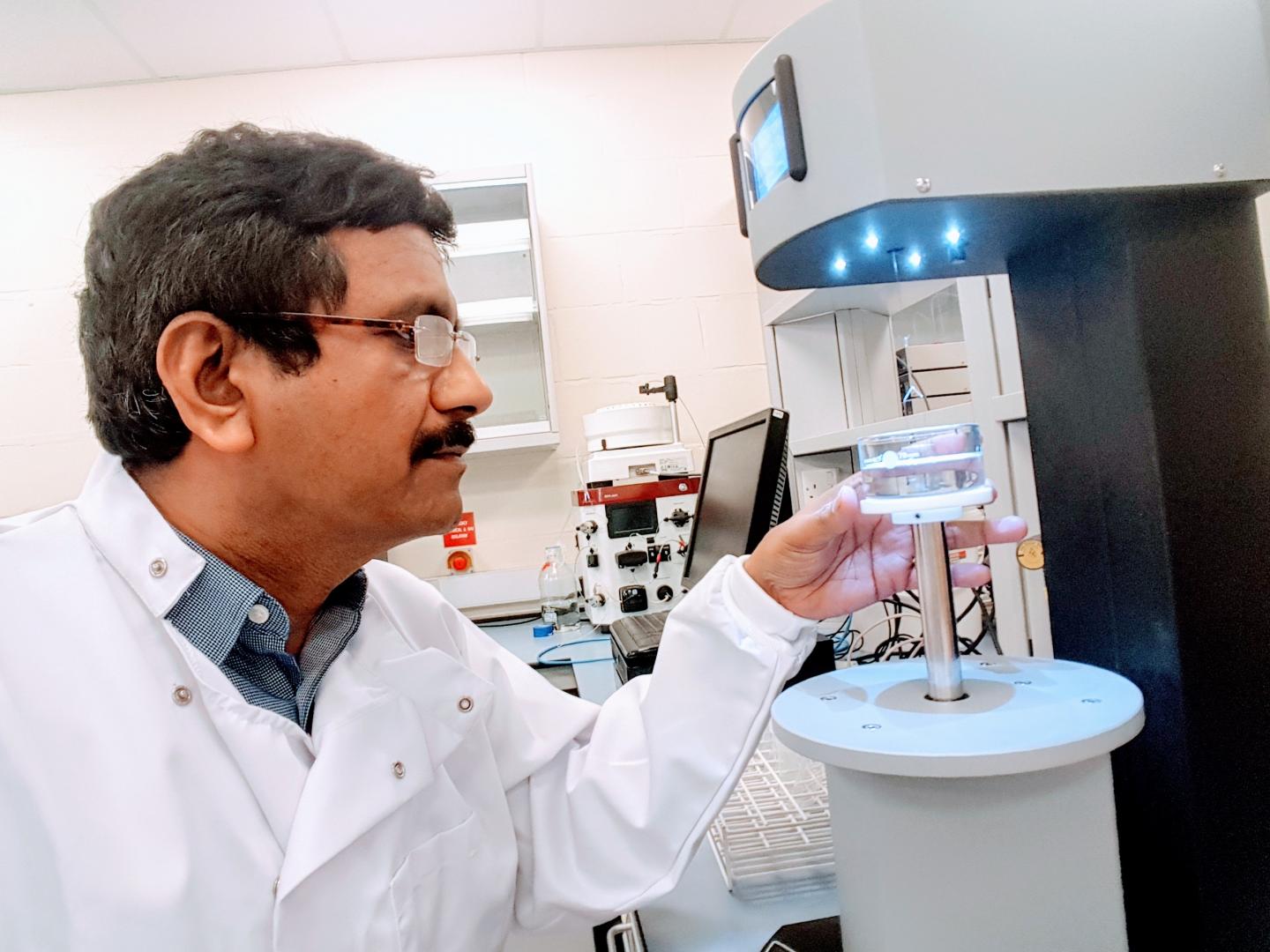
IMAGE

Credit: University of Portsmouth


An international team of researchers has developed an enzyme produced from agricultural waste that could be used as an important additive in laundry detergents.

By using an enzyme produced from a by-product of mustard seeds, they hope to develop a low-cost naturally derived version of lipase, the second largest commercially produced enzyme, which is used in various industries for the production of fine chemicals, cosmetics, pharmaceuticals and biodiesel including detergents.

Thousands of tons of lipase are used annually for the production of laundry detergents as an additive or to replace the chemical detergents because of its advantage of being eco-friendly and better ability to remove oil stains without harming the texture of the cloth.

Lipase is one of the most rapidly growing industrial enzymes in the market and is worth $590.5million. However, the cost of biotechnologically produced lipases has always been a challenge, mainly due to the high cost of feedstocks.

In this collaborative project, Dr Pattanathu Rahman, a microbial biotechnologist from the Centre for Enzyme Innovation at the University of Portsmouth worked with Professor Subudhi and scientists from the Centre for Biotechnology at Siksha O Anusandhan University in Odisha, India, where Dr Rahman is also a visiting Professor.

They examined a lipase produced from mustard oil cakes, which are the by-products of oil extraction from the mustard seeds. Oil cakes are a very good resource for growth of microbes to produce enzymes. They fermented the oil cakes with the bacteria Anoxybacillus sp. ARS-1, living in a tropical hot spring Taptapani, Odisha, India to produce the lipase enzyme.

Mustard are the third most produced oilseed crops in the world after soybean and palm oil seed. These seeds are produced in tropical countries such as Bangladesh, Pakistan and Northern India. The mustard oil extracted from the seeds are used as cooking oils. Oil cakes that are the by-products of oil extraction contain relatively high amounts of protein with small amounts of anti-nutritional compounds like glucosinolates and their breakdown products, phenolics and phytates.

Dr Rahman said: “We further investigated suitability of the lipase enzyme in detergent formulations. Anoxybacillus sp. ARS-1 produced lipase was found to be stable and resist almost all chemical detergents as well as common laundry detergent such as Ezee, Surf, Ariel and Ghadhi, proving it to be a prospective additive for incorporation in the new detergent formulations.”

###

The study ‘Parameter optimization for thermostable lipase production and performance evaluation as prospective detergent additive’ is published in the journal Preparative Biochemistry & Biotechnology.

Media Contact
Glenn Harris
[email protected]
0239-284-2728

Related Journal Article

http://dx.doi.org/10.1080/10826068.2020.1719513

Tags: Agricultural Production/EconomicsBiochemistryBiologyBiomedical/Environmental/Chemical EngineeringBiotechnologyPollution/Remediation
Share12Tweet8Share2ShareShareShare2

Related Posts

Innovative Ligand Design Enhances Nanocluster Catalyst Activity

Innovative Ligand Design Enhances Nanocluster Catalyst Activity

July 10, 2026
New Fluorescent Sensor Quickly Detects Pesticide Phoxim Visually

New Fluorescent Sensor Quickly Detects Pesticide Phoxim Visually

July 10, 2026

Advances in NASICON Cathodes: Structure, Electrochemistry, and Stability Explored

July 10, 2026

Scientists create new method to control quantum states in 2D materials

July 10, 2026
Please login to join discussion

POPULAR NEWS

  • Detection of EDCs in Breast Milk and Infant Urine Up to Six Months Highlights Early Exposure Risks

    77 shares
    Share 31 Tweet 19
  • New Drug Candidate Developed at McMaster Shows Potential for Treating Brain Cancer

    58 shares
    Share 23 Tweet 15
  • KTU Researchers Explore Ultrasound’s Role in Enhancing Blood Flow Beyond Diagnostics

    53 shares
    Share 21 Tweet 13
  • 高齢者の骨粗鬆症治療の持続性比較

    51 shares
    Share 20 Tweet 13

About

We bring you the latest biotechnology news from best research centers and universities around the world. Check our website.

Follow us

Recent News

Innovative Ligand Design Enhances Nanocluster Catalyst Activity

Meet Professor Zhanshan Wang: A Pioneer in Light Studies

New Fluorescent Sensor Quickly Detects Pesticide Phoxim Visually

Subscribe to Blog via Email

Enter your email address to subscribe to this blog and receive notifications of new posts by email.

Join 84 other subscribers
  • Contact Us

Bioengineer.org © Copyright 2023 All Rights Reserved.

Welcome Back!

Login to your account below

Forgotten Password?

Retrieve your password

Please enter your username or email address to reset your password.

Log In
No Result
View All Result
  • Homepages
    • Home Page 1
    • Home Page 2
  • News
  • National
  • Business
  • Health
  • Lifestyle
  • Science

Bioengineer.org © Copyright 2023 All Rights Reserved.