Orthodontic treatment can straighten teeth at a hidden cost: the very forces that move them through bone sometimes dissolve their own roots. Orthodontically induced inflammatory root resorption, or OIIRR, is a loss of mineralized cementum and dentin that clinicians usually detect only on radiographs, and by the time apical resorption becomes radiographically evident it may already be months old. A new pilot study, published in Genomics & Informatics, reports that two proteins measurable in saliva—Caspase-1 and Osteopontin—are markedly elevated in orthodontic patients with radiographically confirmed root resorption compared with matched patients undergoing the same treatment without it. The authors suggest that salivary Caspase-1 in particular could eventually serve as a non-invasive marker of active resorption, while stressing that the finding is exploratory and needs confirmation in much larger cohorts.
The research team, led by Parzhin Moradi and colleagues at Hamadan University of Medical Sciences in Iran, combined computational systems biology with a small clinical validation. Their starting point was a set of genes plausibly linked to root resorption, assembled from a structured literature search of PubMed/MEDLINE, Web of Science and Scopus, supplemented with gene–disease associations from the DisGeNET database. The literature review yielded 133 genes and DisGeNET contributed 43; after merging and removing duplicates, 160 unique genes remained. The authors acknowledge that this in silico approach relies entirely on previously published knowledge rather than new profiling in their own patients, which makes it vulnerable to literature and annotation bias favoring well-studied genes.
From that gene list the team built a protein–protein interaction network using the STRING database at a medium-confidence threshold of 0.4, then visualized and analyzed it in Cytoscape. After removing isolated nodes, the network contained 120 nodes and 648 edges. Applying topological criteria—degree and betweenness centrality at least twice the network average, and closeness centrality above the mean—identified 13 hub genes. A molecular complex detection analysis also flagged one densely connected cluster of 27 genes and 304 edges with an MCODE score of 23.385.
The immune signature that emerged from the network analysis was specific and structured. Within the significant cluster, the top three enriched pathways were “Signaling by interleukins,” “Cytokine signaling in immune system,” and “Interleukin-10 signaling,” while the leading biological processes were “Response to cytokine,” “Cellular response to organic substance,” and “Cytokine-mediated signaling pathway.” When the full set of 160 genes was submitted for molecular function and cellular component annotation, “Cytokine activity,” “Signaling receptor binding,” and “Receptor ligand activity” topped the molecular function list, and “Extracellular space,” “Extracellular region,” and “Vesicle” were the principal cellular components. Enrichment analyses applied a false discovery rate threshold below 0.05 and required at least ten enriched genes per term, and only nine pathways met those significance criteria.
Beyond the interaction network, the team constructed a Gene Regulatory Network to search for transcription factors sitting upstream of the hub genes. Using the iRegulon plugin, with a normalized enrichment score threshold above 10, the analysis pinpointed 13 candidate transcription factors targeting SPP1 and/or CASP1. Among the factors targeting both genes, IRF4 had the highest score at 10.615. The authors are careful to frame this as computational inference only: network centrality reflects statistical connectivity rather than established biological causation, and the predicted regulatory role of IRF4 awaits experimental validation. They note that the literature on interferon regulatory factors in root resorption centers on IRF8, which has been established as a negative regulator of osteoclast activity; mutations such as the IRF8 G388S variant have been linked to increased susceptibility to multiple idiopathic cervical root resorptions through enhanced osteoclast formation. Whether IRF4 acts through similar or distinct mechanisms remains an open question.
The clinical component was a matched cross-sectional case–control study reported according to the STROBE guidelines. Of 130 orthodontic patients initially screened, 24 were enrolled: 12 with radiographically confirmed root resorption and 12 without, matched for age and gender. All participants were treated with the MBT appliance system with a 0.022-inch slot at a single academic center in Hamadan, Iran, between 2023 and 2025. Cases required Grade II or higher resorption on the Levander–Malmgren scale, assessed primarily on panoramic radiographs, with periapical films added only when clinically warranted under the ALARA radiation-protection principle. Controls had completed at least 36 months of active fixed appliance therapy, with a mean of 39 months, so that cumulative mechanical exposure was comparable between groups. Exclusion criteria were deliberately broad, covering systemic disease, allergies, smoking, recent antibiotics, periodontal disease, and complex mechanics such as intrusion arches or vertical elastics. Baseline cephalometric measurements confirmed comparable vertical skeletal patterns, another established risk modifier.
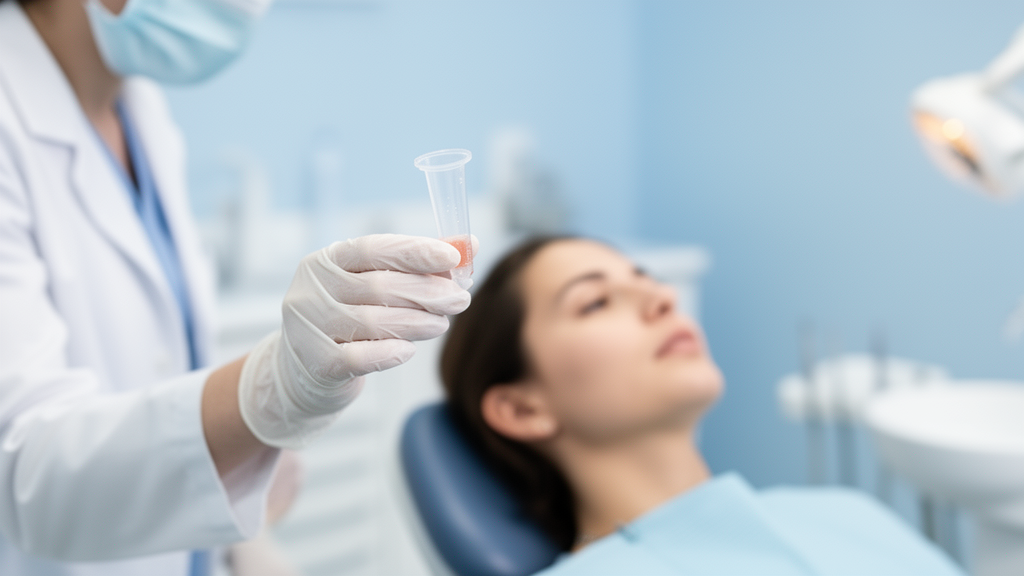
Saliva collection followed a standardized protocol designed to suppress the known sources of variability in salivary protein measurements. Samples were gathered between 09:00 and 11:00 AM after a one-hour fast, using a five-minute unstimulated passive drool method with the first minute discarded. Specimens were kept on ice, transported to the laboratory within 120 minutes, centrifuged at 12,000×g for 15 minutes at 4 °C, and stored at −80 °C. Laboratory personnel running the enzyme-linked immunosorbent assays were blinded to group allocation, as were the two calibrated orthodontic examiners who read the radiographs. Caspase-1 was quantified with a human kit from R&D Systems reporting an analytical sensitivity of approximately 1.24 pg/mL, and Osteopontin with a FineTest kit reporting approximately 0.094 ng/mL, with concentrations derived from four-parameter logistic standard curves.
The measured differences were substantial. Salivary CASP1 averaged 28.24550 ng/mL in the case group versus 13.24367 ng/mL in controls, a 2.13-fold increase with a p-value of 2.193 × 10⁻⁷. SPP1 averaged 1.450083 ng/mL in cases versus 1.024 ng/mL in controls, a 1.42-fold increase with a p-value of 0.02862. Cohen’s d values were 3.01 for Caspase-1 and 0.96 for Osteopontin, both large effect sizes, and post hoc power analysis indicated achieved power of roughly 99% for Caspase-1 and 78% for Osteopontin based on the observed effects. Receiver operating characteristic analysis yielded an AUC of 0.9861 for Caspase-1 (95% CI 0.953–1.000) and 0.75 for Osteopontin (95% CI 0.543–0.957). At the in-sample optimal cutoff of 18.75 ng/mL, Caspase-1 showed 100% sensitivity, 91.67% specificity, and a Youden Index of 0.917; Osteopontin at 1.244 ng/mL achieved 66.67% sensitivity and 83.33% specificity, with a Youden Index of 0.50.
The authors devote considerable space to explaining why such striking performance must be treated with caution. With only 12 cases and 12 controls, no independent test dataset, and no external validation cohort, the metrics reflect exploratory discrimination within this particular study group rather than definitive diagnostic criteria. The two biomarkers were analyzed separately without correction for multiple comparisons, which the authors acknowledge is appropriate for hypothesis generation but should be replaced by stricter procedures such as Bonferroni or false discovery rate control in confirmatory work. Because the design was cross-sectional, with resorption status determined at a single time point from routine radiographs, the study could not establish a temporal relationship between biomarker levels and resorption progression, and the retrospective records made it impossible to confirm precisely when resorption first occurred during treatment.
The mechanistic discussion draws on prior work to argue that the two proteins are plausibly involved in resorption rather than merely correlating with it. In a rat model, Zhang and colleagues found the NLRP3 inflammasome, CASP1, IL-1β, and M1 macrophages concentrated in periodontal ligament regions undergoing root resorption, and showed in co-culture experiments that mechanically pre-treated periodontal ligament cells promoted M1 macrophage polarization and inflammasome activation, effects reduced by the NLRP3 inhibitor MCC950. Other work suggests Caspase-1 can induce pyroptosis in periodontal ligament stem cells under excessive loading, promoting the transfer of damaged mitochondria and elevated reactive oxygen species in osteoclast precursors, thereby increasing osteoclast abundance and activity. Osteopontin, meanwhile, stimulates osteoclast differentiation and supports osteoclast survival and migration through CD44- and αvβ3-dependent signaling, contributes to podosome formation needed for hard-tissue degradation, and suppresses osteoblast mineralization through a phosphate-dependent mechanism.
These protein-level findings sit within a longer history of genetic association research. A systematic review by Andrade and colleagues covering 21 studies reported that CASP1/ICE and SPP1 polymorphisms have been associated with resorption susceptibility, though results have conflicted across populations, with IL1 family genes and P2RX7 among the more consistently implicated loci. Earlier single studies pointed the same way: Iglesias-Linares and colleagues, studying 87 orthodontic patients, found that certain SPP1 genotypes at rs9138 and rs11730582 were protective against resorption while homozygosity for other alleles raised risk, and Jimenez-Pellegrin and colleagues documented SPP1 immunolabeling in both clastic cells and the root surface during repair of resorbed cementum. The authors argue that genetic testing captures inherited susceptibility while salivary protein measurement detects ongoing resorptive activity, and that the two approaches could eventually complement each other.
The broader immune literature they cite reinforces the dysregulation framing. Ahuja and colleagues documented elevated TNF-α and IL-7 in gingival crevicular fluid after heavy orthodontic forces, correlating with resorption severity, but also elevated CSF2, an anti-resorptive cytokine, in mild cases, suggesting a compensatory counterbalance rather than simple hyperactivation. Nakano and colleagues identified IL-17 as a mediator that upregulates RANKL in dental pulp cells, and Seifi and colleagues traced resorption to sterile necrosis in the periodontal ligament driven by compromised vascularization, with basic fibroblast growth factor reducing resorption by promoting angiogenesis. Nishioka and colleagues found that patients with allergies and asthmatic tendencies show greater susceptibility to excessive resorption, hinting that baseline immune constitution shapes the response to mechanical stress.
Practical hurdles remain before any chairside application. Salivary protein concentrations vary with collection time, salivary flow rate, and transient oral inflammation such as mild gingivitis, so standardized sampling and affordable rapid assays will be prerequisites for real-time monitoring. The authors position their contribution accordingly: elevated salivary Caspase-1 and Osteopontin are candidate biomarkers associated with radiographically confirmed OIIRR whose biological relevance warrants longitudinal evaluation, not definitive predictive tools or therapeutic targets, and large, prospective, multicenter studies are needed to replicate the findings and define robust diagnostic thresholds.
Subject of Research: Salivary biomarkers for orthodontically induced inflammatory root resorption identified through systems biology network analysis and ELISA validation
Article Title: A systems biology network analysis of root resorption biomarkers and their clinical relevance in orthodontics: a pilot study
Article References: Moradi, P., Mollabashi, V., Taherkhani, A., Farhadifard, H., & Ayubi, E. (2026). A systems biology network analysis of root resorption biomarkers and their clinical relevance in orthodontics: a pilot study. Genomics & Informatics, 24(1), Article 16. https://doi.org/10.1186/s44342-026-00079-2
Image Credits: AI Generated
DOI: 10.1186/s44342-026-00079-2
Keywords: orthodontics, root resorption, salivary biomarkers, Caspase-1, Osteopontin, systems biology, protein-protein interaction network, ELISA, ROC analysis, IRF4, case-control study, pilot study
News Source: Gregory Coleman. (October 28, 2026). Saliva proteins may flag orthodontic root resorption, pilot study suggests. Scienmag.