• HOME
  • NEWS
  • EXPLORE
    • CAREER
      • Companies
      • Jobs
    • EVENTS
    • iGEM
      • News
      • Team
    • PHOTOS
    • VIDEO
    • WIKI
  • BLOG
  • COMMUNITY
    • FACEBOOK
    • INSTAGRAM
    • TWITTER
Friday, March 27, 2026
BIOENGINEER.ORG
No Result
View All Result
  • Login
  • HOME
  • NEWS
  • EXPLORE
    • CAREER
      • Companies
      • Jobs
        • Lecturer
        • PhD Studentship
        • Postdoc
        • Research Assistant
    • EVENTS
    • iGEM
      • News
      • Team
    • PHOTOS
    • VIDEO
    • WIKI
  • BLOG
  • COMMUNITY
    • FACEBOOK
    • INSTAGRAM
    • TWITTER
  • HOME
  • NEWS
  • EXPLORE
    • CAREER
      • Companies
      • Jobs
        • Lecturer
        • PhD Studentship
        • Postdoc
        • Research Assistant
    • EVENTS
    • iGEM
      • News
      • Team
    • PHOTOS
    • VIDEO
    • WIKI
  • BLOG
  • COMMUNITY
    • FACEBOOK
    • INSTAGRAM
    • TWITTER
No Result
View All Result
Bioengineer.org
No Result
View All Result
Home NEWS Science News

Russian scientists to improve the battery for sensors

Bioengineer by Bioengineer
June 1, 2020
in Science News
Reading Time: 2 mins read
0
IMAGE
Share on FacebookShare on TwitterShare on LinkedinShare on RedditShare on Telegram

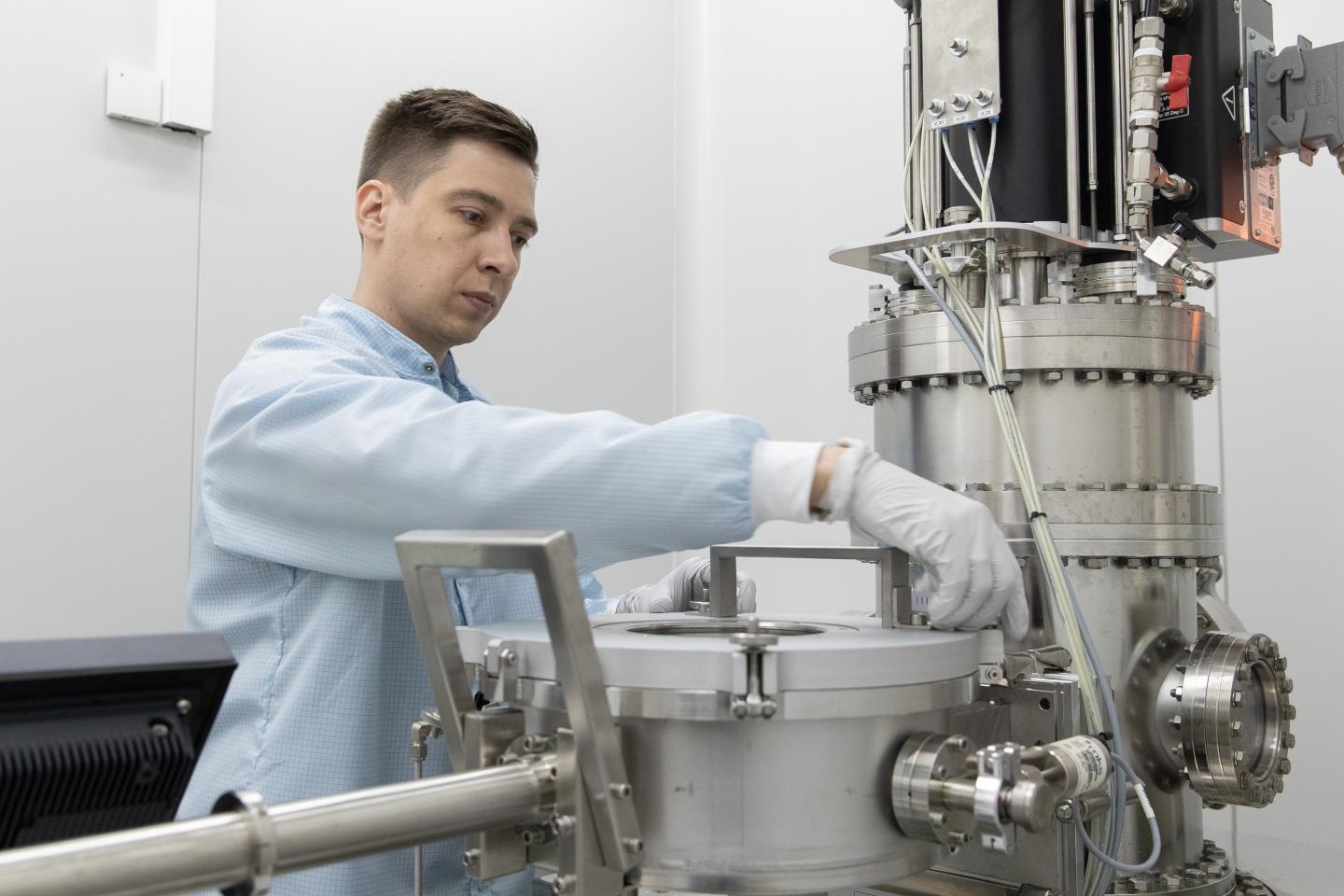
Researchers approached the creation of a solid-state thin-film battery for miniature devices and sensors
IMAGE

Credit: Peter the Great St.Petersburg Polytechnic University

Researchers of Peter the Great St.Petersburg Polytechnic University (SPbPU) approached the creation of a solid-state thin-film battery for miniature devices and sensors. The results of the study were published in the special issue dedicated to improved materials for lithium and sodium-ion batteries (Energies Journal, MDPI Publishing House).

The development of miniature devices such as biosensors, smartwatches, Internet of things (IoT) devices requires the establishment of small and complex power supplies with a high energy density. According to experts, traditional technologies for lithium-ion batteries production reach their limits. It is difficult to reduce the size and control the shape of the power source any further in the required dimensions. Meanwhile, the use of microelectronic technologies, such as, Atomic Layer Deposition, can assist in the production of miniature solid-state lithium-ion batteries with high specific energy.

“We were able to obtain the cathode material, lithium nickelate using the Atomic Layer Deposition method, which allows setting the thickness of the films with high precision”, said Dr. Maxim Maximov of High School of Materials Physics and Technologies, Institute of Mechanical Engineering, Materials and Transport SPbPU.

He mentioned that the researchers demonstrated high specific capacities at increased discharge current. It can improve the performance and efficiency of devices, as well as reduce their size.

According to the scientist, the production of thin-film positive electrodes based on lithium nickelate and lithium mixed oxides with a high nickel content is a huge step to the creation of efficient solid-state batteries, which are safe due to the lack of liquid electrolyte.

###

Media Contact
Raisa Bestugina
[email protected]

Related Journal Article

http://dx.doi.org/10.3390/en13092345

Tags: Chemistry/Physics/Materials SciencesElectromagneticsIndustrial Engineering/ChemistryMaterialsMechanical EngineeringNanotechnology/MicromachinesResearch/Development
Share12Tweet8Share2ShareShareShare2

Related Posts

Starburst Winds Drain Supernova Energy Quickly

Starburst Winds Drain Supernova Energy Quickly

March 26, 2026
Decoding the Phosphorus Puzzle: How Microplastics and Hydrochar Transform Nutrient Dynamics in Rice Paddies

Decoding the Phosphorus Puzzle: How Microplastics and Hydrochar Transform Nutrient Dynamics in Rice Paddies

March 26, 2026

Microtubules Found to Actively Ensure Accurate Chromosome Distribution During Cell Division

March 25, 2026

Aversive Learning Hijacks Brain Sugar Sensor

March 25, 2026
Please login to join discussion

POPULAR NEWS

  • blank

    Revolutionary AI Model Enhances Precision in Detecting Food Contamination

    96 shares
    Share 38 Tweet 24
  • Imagine a Social Media Feed That Challenges Your Views Instead of Reinforcing Them

    1003 shares
    Share 397 Tweet 248
  • Uncovering Functions of Cavernous Malformation Proteins in Organoids

    54 shares
    Share 22 Tweet 14
  • Promising Outcomes from First Clinical Trials of Gene Regulation in Epilepsy

    51 shares
    Share 20 Tweet 13

About

We bring you the latest biotechnology news from best research centers and universities around the world. Check our website.

Follow us

Recent News

In-Sensor Cryptography Links Physical Process to Digital Identity

Can Psychosocial Factors Influence Cancer Risk?

Depression Factors in Elderly: Pre vs. Post-COVID Analysis

Subscribe to Blog via Email

Enter your email address to subscribe to this blog and receive notifications of new posts by email.

Join 78 other subscribers
  • Contact Us

Bioengineer.org © Copyright 2023 All Rights Reserved.

Welcome Back!

Login to your account below

Forgotten Password?

Retrieve your password

Please enter your username or email address to reset your password.

Log In
No Result
View All Result
  • Homepages
    • Home Page 1
    • Home Page 2
  • News
  • National
  • Business
  • Health
  • Lifestyle
  • Science

Bioengineer.org © Copyright 2023 All Rights Reserved.