• HOME
  • NEWS
  • EXPLORE
    • CAREER
      • Companies
      • Jobs
    • EVENTS
    • iGEM
      • News
      • Team
    • PHOTOS
    • VIDEO
    • WIKI
  • BLOG
  • COMMUNITY
    • FACEBOOK
    • INSTAGRAM
    • TWITTER
Tuesday, August 18, 2026
BIOENGINEER.ORG
No Result
View All Result
  • Login
  • HOME
  • NEWS
  • EXPLORE
    • CAREER
      • Companies
      • Jobs
        • Lecturer
        • PhD Studentship
        • Postdoc
        • Research Assistant
    • EVENTS
    • iGEM
      • News
      • Team
    • PHOTOS
    • VIDEO
    • WIKI
  • BLOG
  • COMMUNITY
    • FACEBOOK
    • INSTAGRAM
    • TWITTER
  • HOME
  • NEWS
  • EXPLORE
    • CAREER
      • Companies
      • Jobs
        • Lecturer
        • PhD Studentship
        • Postdoc
        • Research Assistant
    • EVENTS
    • iGEM
      • News
      • Team
    • PHOTOS
    • VIDEO
    • WIKI
  • BLOG
  • COMMUNITY
    • FACEBOOK
    • INSTAGRAM
    • TWITTER
No Result
View All Result
Bioengineer.org
No Result
View All Result
Home NEWS Science News

Russian scientists to improve the battery for sensors

Bioengineer by Bioengineer
June 1, 2020
in Science News
Reading Time: 2 mins read
0
IMAGE
Share on FacebookShare on TwitterShare on LinkedinShare on RedditShare on Telegram

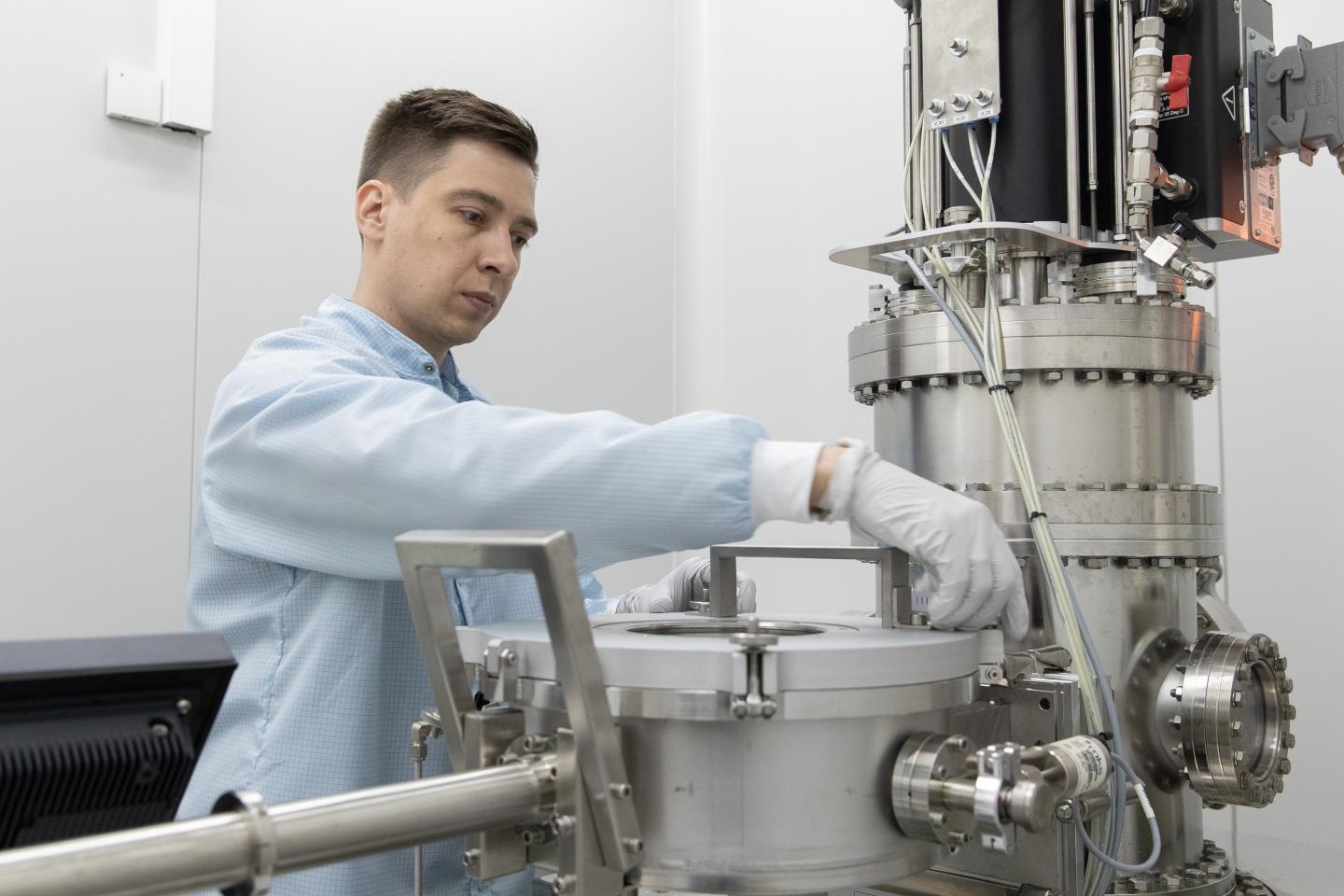
Researchers approached the creation of a solid-state thin-film battery for miniature devices and sensors
IMAGE

Credit: Peter the Great St.Petersburg Polytechnic University

Researchers of Peter the Great St.Petersburg Polytechnic University (SPbPU) approached the creation of a solid-state thin-film battery for miniature devices and sensors. The results of the study were published in the special issue dedicated to improved materials for lithium and sodium-ion batteries (Energies Journal, MDPI Publishing House).

The development of miniature devices such as biosensors, smartwatches, Internet of things (IoT) devices requires the establishment of small and complex power supplies with a high energy density. According to experts, traditional technologies for lithium-ion batteries production reach their limits. It is difficult to reduce the size and control the shape of the power source any further in the required dimensions. Meanwhile, the use of microelectronic technologies, such as, Atomic Layer Deposition, can assist in the production of miniature solid-state lithium-ion batteries with high specific energy.

“We were able to obtain the cathode material, lithium nickelate using the Atomic Layer Deposition method, which allows setting the thickness of the films with high precision”, said Dr. Maxim Maximov of High School of Materials Physics and Technologies, Institute of Mechanical Engineering, Materials and Transport SPbPU.

He mentioned that the researchers demonstrated high specific capacities at increased discharge current. It can improve the performance and efficiency of devices, as well as reduce their size.

According to the scientist, the production of thin-film positive electrodes based on lithium nickelate and lithium mixed oxides with a high nickel content is a huge step to the creation of efficient solid-state batteries, which are safe due to the lack of liquid electrolyte.

###

Media Contact
Raisa Bestugina
[email protected]

Related Journal Article

http://dx.doi.org/10.3390/en13092345

Tags: Chemistry/Physics/Materials SciencesElectromagneticsIndustrial Engineering/ChemistryMaterialsMechanical EngineeringNanotechnology/MicromachinesResearch/Development
Share12Tweet8Share2ShareShareShare2

Related Posts

Immunotherapy Shows Promise Against Hard-to-Treat Ovarian Cancer Subtype

August 18, 2026
Could Autonomous AI Outperform AI-Assisted Physicians in Delivering the Best Medical Care?

Could Autonomous AI Outperform AI-Assisted Physicians in Delivering the Best Medical Care?

August 18, 2026

Quantum Light Engines Could Power a New Generation of Microscopic Machines

August 18, 2026

Cardiac stress marker changes may better predict heart disease in older adults

August 17, 2026
Please login to join discussion

POPULAR NEWS

  • Immunotherapy Shows Promise Against Hard-to-Treat Ovarian Cancer Subtype

    29 shares
    Share 12 Tweet 7
  • Could Autonomous AI Outperform AI-Assisted Physicians in Delivering the Best Medical Care?

    29 shares
    Share 12 Tweet 7
  • Quantum Light Engines Could Power a New Generation of Microscopic Machines

    29 shares
    Share 12 Tweet 7
  • Cardiac stress marker changes may better predict heart disease in older adults

    29 shares
    Share 12 Tweet 7

About

We bring you the latest biotechnology news from best research centers and universities around the world. Check our website.

Follow us

Recent News

Immunotherapy Shows Promise Against Hard-to-Treat Ovarian Cancer Subtype

Could Autonomous AI Outperform AI-Assisted Physicians in Delivering the Best Medical Care?

Quantum Light Engines Could Power a New Generation of Microscopic Machines

Subscribe to Blog via Email

Enter your email address to subscribe to this blog and receive notifications of new posts by email.

Join 85 other subscribers
  • Contact Us

Bioengineer.org © Copyright 2023 All Rights Reserved.

Welcome Back!

Login to your account below

Forgotten Password?

Retrieve your password

Please enter your username or email address to reset your password.

Log In
No Result
View All Result
  • Homepages
    • Home Page 1
    • Home Page 2
  • News
  • National
  • Business
  • Health
  • Lifestyle
  • Science

Bioengineer.org © Copyright 2023 All Rights Reserved.