• HOME
  • NEWS
  • EXPLORE
    • CAREER
      • Companies
      • Jobs
    • EVENTS
    • iGEM
      • News
      • Team
    • PHOTOS
    • VIDEO
    • WIKI
  • BLOG
  • COMMUNITY
    • FACEBOOK
    • INSTAGRAM
    • TWITTER
Monday, May 11, 2026
BIOENGINEER.ORG
No Result
View All Result
  • Login
  • HOME
  • NEWS
  • EXPLORE
    • CAREER
      • Companies
      • Jobs
        • Lecturer
        • PhD Studentship
        • Postdoc
        • Research Assistant
    • EVENTS
    • iGEM
      • News
      • Team
    • PHOTOS
    • VIDEO
    • WIKI
  • BLOG
  • COMMUNITY
    • FACEBOOK
    • INSTAGRAM
    • TWITTER
  • HOME
  • NEWS
  • EXPLORE
    • CAREER
      • Companies
      • Jobs
        • Lecturer
        • PhD Studentship
        • Postdoc
        • Research Assistant
    • EVENTS
    • iGEM
      • News
      • Team
    • PHOTOS
    • VIDEO
    • WIKI
  • BLOG
  • COMMUNITY
    • FACEBOOK
    • INSTAGRAM
    • TWITTER
No Result
View All Result
Bioengineer.org
No Result
View All Result
Home NEWS Science News Chemistry

Russian scientists investigate new materials for Li-ion batteries of miniature sensors

Bioengineer by Bioengineer
May 29, 2019
in Chemistry
Reading Time: 2 mins read
0
IMAGE
Share on FacebookShare on TwitterShare on LinkedinShare on RedditShare on Telegram

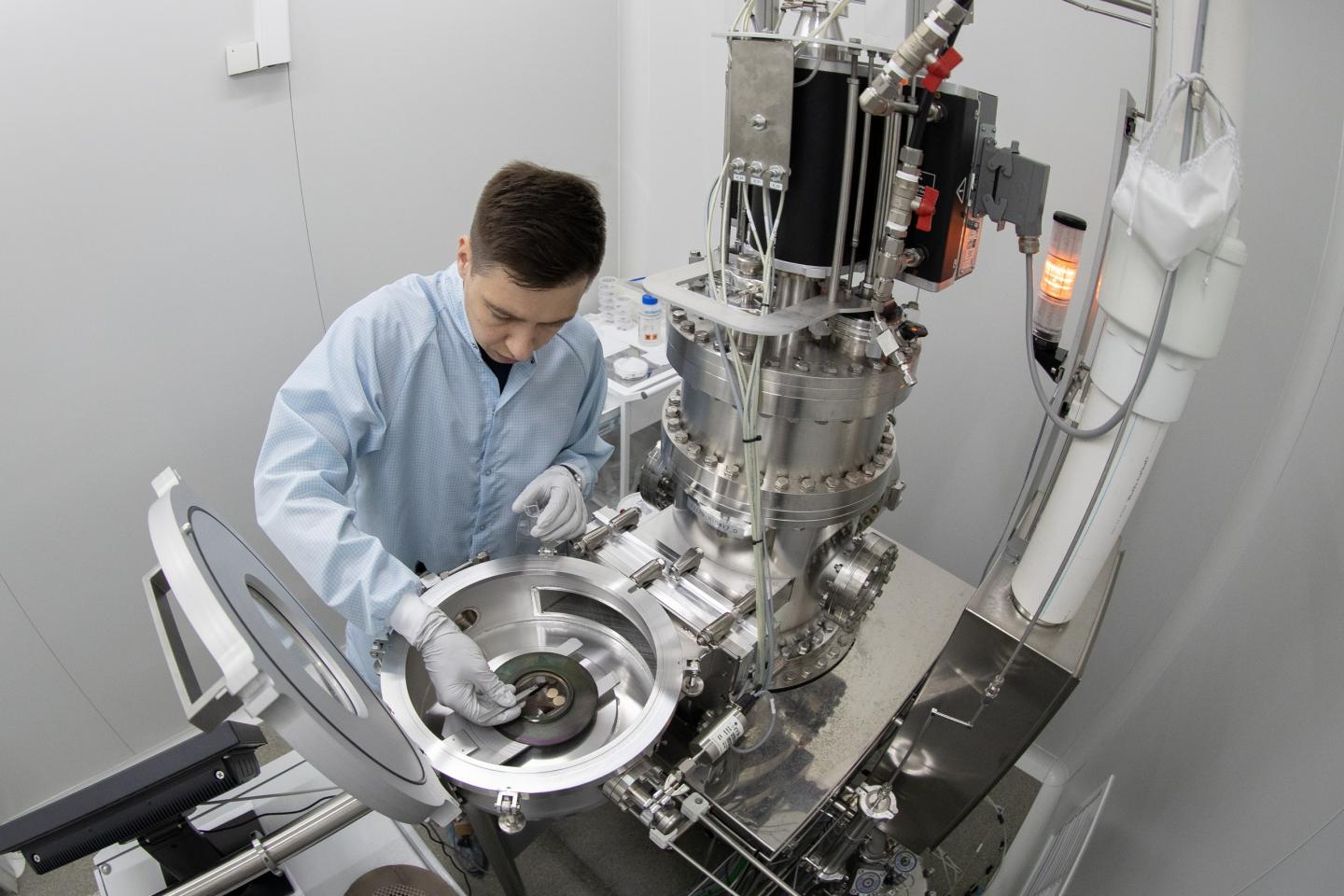
Researchers are developing new materials for solid-state thin-film Li-ion batteries for micro and nanodevices
IMAGE

Credit: Peter the Great St.Petersburg Polytechnic University

Researchers of Peter the Great St.Petersburg Polytechnic University (SPbPU) are developing new materials for solid-state thin-film Li-ion batteries for micro and nanodevices. The first stage of the project was successfully completed at the laboratory “Functional Materials” of the Institute of Metallurgy, Mechanical Engineering, and Transport SPbPU. The project is supported by the Russian Science Foundation (RScF).

Part of the results obtained at the first stage of the project was published in the article “Atomic Layer Deposition of NiO to Produce Active Material for Thin-Film Lithium-Ion Batteries” in the journal Coatings, MDPI.

The authors suggested using a new pair of reagents to obtain the electrode materials based on nickel oxide. Researchers studied the fundamental processes taking place during the charge and discharge processes of thin-film material.

It should be noted that the lithium-ion batteries are used not only in phones and laptops but also in the whole class of micro and nanodevices such as wireless sensors, pacemakers and etc. These devices, usually, operate using thin-film current sources. The smaller the device, the thinner the power source is required. Therefore, the materials should have improved electrochemical characteristics to operate longer without additional charge.

“In the frames of the RScF project, we obtained an electrode material based on nickel oxide by atomic layer deposition (ALD) using new processes. We demonstrated its possible application in Li-ion batteries by studying its electrochemical features. In the future, we are planning to improve the materials of electrodes for thin-film batteries. It will bring us closer to a prototype of a solid-state thin-film Li-ion battery produced by ALD. I suppose that the positive results undoubtedly will be interesting for commercial application”, says Maxim Maximov, leading researcher of the laboratory “Functional Materials” of the Institute of Metallurgy, Mechanical Engineering and Transport SPbPU.

###

Media Contact
Raisa Bestugina
[email protected]

Related Journal Article

http://dx.doi.org/10.3390/coatings9050301

Tags: Chemistry/Physics/Materials SciencesIndustrial Engineering/ChemistryMaterialsMechanical EngineeringNanotechnology/MicromachinesNeurochemistryResearch/Development
Share12Tweet8Share2ShareShareShare2

Related Posts

Miniature Sensor Uses Light to Detect Touch — Chemistry

Miniature Sensor Uses Light to Detect Touch

May 8, 2026
Iron Minerals Determine Whether Dissolved Organic Matter Fuels Microbes or Becomes Long-Term Carbon Storage — Chemistry

Iron Minerals Determine Whether Dissolved Organic Matter Fuels Microbes or Becomes Long-Term Carbon Storage

May 8, 2026

Kate Evans Appointed Associate Lab Director for Biological and Environmental Systems Science at ORNL

May 8, 2026

Advancing Multiscale Modeling and Overcoming Operational Challenges in Autothermal COâ‚‚-to-Methanol Reactors

May 8, 2026
Please login to join discussion

POPULAR NEWS

  • Research Indicates Potential Connection Between Prenatal Medication Exposure and Elevated Autism Risk

    840 shares
    Share 336 Tweet 210
  • New Study Reveals Plants Can Detect the Sound of Rain

    727 shares
    Share 290 Tweet 181
  • Salmonella Haem Blocks Macrophages, Boosts Infection

    61 shares
    Share 24 Tweet 15
  • Breastmilk Balances E. coli and Beneficial Bacteria in Infant Gut Microbiomes

    57 shares
    Share 23 Tweet 14

About

We bring you the latest biotechnology news from best research centers and universities around the world. Check our website.

Follow us

Recent News

New Post-Hoc Analysis Explores Daily Oral Orforglipron Use in Adults Over 65 with Obesity, Regardless of Diabetes Status

Evaluating Digoxin Use in Patients with Symptomatic Rheumatic Heart Disease

Evaluating the Effectiveness and Safety of Digitalis Glycosides in Treating Heart Failure

Subscribe to Blog via Email

Enter your email address to subscribe to this blog and receive notifications of new posts by email.

Join 82 other subscribers
  • Contact Us

Bioengineer.org © Copyright 2023 All Rights Reserved.

Welcome Back!

Login to your account below

Forgotten Password?

Retrieve your password

Please enter your username or email address to reset your password.

Log In
No Result
View All Result
  • Homepages
    • Home Page 1
    • Home Page 2
  • News
  • National
  • Business
  • Health
  • Lifestyle
  • Science

Bioengineer.org © Copyright 2023 All Rights Reserved.