Amino acid nutrition in ruminants is usually judged at the ileum, the final segment of the small intestine, because that is where the true digestibility of protein and amino acids can be assessed. A new open-access study in the journal Amino Acids set out to measure how much methionine and total amino acids actually flow from the rumen to the small intestine when cows are fed low-crude-protein diets supplemented with rumen-protected methionine, using a laboratory rumen simulation system rather than live animals.
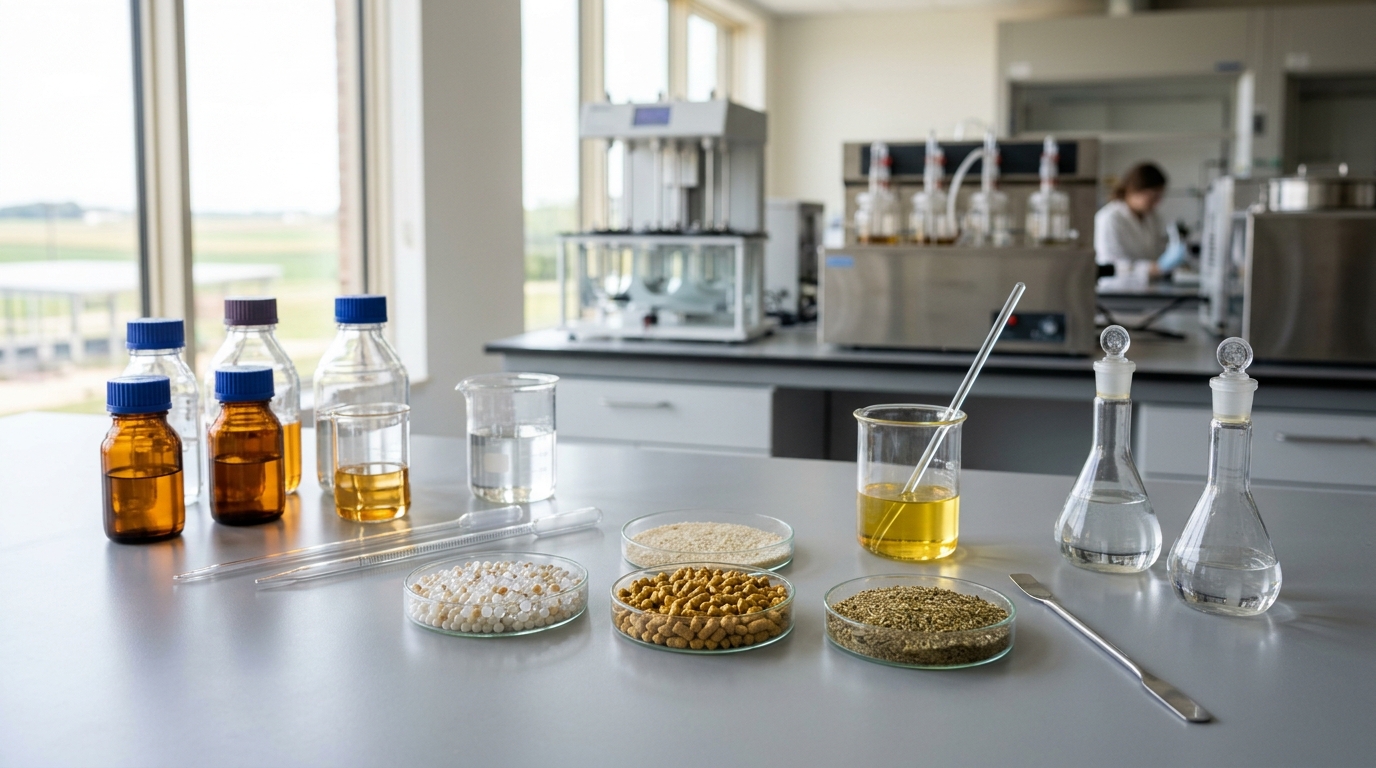
The research, published on 5 August 2026, was conducted with the rumen simulation technique known as Rusitec, paired with in vitro abomasum and ileum digestibility methods. Four diets were compared in a randomized, independent design that was run twice over 15-day incubation periods: a high-protein diet containing 163.39 grams of crude protein per kilogram, a low-protein diet at 146.33 grams per kilogram, and two low-protein diets supplemented with either a low dose (0.11 grams per kilogram) or a high dose (0.81 grams per kilogram) of rumen-protected methionine. Each fermenter in the Rusitec system received 20 grams of the basal diet mixed with the respective treatment.
The central question was practical: can a low-protein diet fortified with protected methionine deliver amino acids to the intestine as effectively as a conventional higher-protein ration? The study tested whether that tool performs as expected under simulated digestive conditions.
The results were nuanced. Methionine flow measured from the Rusitec fermenters and from the abomasum residue was not significantly affected across all dietary groups, with P values above 0.05. In contrast, total amino acid flow was significantly higher in the high-protein group than in the low-protein, low-methionine and high-methionine groups in both the Rusitec and in vitro abomasum measurements, with P values below 0.05.
When the researchers looked at flow into the ileum in the fluid portion, supplementation of rumen-protected methionine with low-crude-protein diets significantly influenced total and methionine amino acid flow from the Rusitec to the ileum. Total amino acid flow in the Rusitec fluid remained significantly higher in the high-protein group than in the other groups. However, at the abomasum and ileum sites, flow was comparable between the high-protein group and the low-protein diet with high rumen-protected methionine, and both were higher than in the remaining groups.
Methionine flow itself stayed unaffected among groups inside the Rusitec fermenters, but it was significantly higher for the high-dose rumen-protected methionine treatment at the abomasum and ileum compared with the other groups.
The authors concluded that a high level of rumen-protected methionine supplementation with a low-protein diet can increase amino acid supply in the intestine at the same rate as the higher-protein diet. According to the paper, this helps ensure that a low-crude-protein diet with rumen-protected methionine provides adequate delivery of amino acids while reducing feed expense and nitrogen losses to the environment.
Those conclusions come with important caveats. The work is entirely in vitro, conducted in fermentation vessels that mimic rumen function rather than in living cattle, so the findings describe simulated digestive dynamics rather than confirmed animal performance. The study was randomized and independent but repeated only twice over 15-day incubation periods, and the diets were tested at specific inclusion rates of crude protein and methionine. Real-world responses in milk yield, body weight and nitrogen balance would require animal trials that this design did not include.
Subject of Research: An in vitro rumen simulation study testing how rumen-protected methionine supplementation of low-protein dairy diets affects methionine and total amino acid flow to the intestine.
Article Title: Estimate ileal flow of methionine and total amino acids; supplemented rumen-protected methionine with low dietary protein diet using different in vitro digestibility techniques
Article References: Raja, I. H., Abbasi, F., & Cao, Y. (2026). Estimate ileal flow of methionine and total amino acids; supplemented rumen-protected methionine with low dietary protein diet using different in vitro digestibility techniques. Amino Acids. https://doi.org/10.1007/s00726-026-03546-w
Image Credits: AI Generated
DOI: 10.1007/s00726-026-03546-w
Keywords: rumen-protected methionine, low-protein diet, amino acid flow, ileal digestibility, Rusitec, dairy cattle nutrition, in vitro digestibility, nitrogen losses, feed costs, abomasum, small intestine, crude protein
News Source: Daisy Hatcher. (November 5, 2026). Rumen-Protected Methionine With Low-Protein Diets Matches Higher-Protein Amino Acid Delivery in Simulated Cow Digestion. Scienmag.