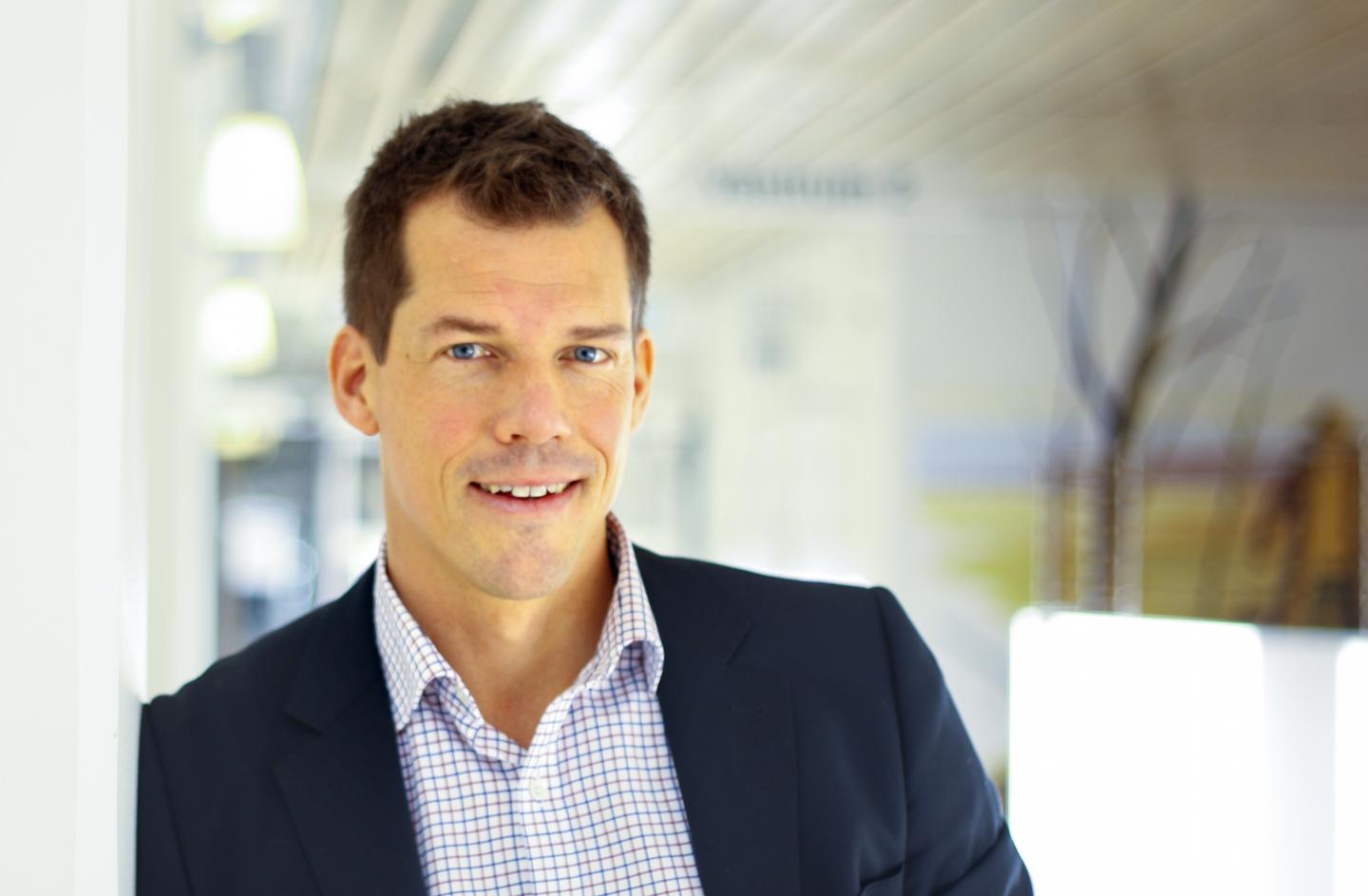
Credit: Photo by Elin Lindstrom
Older people’s risk of recurrent fractures decreases by 18 percent if the care they receive is more structured and preventive, through fracture liaison services. This is shown by a study from the University of Gothenburg, Sweden.
Sweden and the Nordic region in general rank high in international statistics on osteoporotic (fragility) fractures among the over-50s. After the age of 50, the life-time risk of sustaining a fragility fracture is 50% among women and 25% among men. Sweden’s care services in this area are estimated to cost billions of euros annually, and the human suffering is immense.
Following fragility fractures, the usual outcomes are functional impairment and higher morbidity and mortality rates. For up to two years after the first fracture the risk of having another is four to five times, and thereafter twice, as high as in people of the same age who have had no fractures.
Fracture prevention is therefore vital, and at a few hospitals fracture liaison services have been introduced. Examples are Skaraborg Hospital and Sahlgrenska University Hospital, which are both included in the present study from Sahlgrenska Academy at the University of Gothenburg.
The method involves identification, risk evaluation, examination, and treatment of patients straight after the first fracture. To keep track of the process there are “fracture coordinators,” usually working at the specialist clinics that attend to fracture patients or treat osteoporosis, the underlying disease.
The study, published in the Journal of Bone and Mineral Research, is based on data about 21,083 patients from a total of four hospitals in Västra Götaland County in 2012-2017. All patients aged 50 and over with classic osteoporotic (fragility) fractures of the hip, vertebra, upper arm, wrist or pelvis were included.
The researchers’ primary aim was to investigate the proportion of patients who suffered a new fragility fracture after the first. All the patients with a fracture after the introduction of the local fracture liaison service were compared with historical controls.
“It’s very pleasing that fewer patients were affected by new fractures and thereby spared the suffering a fracture involves. Fewer fractures also means savings for the society,” says Kristian Axelsson, the first author of the article, a University of Gothenburg PhD student, and resident physician specializing in orthopedics at Skaraborg Regional Hospital in Skövde. Axelsson is in charge of the fracture liaison service in Skaraborg.
While the risk of a recurrent fracture was 18 percent lower after the introduction of fracture liaison service, the risk of fall injuries was unchanged. According to the researchers, this suggests that the risk reduction can be linked to the increase in prescription of drugs against osteoporosis. Among the oldest old, over 82 years of age, only 16 fracture patients needed to be screened in order to prevent a new fracture in 5 years.
Neither was there any increase in the use of medication, or reduced risk of a new fracture, at those hospitals where no organizational changes were made during the study period. The analyses were adjusted for differences between the groups compared, which did not change the results.
Mattias Lorentzon is the senior author of the study and a professor of geriatrics at the University of Gothenburg, and chief physician at Sahlgrenska University Hospital in charge of the Hospital’s fracture liaison service.
“The results show that simple changes in our care routines have the intended effect, with fewer fractures as a result. It’s now particularly important for the extremely few hospitals that have fracture liaison services to become more numerous, to reduce inequality in care, for the good of the patients,” he says.
###
Title: Association Between Recurrent Fracture Risk and Implementation of Fracture Liaison Services in four Swedish hospitals: A Cohort Study; https:/
Contacts:
Kristian Axelsson, PhD student, University of Gothenburg, +46 708 197 373, [email protected]
Mattias Lorentzon, professor, University of Gothenburg, +46-733 388 185; [email protected]
Media Contact
Kristian Axelsson
[email protected]
46-708-197-373
Original Source
https:/
Related Journal Article
http://dx.