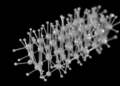
Kyoto, Japan — A new study has identified a rare magnetic transition in which the familiar rules of mean-field theory appear to govern an insulating ferrimagnet. Researchers from Kyoto University, Tohoku University, and the Australian Nuclear Science and Technology Organisation (ANSTO) report that long-range magnetic dipole–dipole interactions control the critical behavior of Eu₂MnSi₂O₇ as it approaches its ferrimagnetic phase transition. The finding provides the first reported evidence that dipolar interactions can drive mean-field criticality in an insulating ferrimagnet, extending an important principle previously established mainly in insulating ferromagnets.
Phase transitions occur when matter reorganizes itself in response to changes in temperature, pressure, magnetic field, or another external condition. Near a transition, a material’s microscopic details can become less important, while collective behavior takes over. This remarkable convergence is described by the idea of universality: physically different systems can exhibit the same mathematical behavior when they share key characteristics, such as spatial dimensionality, spin dimensionality, and the range of interactions between their constituent particles. In magnetic materials, ferromagnets, ferrimagnets, and antiferromagnets can belong to related universality classes when their interactions are predominantly short-ranged. But when interactions extend over much longer distances, the rules governing the transition can change dramatically.
The researchers focused on a question that has remained unresolved in magnetism. Long-range interactions in insulating magnetic crystals can arise from magnetic dipole–dipole coupling, in which each magnetic moment interacts with the magnetic fields produced by many other moments throughout the material. These interactions weaken with distance, but they reach far beyond the nearest-neighbor scale associated with ordinary exchange coupling. Mean-field theory effectively treats a magnetic moment as responding to an average magnetic environment created by the surrounding system. Although dipolar mean-field criticality has been firmly demonstrated in some insulating ferromagnets, comparable evidence has been lacking for ferrimagnets and antiferromagnets.
“Near a phase transition, the microscopically strongest interaction is not always the one that sets the critical rules,” says corresponding author Yusuke Nambu. “Exchange interactions build the ferrimagnetic state, but because dipolar interactions reach much farther, they determine how the material approaches the transition.” This distinction is central to the study. Exchange interactions can establish the arrangement of magnetic moments at low temperatures, while long-range dipolar forces may determine the way the order disappears as the material is heated toward its critical temperature.
Eu₂MnSi₂O₇ offered the team an unusually clean experimental platform. The compound has a melilite-type crystal structure and contains two magnetic sublattices formed by Eu²⁺ and Mn²⁺ ions. In a ferrimagnet, these sublattices are oriented primarily in opposite directions, as in an antiferromagnet, but their magnetic moments are unequal, leaving a net magnetization. In Eu₂MnSi₂O₇, both ions carry large, spin-only magnetic moments, reducing complications associated with orbital contributions and strong single-ion anisotropies. The material therefore makes it possible to examine how the spatial range of magnetic interactions affects critical behavior without the interpretation being dominated by more complex electronic effects.
To investigate the compound, the researchers synthesized polycrystalline samples and combined several complementary techniques. Magnetization measurements tracked how the material responded to temperature and applied magnetic fields, while neutron powder diffraction at ANSTO’s Echidna and Wombat instruments revealed the arrangement of magnetic moments inside the crystal. Neutrons are particularly valuable for this purpose because their magnetic moments interact directly with the magnetic structure of a sample, allowing researchers to distinguish magnetic ordering from the positions of the atoms themselves. Using both bulk magnetic measurements and microscopic structural data enabled the team to test whether the observed critical behavior was consistent across independent experimental approaches.
A central part of the analysis involved determining critical exponents, quantities that describe how physical properties change close to a continuous phase transition. The exponent β characterizes the growth or disappearance of the spontaneous magnetization, γ describes the divergence of magnetic susceptibility, and δ captures how magnetization depends on an applied magnetic field at the transition. These exponents are not arbitrary fitting parameters; together, they identify the mathematical universality class of the transition. The team extracted them using neutron diffraction, Kouvel–Fisher analysis, and measurements of the field dependence of magnetization. The resulting values were close to mean-field predictions, while an independent analysis of a temperature-dependent magnetic neutron reflection supported the same conclusion.
The neutron data also revealed the detailed magnetic structure below the transition. Eu²⁺ and Mn²⁺ moments order simultaneously in a tilted ferrimagnetic arrangement. Their moments are nearly antiparallel but slightly canted, meaning that the two magnetic directions deviate by a small angle from perfect opposition. This canting is consistent with the absence of inversion symmetry in the crystal structure, which permits interactions that can favor a noncollinear arrangement. Despite this internal complexity, the critical exponents remain close to the mean-field values expected when long-range dipolar interactions dominate. The result suggests that the behavior near the transition is governed less by the precise microscopic orientation of every moment than by the extended reach of the magnetic coupling.
The study’s implications extend beyond a single compound. It demonstrates that mean-field criticality can emerge in an insulating ferrimagnet even though ferrimagnets combine a net magnetization with antiferromagnetic-like correlations between sublattices. This places ferrimagnets in a significant position between ferromagnets and antiferromagnets when scientists seek to understand how long-range forces shape collective behavior. The findings also provide a framework for identifying similar physics in other insulating magnets, particularly materials containing large localized moments and relatively weak electronic conductivity. Because insulating magnets avoid the itinerant-electron effects present in metals, they can serve as controlled laboratories for testing fundamental theories of phase transitions.
“Ferrimagnets combine a net magnetization with internal antiferromagnetic correlations,” Nambu adds. “Our research closes an important gap between ferromagnets and the still-unresolved antiferromagnetic case.” That gap matters both theoretically and technologically. Understanding the critical behavior of ferrimagnets could improve the design of magnetic materials whose properties change sharply near a controllable temperature or field. Such systems may eventually contribute to spintronic devices, magnetic sensors, data-storage concepts, and other technologies that use spin rather than electrical charge alone. For now, Eu₂MnSi₂O₇ offers a powerful example of how interactions that are individually weaker than exchange coupling can nevertheless dictate the collective laws of a material at the precise moment when its magnetic order begins to vanish.
Subject of Research: Long-range magnetic dipole interactions and mean-field criticality in the insulating ferrimagnet Eu₂MnSi₂O₇.
Article Title: “Dipolar-Driven Mean-Field Criticality in the Ferrimagnet Eu₂MnSi₂O₇”
News Publication Date: 12 August 2026
Web References: https://doi.org/10.1103/5ftk-7qyg
References: Physical Review Letters article, DOI: 10.1103/5ftk-7qyg
Image Credits: Kyoto University / Yusuke Nambu
Keywords
Ferrimagnetism, magnetic phase transitions, mean-field theory, dipole–dipole interactions, neutron powder diffraction, critical exponents, Eu₂MnSi₂O₇, magnetic materials, condensed matter physics, spintronics