Adult mammalian Müller glia cells co-cultured with primary retinal pigment epithelium cells exposed to a selective alpha-7 nicotinic acetylcholine receptor agonist demonstrated significant increases in cellular proliferation, progenitor-like characteristics, and neuronal marker expression without direct genetic manipulation. The investigation, conducted using primary cell cultures derived from adult mice, revealed that pharmacological stimulation of non-neuronal retinal pigment epithelium cells initiates an intercellular communication cascade that prompts quiescent Müller glia to enter the cell cycle and adopt neurogenic features. By tracking both phenotypic transformations and early transcriptomic alterations across defined time points, the researchers identified an evolving gene regulatory program that shifts glial cells from their mature homeostatic state toward developmental and neurogenic trajectories, offering new mechanistic insights into latent regenerative capacities within the mammalian central nervous system.
In the mature mammalian retina, Müller glia serve vital architectural and metabolic functions that preserve the structural integrity and survival of neighboring retinal neurons. However, unlike certain non-mammalian vertebrates such as teleost fish and amphibians, which naturally regenerate damaged retinal neurons through Müller glia proliferation and asymmetric division into multipotent progenitor cells, adult mammals exhibit a restrictive response to retinal trauma. Injury in mammalian retinal tissue typically provokes reactive gliosis and glial scar formation, an outcome that prevents endogenous neuronal repair and exacerbates irreversible vision loss in degenerative pathologies like age-related macular degeneration and glaucoma. Although evolutionary studies demonstrate that developmental pathways such as Sonic hedgehog and canonical Wnt signaling remain conserved in mammalian ocular tissues, they normally fail to activate sufficiently after injury to drive functional neurogenesis, prompting extensive experimental efforts to artificially reprogram mammalian glia.
Previous investigations indicated that topical administration of PNU-282987, a potent and selective agonist of the alpha-7 nicotinic acetylcholine receptor, stimulated cellular proliferation and neurogenic markers in the retinas of adult rodents. Those prior studies suggested that the non-neuronal retinal pigment epithelium, which directly abuts the apical processes of Müller glia within the subretinal space, might serve as the primary sensory intermediary responding to the agonist. That hypothesis gained support when conditioned media obtained from agonist-treated retinal pigment epithelium cultures elicited proliferative responses following intravitreal injection, an effect that was markedly suppressed when the epithelial cells were pretreated with the specific receptor antagonist methyllycaconitine. Nevertheless, because earlier mechanistic work relied heavily on immortalized cell lines or complex intact ocular environments, the precise cellular dynamics and immediate transcriptomic changes occurring within primary adult glia remained underexplored.
To evaluate these cellular interactions in an isolated environment, the researchers established primary cell cultures of both retinal pigment epithelium and Müller glia from adult wild-type 129/SvJ mice aged three to four months. Retinal tissues were enucleated under sterile protocols, enzymatically dissociated with activated papain and deoxyribonuclease I, and plated on laminin-coated substrates, utilizing serum-free medium initially to deplete native retinal neurons. In parallel, retinal pigment epithelial cells were dissociated using hyaluronidase and trypsin before expansion on laminin coatings. Both cell types were passaged four times to generate highly enriched, validated cultures. Crucially, metabolic activity assays measuring mitochondrial reduction demonstrated that treating primary glia across passages zero through four with one hundred nanomolar PNU-282987 for forty-eight hours induced no significant alteration in cell viability compared to vehicle-treated controls, establishing a reliable baseline for experimental manipulation.
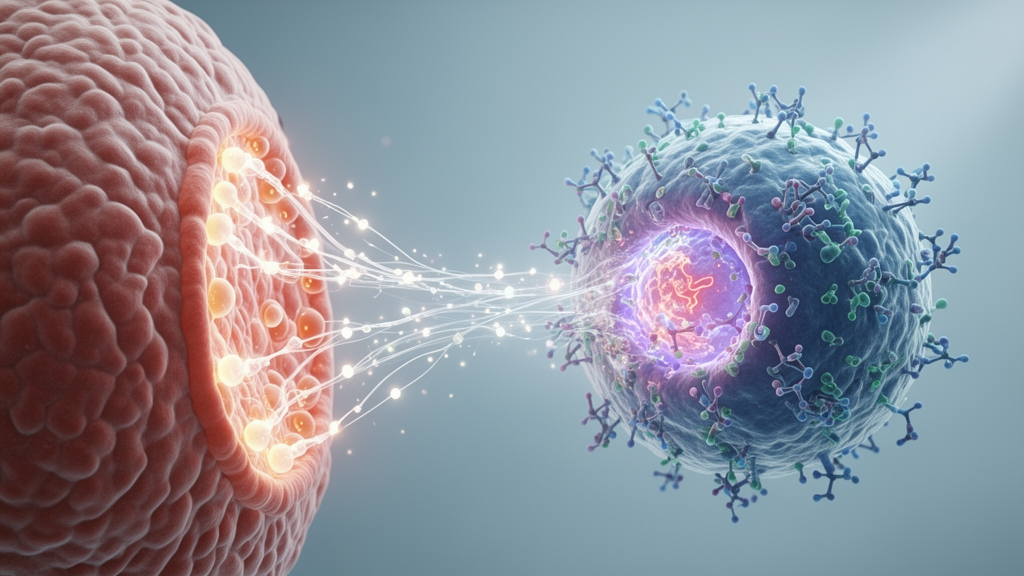
The experimental architecture centered on a physical transwell co-culture system designed to isolate paracrine signaling events between the two distinct retinal cell populations. Primary retinal pigment epithelial cells were seeded onto permeable membrane inserts with three-micrometer pore sizes and incubated for twenty-four hours in medium containing either zero point one percent dimethyl sulfoxide as a control or one hundred nanomolar PNU-282987 dissolved in the vehicle. After the treatment interval, the epithelial monolayers were washed thoroughly with phosphate-buffered saline lacking calcium and magnesium to eliminate residual drug before being positioned directly above adherent primary Müller glia plated on laminin-coated dishes. This physical separation ensured that the cell types shared culture media and permitted soluble factors released by the treated epithelium to diffuse onto the glia without enabling direct membrane-to-membrane contact.
Immunocytochemical evaluations using Ki67, an established nuclear marker of active cell-cycle progression, confirmed that exposure to stimulated epithelial cells induced a time-dependent proliferative surge in adult Müller glia. A two-way analysis of variance across twelve, twenty-four, and forty-eight hours of co-culture identified significant main effects of both time and treatment, along with a statistically significant interaction between the two variables. Quantitative post hoc analyses demonstrated that total cell counts, quantified via Hoechst nuclear counterstaining, were significantly elevated at forty-eight hours, exhibiting a mean increase of forty-eight point four cells per field compared with control preparations. Concurrently, the absolute number of Ki67-positive glia increased significantly by twenty-three point nine cells per field at forty-eight hours, and the overall proportion of proliferating glia expanded from twelve point six-six percent at twenty-four hours to twenty-six point two-five percent at forty-eight hours.
Beyond general cell-cycle re-entry, the researchers evaluated whether the proliferating glia acquired the molecular signature of multipotent retinal progenitor cells by examining the transcription factor Pax6. Under normal physiological conditions, Pax6 expression is required during embryonic ocular development to maintain retinal progenitor competence, though it is also retained by select mature neuronal subsets including ganglion and amacrine cells. After forty-eight hours of transwell co-culture with agonist-treated epithelial cells, immunocytochemical analysis revealed a statistically significant increase of eight point four-three Pax6-positive cells per microscopic field compared to control conditions. Furthermore, the proportion of glial nuclei expressing Pax6 rose by thirty-three point two percent relative to controls, indicating that soluble signals emanating from stimulated epithelial cells promoted the acquisition of an immature, progenitor-like phenotypic state within primary mammalian glia.
To establish whether this progenitor state progressed toward neuronal lineage specification, the investigators stained co-cultured glial monolayers for class three beta-tubulin, commonly known as TuJ1, a cytoskeletal marker characteristic of early neurogenesis. Following forty-eight hours of co-culture beneath agonist-stimulated retinal pigment epithelium, primary glia demonstrated a statistically significant emergence of TuJ1-positive cells, displaying an increase of eight point four cells per field over vehicle-treated controls. Expressed as a fraction of total Hoechst-stained cells, TuJ1 positivity increased by twelve point one-eight percent in the stimulated condition. Importantly, control glial cultures co-cultured with vehicle-treated epithelium exhibited no detectable TuJ1 immunoreactivity under identical imaging thresholds, verifying that the observed neurogenic transformation was not an artifact of culture conditions or physical manipulation but a specific consequence of epithelial stimulation.
To map the upstream molecular cascades that preceded these cellular transformations, the researchers conducted bulk RNA sequencing on primary glia following two and six hours of co-culture, well before the phenotypic emergence of proliferation at twelve hours. High-throughput sequencing yielded read alignment rates between ninety-four point three-six and ninety-five point five-nine percent against the mouse reference genome. At the two-hour mark, differential expression profiling identified three hundred and fifteen significantly altered genes, comprising one hundred and twenty-one upregulated and one hundred and ninety-four downregulated transcripts. Gene ontology enrichment analysis revealed that these immediate transcriptional shifts were strongly concentrated in biological processes governing neural crest cell development, cell fate commitment, positive regulation of cell proliferation, and multicellular organism development, highlighting an early activation of developmental regulatory programs.
At the individual transcript level, the two-hour RNA sequencing data revealed dramatic upregulations of pivotal developmental morphogens and transcriptional regulators. The Sonic hedgehog ligand gene Shh emerged as the most strongly induced transcript, exhibiting a log2 fold change of ten point three-three, while the critical homeobox transcription factor Six3 showed the highest statistical significance with a log2 fold change of eight point six-seven. Other robustly elevated developmental transcripts included Pax6, Hmx1, St8sia2, and the canonical Wnt pathway ligand Wnt7b, which displayed a log2 fold change of six point four-nine. Additionally, the pluripotency and stem cell maintenance factor Sox2 was strongly elevated with a log2 fold change of eight point zero-five at two hours, demonstrating that primary glia initiate extensive developmental and progenitor-associated transcriptional programming within hours of receiving paracrine epithelial cues.
By six hours of co-culture, the transcriptional landscape in Müller glia evolved substantially, encompassing six hundred and fifty-three significantly differentially expressed genes, with five hundred and two transcripts upregulated and one hundred and fifty-one downregulated. Gene ontology enrichment categories shifted markedly toward neural differentiation, axon guidance, and nervous system maturation. Sox2 expression remained elevated with a log2 fold change of ten point seven-nine, while transcripts associated with neuronal lineages, such as Tnc and Uchl1, showed significant induction. Simultaneously, the mature glial identity marker S100b was significantly downregulated with a log2 fold change of minus one point six-six. Key expression changes were independently confirmed using reverse transcription quantitative real-time polymerase chain reaction, which verified consistent directional shifts across target transcripts normalized to the housekeeping gene Ppia.
These transcriptomic analyses demonstrated that the observed cellular reprogramming occurred independently of classical proneural factors such as Ascl1 or canonical Ctnnb1 modulation, pointing toward alternative regulatory networks driven by early Sonic hedgehog and Wnt signaling components. However, the authors noted several key limitations inherent to the experimental model. The study was conducted entirely in vitro using cultured cells, lacking the complex architectural constraints, synaptic connections, and immune interactions present in the living retina. Furthermore, while the data demonstrate a clear temporal association between transcriptional activation and glial plasticity, they do not establish direct functional causality for individual factors such as Sonic hedgehog. The identity of the specific soluble signaling molecules released by the stimulated epithelium also remains unidentified, establishing the objective for ongoing multiomic investigations aimed at clarifying mammalian retinal repair mechanisms.
Subject of Research: Retinal Müller glia reprogramming and proliferation via retinal pigment epithelium signaling
Article Title: α7 nicotinic acetylcholine receptor activation in retinal pigment epithelium promotes Müller glia proliferation and progenitor-like states
Article References: Hedblad, H. K., Webster, S. E., Nolasco de Carvalho, G. V., Webster, M. K., Spitsbergen, J. B., Linn, D. M., & Linn, C. L. (2026). α7 nicotinic acetylcholine receptor activation in retinal pigment epithelium promotes Müller glia proliferation and progenitor-like states. Frontiers in Molecular Neuroscience, 19, 1953543. https://doi.org/10.3389/fnmol.2026.1953543
Image Credits: AI Generated
DOI: 10.3389/fnmol.2026.1953543
Keywords: Müller glia, retinal pigment epithelium, PNU-282987, alpha-7 nicotinic receptor, retinal regeneration, cell proliferation, progenitor cells, Pax6, TuJ1, Ki67, RNA sequencing, Sonic hedgehog, Wnt signaling, Sox2, retinal plasticity, primary cell culture, in vitro co-culture, molecular neuroscience
News Source: Drew Townsend. (November 19, 2026). Retinal Pigment Epithelial Receptor Activation Stimulates Mouse Müller Glia Reprogramming. Scienmag.