

• HOME
  • NEWS
  • EXPLORE
    • CAREER
      • Companies
      • Jobs
    • EVENTS
    • iGEM
      • News
      • Team
    • PHOTOS
    • VIDEO
    • WIKI
  • BLOG
  • COMMUNITY
    • FACEBOOK
    • INSTAGRAM
    • TWITTER
Wednesday, April 22, 2026
BIOENGINEER.ORG
No Result
View All Result
  • Login
  • HOME
  • NEWS
  • EXPLORE
    • CAREER
      • Companies
      • Jobs
        • Lecturer
        • PhD Studentship
        • Postdoc
        • Research Assistant
    • EVENTS
    • iGEM
      • News
      • Team
    • PHOTOS
    • VIDEO
    • WIKI
  • BLOG
  • COMMUNITY
    • FACEBOOK
    • INSTAGRAM
    • TWITTER
  • HOME
  • NEWS
  • EXPLORE
    • CAREER
      • Companies
      • Jobs
        • Lecturer
        • PhD Studentship
        • Postdoc
        • Research Assistant
    • EVENTS
    • iGEM
      • News
      • Team
    • PHOTOS
    • VIDEO
    • WIKI
  • BLOG
  • COMMUNITY
    • FACEBOOK
    • INSTAGRAM
    • TWITTER
No Result
View All Result
Bioengineer.org
No Result
View All Result
Home NEWS Science News Biology

Responses of waterbirds to climate change is linked to their preferred wintering habitats

Bioengineer by Bioengineer
November 20, 2018
in Biology
Reading Time: 2 mins read
0
Share on FacebookShare on TwitterShare on LinkedinShare on RedditShare on Telegram
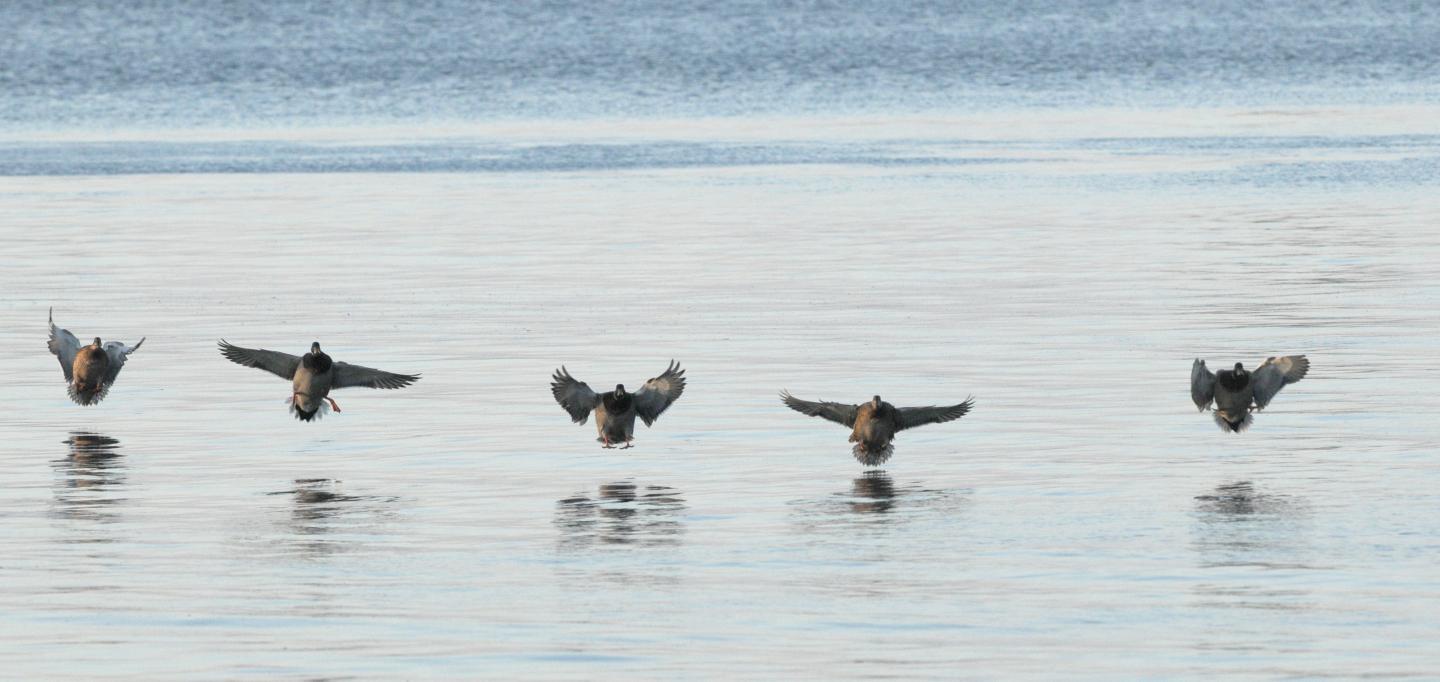
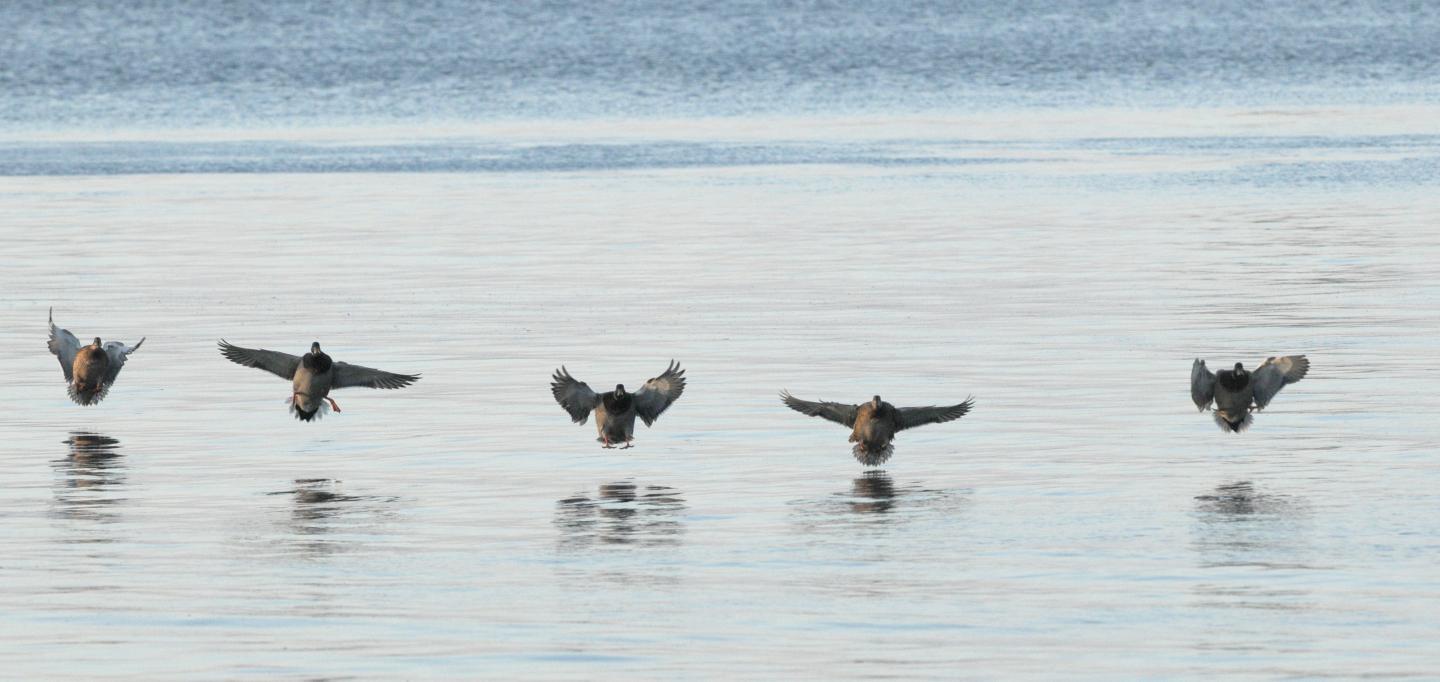
IMAGE

Credit: Aleksi Lehikoinen

A new scientific article shows that 25 European waterbird species can change their wintering areas depending on winter weather. Warm winters allow them to shift their wintering areas northeastwards, whereas cold spells push birds southwestwards. Species wintering in deep waters show the fastest long-term change: their abundances have shifted annually about 5 km northeastwards in the past 24 years.

A recent collaborative study between 21 European countries provides new insights into how waterbirds respond to the changes in winter weather conditions at large scale. The study shows that waterbirds respond to both year-to-year and long-term changes in winter weather conditions, which is evident by the changes in local abundances during winter.

– Our study highlights that not all waterbirds respond equally to changes in weather conditions. Species preferring shallow and deep water are responding fastest to annual variation in temperature, whereas farmland species like geese, show weak responses, says Diego Pavón-Jordán from the Helsinki Lab of Ornithology at Finnish Museum of Natural History and leading author of this study.

In addition to the year-to-year variation, the study also shows that there is a long-term shift of the centre of the wintering population of species preferring deep waters, which has been progressively moving northeastwards during the 1990s and 2000s. The centre of the wintering population of species preferring shallow waters moved northeastwards during the 1990s and early 2000s but southwestwards after mid-2000s, coinciding with several consecutive harsh winters in Europe.

– According to the latest IPCC report released in October 2018 winters will become milder in the near future, which will definitely affect abundances of waterbirds across Europe. There will likely be to local extinctions in some wetlands at the southern edge of the distribution of many species, and colonisations of new wetlands in the northern edge of the distribution, says Aleksi Lehikoinen head of the Helsinki Lab of Ornithology at the Finnish Museum of Natural History.

Increased variability in winter weather conditions reported by the IPCC can also cause large year-to-year fluctuations in abundances, pushing and pulling individuals north and south along the migration flyway. All these changes in distribution areas and abundances of waterbirds create challenges to protect and monitor species. For instance species may not winter any more inside certain protected areas since climatic conditions may have become unfavourable in the region.

###

This study was carried out thanks to the collaboration between research centres and NGOs across Europe and the enormous effort of Wetlands International coordinating the citizen-science-based International Waterbird Census (IWC) worldwide. Findings are published in the scientific journal Diversity and Distributions.

Media Contact

Aleksi Lehikoinen
[email protected]
358-451-375-732
@helsinkiuni

http://www.helsinki.fi/university/

Original Source

https://www.helsinki.fi/en/news/sustainability-news/responses-of-waterbirds-to-climate-change-is-linked-to-their-preferred-wintering-habitats-in-europe http://dx.doi.org/10.1111/ddi.12855


Share12Tweet8Share2ShareShareShare2

Related Posts

Bird Behavior: Demographics Shape Promiscuity and Parenting, Not Vice Versa

Bird Behavior: Demographics Shape Promiscuity and Parenting, Not Vice Versa

April 22, 2026
New research uncovers vulnerabilities in tick-borne diseases, paving the way for innovative treatments

New research uncovers vulnerabilities in tick-borne diseases, paving the way for innovative treatments

April 22, 2026

UCT Researchers Identify Molecular “Switch” Driving Cancer Progression

April 22, 2026

Decoding the Genetic Origins of Indigenous Peoples

April 22, 2026
Please login to join discussion

POPULAR NEWS

  • Research Indicates Potential Connection Between Prenatal Medication Exposure and Elevated Autism Risk

    800 shares
    Share 320 Tweet 200
  • Scientists Investigate Possible Connection Between COVID-19 and Increased Lung Cancer Risk

    65 shares
    Share 26 Tweet 16
  • Salmonella Haem Blocks Macrophages, Boosts Infection

    59 shares
    Share 24 Tweet 15
  • NSF funds machine-learning research at UNO and UNL to study energy requirements of walking in older adults

    101 shares
    Share 40 Tweet 25

About

We bring you the latest biotechnology news from best research centers and universities around the world. Check our website.

Follow us

Recent News

Liquid-Phase Mitochondria Transplants Heal Heart Injury

BU Scientists Create Innovative Tool to Explore Interactions Among Brain Cell Types

Genetic and Somatic Trade-Offs Drive Aging

Subscribe to Blog via Email

Enter your email address to subscribe to this blog and receive notifications of new posts by email.

Join 81 other subscribers
  • Contact Us

Bioengineer.org © Copyright 2023 All Rights Reserved.

Welcome Back!

Login to your account below

Forgotten Password?

Retrieve your password

Please enter your username or email address to reset your password.

Log In
No Result
View All Result
  • Homepages
    • Home Page 1
    • Home Page 2
  • News
  • National
  • Business
  • Health
  • Lifestyle
  • Science

Bioengineer.org © Copyright 2023 All Rights Reserved.
