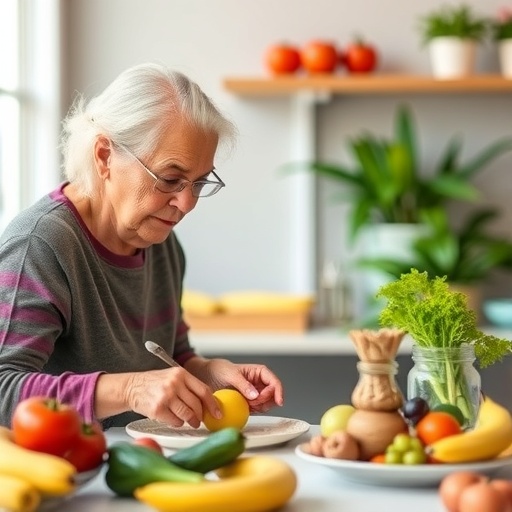
In a groundbreaking new study published in BMC Geriatrics, researchers have unveiled compelling links between nutrition literacy, dietary diversity, and frailty among older adults in China, an insight that could reshape public health strategies targeting aging populations globally. This extensive investigation, led by Tian, Duan, Sun, and colleagues, dives deep into the complex interplay between knowledge about nutrition and its practical application, revealing how these factors critically influence the well-being and independence of elderly individuals.
The demographic shift towards a rapidly aging global population has intensified the focus on frailty—a multifaceted syndrome marked by diminished strength, endurance, and physiological function, increasing vulnerability to adverse health outcomes. Frailty significantly reduces the quality of life and increases the burden on healthcare systems, making its prevention an urgent priority. Yet, the mechanisms underlying frailty remain incompletely understood, with a growing appreciation for the role of diet and nutritional literacy emerging as a pivotal frontier of study.
Nutrition literacy refers to an individual’s ability to obtain, process, and understand basic nutrition information needed to make appropriate dietary decisions. This study operationalizes nutrition literacy as a measurable construct, influencing how well older adults interpret nutritional labels, grasp the consequences of macro- and micronutrient intake, and translate this insight into practice. It suggests that knowledge alone does not suffice; instead, the actionable comprehension and decision-making skills embedded in nutrition literacy directly affect dietary behaviors and subsequent health outcomes.
Dietary diversity—the variety of foods consumed across and within food groups—is another critical dimension examined by the researchers. Dietary diversity has been shown to correlate positively with nutrient adequacy and overall diet quality, factors that play a fundamental role in muscle maintenance, inflammation reduction, and resilience against chronic diseases commonly afflicting aged populations. The study’s findings underscore that older adults with higher dietary diversity tend to exhibit lower frailty scores, indicating more robust health and better physical functioning.
The research team utilized a comprehensive cohort of elderly participants from diverse regions in China, employing validated questionnaires to assess nutrition literacy levels alongside detailed dietary recall methods to capture dietary patterns. Frailty was quantified using internationally recognized scales capturing physical, psychological, and social components, permitting a nuanced assessment beyond simplistic definitions. This multilayered methodology enabled a granular analysis highlighting subtle but significant patterns that might otherwise remain obscured.
A striking revelation from the study is that nutrition literacy significantly mediates the relationship between socioeconomic status and frailty. Individuals with higher education and income levels demonstrated superior nutrition literacy, which in turn fostered more diverse and nutrient-rich diets. This finding elucidates a pathway through which health disparities arise and persist, emphasizing the need for targeted interventions tailored to vulnerable subpopulations lacking access to nutritional education or resources.
Moreover, the interplay between nutrition literacy and dietary diversity was found to dynamically influence chronic inflammation markers, muscle strength, and cognitive function—key determinants of frailty progression. The authors propose that enhancing nutrition literacy among older adults could serve as a preventative strategy to delay or mitigate frailty’s onset, potentially reducing morbidity and mortality rates. This vision calls for multifaceted public health initiatives that go beyond simple dietary recommendations to encompass education, skills training, and culturally sensitive communication.
The implications of this study resonate beyond China’s borders, offering valuable lessons for aging societies worldwide grappling with similar challenges. The researchers advocate for integrating nutrition literacy programs into community health services, creating accessible educational platforms that empower older adults to make informed dietary choices. Such interventions could help combat the global rise in frailty, which increasingly threatens healthcare sustainability and demands proactive solutions.
In crafting policies designed to enrich dietary diversity among elders, the study highlights the importance of recognizing local food availability, culinary traditions, and social contexts. It cautions against one-size-fits-all approaches, urging stakeholders to consider how regional diets and cultural preferences influence food choices, nutrition literacy acquisition, and ultimately health outcomes. By adopting a culturally tailored framework, health practitioners can foster meaningful improvement in the elderly’s nutritional status.
This research further sparks a call to innovate in technological applications supporting nutrition literacy. Digital tools, mobile applications, and e-learning modules offer promising avenues to reach older adults, especially those living in remote or underserved areas. The study’s insights invite interdisciplinary collaboration among nutritionists, gerontologists, data scientists, and policymakers to co-develop scalable, user-friendly solutions that promote dietary diversity and literacy simultaneously.
Additionally, the study reveals that social support networks—including family, friends, and community groups—play a crucial role in reinforcing nutrition literacy and facilitating access to a diverse diet. Engaging these networks in educational efforts can amplify the reach and effectiveness of interventions, creating a supportive environment conducive to behavioral change and sustained health benefits. This social dimension adds an important layer to understanding frailty’s complexity.
The authors recommend longitudinal research to track nutrition literacy and dietary diversity changes over time and their causal impact on frailty development. Such studies would inform the timing and intensity of interventions, helping to optimize resource allocation and maximize health gains. This future direction aligns with precision medicine’s goals, tailoring preventative care to individuals’ evolving needs and vulnerabilities.
Crucially, this study delineates that combatting frailty extends beyond mere nutrient supplementation or clinical treatment; it requires empowering individuals through knowledge and practical skills that translate into healthy eating habits. This empowerment mindset places older adults at the center of their health journey, fostering autonomy and enhancing quality of life—a message that resonates deeply with contemporary public health philosophies focused on patient-centric care.
In sum, Tian and colleagues’ research marks a significant advancement in geriatric nutritional science, illuminating how nutrition literacy intertwined with dietary diversity underpins frailty outcomes among China’s elderly population. Their findings invite a paradigm shift in how health authorities and practitioners address aging challenges, emphasizing education, cultural sensitivity, and innovation. As the global population ages, these insights hold promise to transform aging experiences, mitigating frailty’s impact and enabling older adults to thrive with vitality and dignity.
Subject of Research: Nutrition literacy, dietary diversity, and their impact on frailty among older adults in China.
Article Title: Nutrition literacy, dietary diversity, and frailty among older adults in China.
Article References:
Tian, X., Duan, Y., Sun, Y. et al. Nutrition literacy, dietary diversity, and frailty among older adults in China. BMC Geriatr (2026). https://doi.org/10.1186/s12877-026-07726-x
Image Credits: AI Generated
Tags: aging and dietary decision makingdiet quality and agingdietary diversity and frailtyelderly nutrition knowledge impactfrailty prevention strategiesglobal aging nutrition studiesmacronutrients and frailty riskmicronutrients in elderly healthnutrition education for older adultsnutrition label comprehension seniorsnutrition literacy in elderlypublic health aging populations