• HOME
  • NEWS
  • EXPLORE
    • CAREER
      • Companies
      • Jobs
    • EVENTS
    • iGEM
      • News
      • Team
    • PHOTOS
    • VIDEO
    • WIKI
  • BLOG
  • COMMUNITY
    • FACEBOOK
    • INSTAGRAM
    • TWITTER
Friday, August 14, 2026
BIOENGINEER.ORG
No Result
View All Result
  • Login
  • HOME
  • NEWS
  • EXPLORE
    • CAREER
      • Companies
      • Jobs
        • Lecturer
        • PhD Studentship
        • Postdoc
        • Research Assistant
    • EVENTS
    • iGEM
      • News
      • Team
    • PHOTOS
    • VIDEO
    • WIKI
  • BLOG
  • COMMUNITY
    • FACEBOOK
    • INSTAGRAM
    • TWITTER
  • HOME
  • NEWS
  • EXPLORE
    • CAREER
      • Companies
      • Jobs
        • Lecturer
        • PhD Studentship
        • Postdoc
        • Research Assistant
    • EVENTS
    • iGEM
      • News
      • Team
    • PHOTOS
    • VIDEO
    • WIKI
  • BLOG
  • COMMUNITY
    • FACEBOOK
    • INSTAGRAM
    • TWITTER
No Result
View All Result
Bioengineer.org
No Result
View All Result
Home NEWS Science News Biology

Researchers track down new biocatalysts

Bioengineer by Bioengineer
February 5, 2019
in Biology
Reading Time: 3 mins read
0
IMAGE
Share on FacebookShare on TwitterShare on LinkedinShare on RedditShare on Telegram

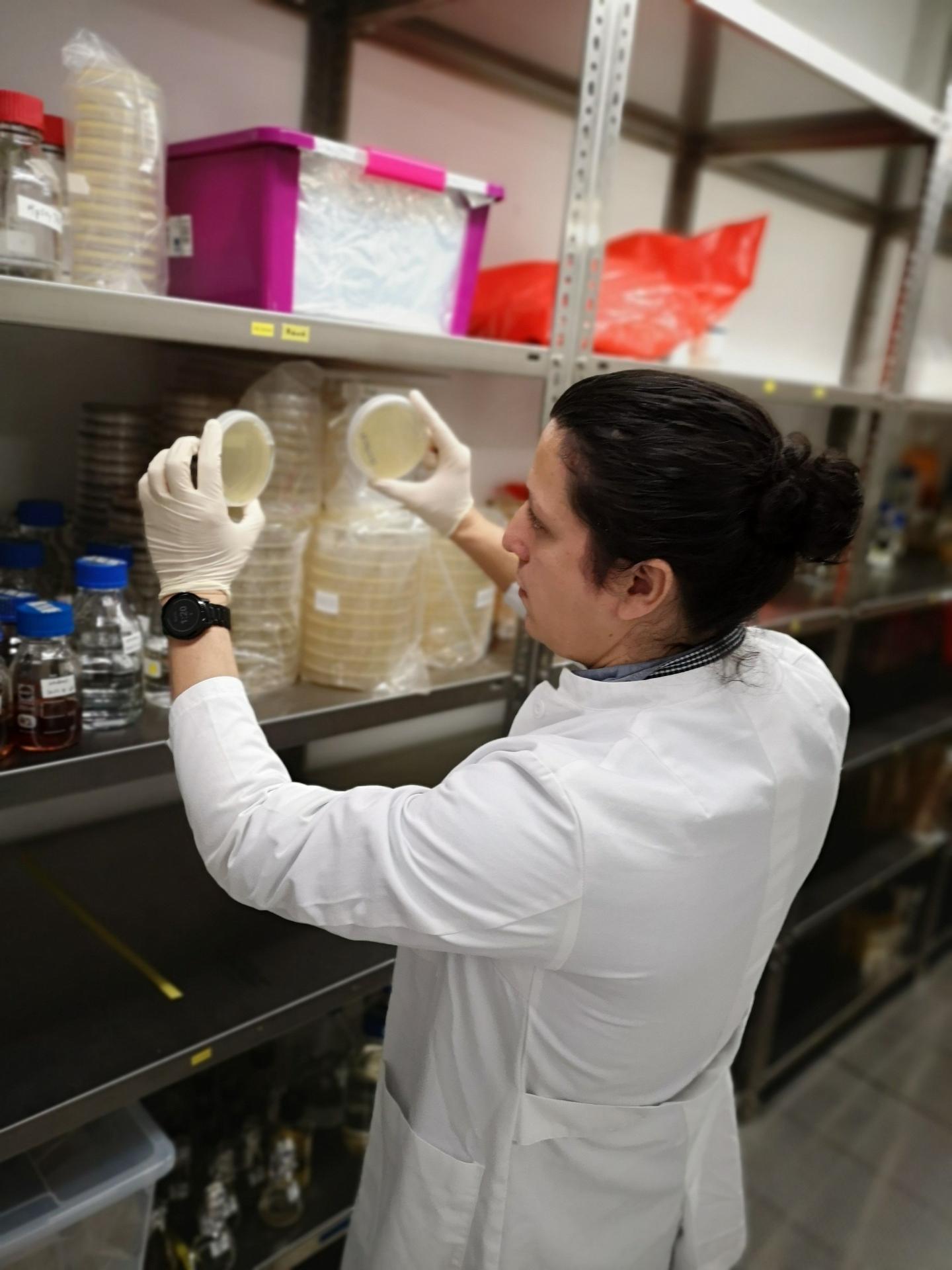
Microbiologists at the University of Göttingen develop new phytase screening method
IMAGE

Credit: G A Castillo Villamizar


Phosphate is a key element in many processes in the body and essential for global food production. Researchers at the University of Göttingen have now developed a method to detect new enzymes from the environment that can release phosphate. This opens up new possibilities for the development and optimisation of phytase-based processes for industrial application, biotechnology and environmentally friendly technologies. The results were published in the scientific journal mBio.

Enzymes such as phytases and phosphatases are required to be able to use organically bound phosphate. The research group led by Professor Rolf Daniel from the Institute of Microbiology and Genetics at the University of Göttingen develops standardised methods to isolate novel phosphatases and phytases from complex environmental samples. “The phytases that are currently used commercially, originate from the cultivation of individual strains of microorganisms,” says Daniel. “This wastes the potential to develop new, more effective processes through the use of improved enzymes.” Phosphates are used as fertilisers in large quantities in conventional agriculture. The increasing depletion of natural phosphorus resources and the pollution of phosphorus deposits with heavy metals make new strategies for the extraction and recycling of phosphates more urgent.

The new method is based on the screening of specially constructed gene libraries from the entire gene pool of organisms in different habitats. The researchers take samples from sediments and soil and clone the whole DNA. They then observe which activities develop in these gene libraries. An innovative screening method is used in which phytate serves as a phosphate source. This enabled the researchers to identify the largest variety of phosphatases and phytases ever obtained using functional metagenomics, including new phytase subtypes with hitherto completely unknown functional groups and new properties.

Phosphatases and phytases are natural biocatalysts that play a central role in many metabolic processes and contribute to the release of organically bound phosphate. Phytases are specialised in the degradation of phytates found in cereals and many other plants. They are already used in the animal feed industry as a feed additive to prevent the phosphate naturally contained in plant food from passing unused through the intestines when feeding non-ruminants such as pigs or poultry. Phytases in particular are therefore considered to have great market potential.

###

Original publication: Genis Andrés Castillo Villamizar et al. Functional Metagenomics Reveals an Overlooked Diversity and Novel Features of Soil-Derived Bacterial Phosphatases and Phytases. mBio 2019. https://doi.org/10.1128/mBio.01966-18.

Contact:

Professor Rolf Daniel

University of Göttingen

Department of Genomic and Applied Microbiology

Grisebachstraße 8

37077 Göttingen, Germany

Phone: +49 (0) 551 39-33827

Email: [email protected]

Internet: http://www.uni-goettingen.de/en//318960.html

Media Contact
Melissa Sollich
[email protected]
49-055-139-26228

Original Source

http://www.uni-goettingen.de/en/3240.html?id=5330

Related Journal Article

http://dx.doi.org/10.1128/mBio.01966-18

Tags: BiochemistryBiomedical/Environmental/Chemical EngineeringBiotechnologyChemistry/Physics/Materials SciencesIndustrial Engineering/ChemistryMaterialsMicrobiology
Share12Tweet8Share2ShareShareShare2

Related Posts

OrbiMed Managing Partner Carl Gordon to Present at ARDD Meeting in Boston

OrbiMed Managing Partner Carl Gordon to Present at ARDD Meeting in Boston

August 14, 2026
Microbial DNA Reveals Global Temperature and Nutrient Limitation Signatures Across Ecosystems

Microbial DNA Reveals Global Temperature and Nutrient Limitation Signatures Across Ecosystems

August 14, 2026

Herbert College of Agriculture Launches Bioinformatics Major Shaping Agriculture and Natural Resources Futures

August 14, 2026

Blood test could soon reveal which organs are aging fastest

August 14, 2026
Please login to join discussion

POPULAR NEWS

  • CDC73 Suppresses Lung Adenocarcinoma Through PTEN/AKT, Shows Extracellular Vesicle Biomarker Potential

    29 shares
    Share 12 Tweet 7
  • Does Finer-Grained Data Improve Bronchopulmonary Dysplasia Prediction?

    29 shares
    Share 12 Tweet 7
  • Lead in Tap Water Linked to Reduced Executive Function in Young Children

    29 shares
    Share 12 Tweet 7
  • Motor and Non-Motor Symptoms Shape Mobility Capacity and Performance in Parkinson’s Disease

    29 shares
    Share 12 Tweet 7

About

We bring you the latest biotechnology news from best research centers and universities around the world. Check our website.

Follow us

Recent News

CDC73 Suppresses Lung Adenocarcinoma Through PTEN/AKT, Shows Extracellular Vesicle Biomarker Potential

Does Finer-Grained Data Improve Bronchopulmonary Dysplasia Prediction?

Lead in Tap Water Linked to Reduced Executive Function in Young Children

Subscribe to Blog via Email

Enter your email address to subscribe to this blog and receive notifications of new posts by email.

Join 85 other subscribers
  • Contact Us

Bioengineer.org © Copyright 2023 All Rights Reserved.

Welcome Back!

Login to your account below

Forgotten Password?

Retrieve your password

Please enter your username or email address to reset your password.

Log In
No Result
View All Result
  • Homepages
    • Home Page 1
    • Home Page 2
  • News
  • National
  • Business
  • Health
  • Lifestyle
  • Science

Bioengineer.org © Copyright 2023 All Rights Reserved.