Scientists at Northern Arizona University are testing wastewater in local communities to help determine the spread of SARS-CoV-2, the virus that causes COVID-19
Credit: Courtesy of Northern Arizona University
With the ongoing challenges associated with large-scale testing for COVID-19–including test kit shortages, stringent testing criteria and the inherent limitations of current tracking systems on mildly symptomatic and asymptomatic populations, scientists are looking for alternate methods to boost testing in order to predict the spread of the disease.
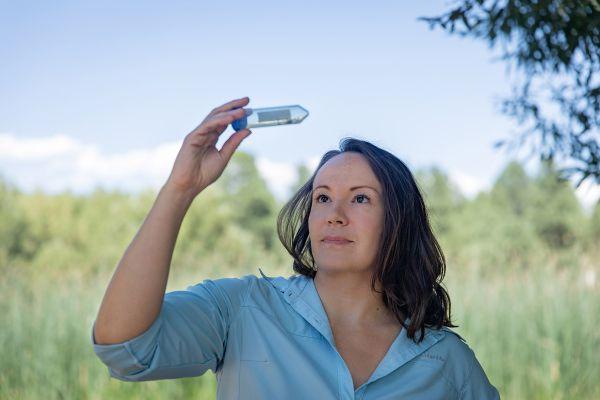
Crystal Hepp, an assistant professor in NAU’s School of Informatics, Computing, and Cyber Systems (SICCS), is testing wastewater in northern Arizona communities to help determine the spread of SARS-CoV-2, the virus that causes COVID-19. Because the virus is shed in human waste, she believes sewage is a viable avenue for its detection.
While scientists predict second or even multiple COVID-19 outbreaks, Hepp believes wastewater testing may function as an early and ongoing warning system, especially in rural communities underserved by healthcare workers and medical facilities, and can alert wastewater plant operators to elevated risks.
“It will be critical to continue surveillance activities that can assist in developing dynamic regional intervention strategies,” Hepp said. “To be sustainable during an outbreak of this magnitude, a more robust, feasible and human-independent method of community sampling needs to be implemented.”
Currently, Hepp and her team are testing influent (untreated) and effluent (treated) samples weekly at six locations in Flagstaff, Munds Park, Kachina Village and Kayenta, located within the Navajo Nation. Collaborators in the project include the City of Flagstaff, Pinewood Sanitary District, Kachina Village Improvement District, the Navajo Tribal Utility Authority and TGen-North.
Doctoral student Jill Cocking, a senior research specialist in the Hepp Lab at SICCS, leads the laboratory component of the work and treats each sample as though it is infectious.
“I take this material and remove the nucleic acids,” said Cocking. “COVID-19 is an RNA virus (a virus that has ribonucleic acid as its genetic material), so the next step is to turn the RNA into DNA so it can be detected by an assay designed by the Centers for Disease Control and Prevention. The assay makes copies of the genetic material until there’s enough to detect it with our instruments. If the coronavirus is present in the wastewater, this analysis will let us know.”
Samples from three influent wastewater sites tested positive in early April. Hepp, an assistant director at NAU’s Pathogen and Microbiome Institute (PMI), notes that the team has not found any positive cases in effluent, indicating the wastewater plant process is effective in treating the virus. The researchers will conduct genetic sequencing analysis on positive samples in influent to look for different strains.
“The virus is always evolving,” Hepp said. “There are always new strains that could be arising. If we find several different strains with different mutations, that would indicate the virus has had more of a chance to mutate over time within the population or that new introductions have occurred. A higher number of strains at any given time may indicate more infected individuals.”
Hepp is working with Jason Sahl, an assistant director of PMI, who will use his established genomics pipeline, WG-FAST, to examine strain diversity.
“Our WG-FAST approach can provide strain level identification of virus, identify strain mixtures and match clinical and wastewater samples,” said Sahl. “This approach can identify circulating viruses without the need to sample humans directly and will independently identify cases. It also can catch COVID-19 cases that may not present to the hospital and could alert public health agencies on circulating strains, which will help with contact tracing and inform the public on new waves of COVID-19 in their communities.”
“This sequencing analysis will help us understand the circulating strain in a community, the overall diversity of the virus and how that changes between different locales and at different times of the year,” said Dave Engelthaler, associate professor and TGen-North director.
Hepp’s study is expected to continue through the summer. She hopes to secure funding through the National Institutes of Health (NIH) and extend the research to the end of the outbreak.
###
Media Contact
Diane Rechel
[email protected]
Original Source
https:/