An international team of scientists have used mixtures of different skin microbial components to temporarily modulate the composition of recipient skin bacteria for therapeutic or cosmetic purposes.
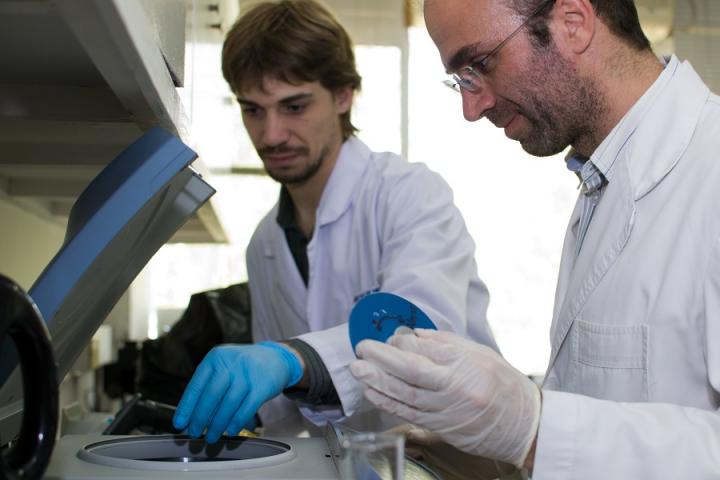
Credit: Source: S-biomedic.
Scientists at UPF and the company S-Biomedic have demonstrated the use of living bacteria to modulate skin microbiome composition. In the study, published in Microbiome, mixtures of different skin microbial components have been used to temporarily modulate the composition of recipient skin bacteria for therapeutic or cosmetic purposes.
The human body is host to a complex and rich microbial community, which mainly resides in the skin, in the oral mucosa, and in the gastrointestinal tracts, and has fundamental roles in health and disease. More specifically, the skin is colonized by a large number of microorganisms with a stable composition of species over time. However, skin-associated diseases such as acne vulgaris, eczema, psoriasis, or dandruff are associated with strong and specific microbiome alterations.
The targeted manipulation of the human microbiome may become a potential therapeutic strategy for the treatment and study of diseases. The most prominent example of this is the treatment of the antibiotic-resistant bacteria Clostridium difficile within the gut microbiome with the help of faecal transplantation. Similarly, manipulation of the skin microbiome entails the promise of novel therapeutic strategies for skin diseases.
Manipulation of the skin microbiome entails the promise of novel therapeutic strategies for skin diseases.
“We are particularly interested in Cutibacterium acnes and its strain diversity, as this bacterium represents a major part of the human skin microbiome, and certain strains are associated with a deviation in the microbiome which probably causes acne vulgaris”, states Marc Güell, head of the Translational Synthetic Biology group at the Department of Experimental and Health Sciences (DCEXS). “Therefore, we developed and tested an approach to modulate the subpopulation of this species at strain level”, adds Güell.
For the study, the researchers prepared probiotic solutions from donor microbiomes and applied them in 18 healthy volunteers aged 22 to 42. Eight different skin areas were defined for application –on the chest and along the spine–, chosen due to their typically high abundance of sebaceous glands.
After a few weeks, the skin microbiome returned to ground state and no adverse effects were detected.
They show that after sequential applications of a donor microbiome, the recipient becomes more similar to the donor microbiome. The level of success depends on the composition of the recipient and donor microbiomes, and the bacterial load applied.
“We observed better results using a multi-strain donor solution with recipient skin rich in a specific Cutibacterium acnes subtype with positive features isolated from healthy individuals”, explains Bernhard Paetzold, first author of the study and co-founder and chief scientific officer of S-Biomedic. After a few weeks, the skin microbiome returned to ground state and no adverse effects were detected.
This method opens the possibility of developing probiotic solutions that help human skin to revert diseased microbiome states to healthy ones. “We expect that this methodology could be used to study and modify skin microbial components and have broad implications for future therapies and research in the skin microbiome and related diseases”, concludes Marc Güell.
###
The study involved researchers from the Centre for Genomic Regulation (CRG), Aarhus University (Denmark) and Otto-von-Guericke-Universität Magdeburg (Germany).
Reference article:
B Paetzold, J R. Willis, J Pereira de Lima, N Knödlseder, H Brüggemann, S R. Quist, T Gabaldón and M Güell. Skin microbiome modulation induced by probiotic solutions. Microbiome, June 2019. DOI: 10.1186/s40168-019-0709-3.
Media Contact
Camren Cebrián
[email protected]
Original Source
https:/
Related Journal Article
http://dx.