Credit: University of Oklahoma
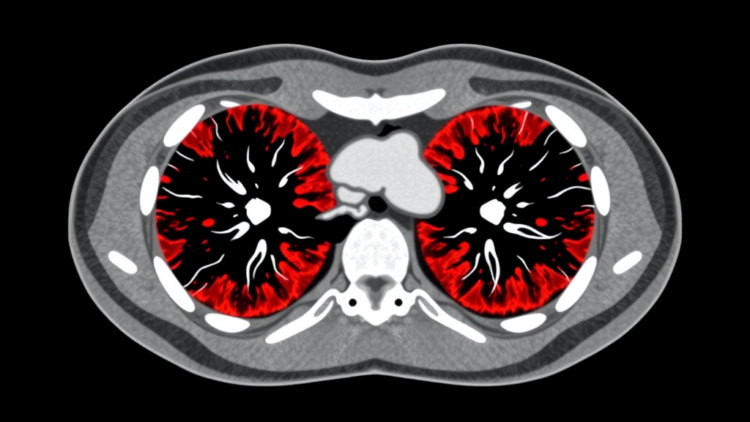
Oklahoma City — Lung cancer is a notoriously difficult type of cancer to treat because, in most cases, it has spread to other parts of the body by the time it is discovered.
However, if microscopic lung tumor cells could be detected earlier, treatment might have a better chance of being effective. Rajagopal Ramesh, Ph.D., a researcher at the Stephenson Cancer Center at OU Medicine, recently received a five-year, $1.6 million grant from the National Cancer Institute to further study a gene that shows promise in suppressing tumor cells.
Ramesh’s research focuses on gene-based therapeutics – using the body’s own genes to prevent or treat cancer rather than drugs or surgery. For this study, Ramesh and his research team are studying a gene called interleukin 24, or IL-24. Previous studies have shown IL-24 to suppress tumor growth, and it is safe to insert into a patient’s cells. But to harness the gene to its full potential, Ramesh knew he had to dig deeper into one question: Why does IL-24 have the ability to suppress tumors when other genes in its family cannot?
“To understand what is so unique about this particular family member, we had to conduct studies into the function of this gene,” he said.
Just like humans, the siblings in a gene’s family have different personalities. IL-24 is one of six offspring of its parent, called IL-10. Of the six, IL-24 is the only one that has the ability to suppress tumor cells. In addition, IL-24 has five sites through which it undergoes phosphorylation – the mechanism by which it can be altered. In the process of studying all the possible combinations of phosphorylation sites, Ramesh discovered that if one particular site is removed, IL-24 becomes even better at suppressing tumor cells.
Ramesh compares these sites to the guidance system in a car. “The phosphorylation dictates the function,” he said. “It would be like my car’s GPS telling me what my destination is.”
Ramesh’s latest grant will allow him to further investigate the ability of IL-24 to suppress tumor growth in both cell culture dishes and animal research models. An additional component of his research will study whether IL-24, if combined with other immune therapies known to suppress cancer, can provide even greater ability to detect and eliminate micro-metastatic lung tumors that often evade detection.
“Micro-metastatic tumors are invisible clinically. They may be dormant for some time, but can start growing quickly within a short time,” he said. “If we can use IL-24 to help activate the immune system, which can be heightened by adding immune therapy, it will continue to recognize the insidious cancer cells and eliminate them.”
Because IL-24’s potential is through gene therapy rather than a drug, its success is contingent upon being delivered to the correct place in the human body. That’s where Ramesh’s previous research comes into play. His laboratory has successfully created a lipid-based nanoparticle delivery system, which is currently in Phase 2 clinical trials in humans. Carrying IL-24 as a “passenger,” the nanoparticles are directed to the cancer cells, which they can enter because of their small size. Because the nanoparticle delivery system is already showing its effectiveness and safety in humans, it will accelerate IL-24 to becoming an approved cancer therapy if Ramesh’s research progresses as anticipated.
In a state like Oklahoma, which has a higher rate of lung cancer diagnoses than the national average, that’s good news. Gene therapy and immune therapy are two of the most promising areas for new cancer treatments. As part of an academic health system and as Oklahoma’s only National Cancer Institute-designated cancer center, the Stephenson places a high priority on research.
“Dr. Ramesh’s research is exciting because it has the potential to progress to a treatment that can give patients with cancer new hope,” said Robert Mannel, M.D., director of the Stephenson Cancer Center. “On our campus, researchers frequently collaborate with physicians to develop new research projects. Those partnerships hold tremendous promise for future patient treatments.”
###
Media Contact
April Sandefer
[email protected]
405-271-5067