A tiny deep-water crustacean barely four millimetres long has quietly rewritten the zooplankton record of the Mediterranean Sea. Researchers sampling the coastal waters north of Latakia, Syria, have documented Scina nana, a rare holoplanktonic amphipod previously known only from tropical and subtropical waters of the world’s oceans, for the first time anywhere in the Mediterranean Basin. The discovery, published in the Biodiversity Data Journal, is based on specimens collected during seasonal surveys in 2024 and carries wider implications for how a rapidly warming sea is reshaping its planktonic fauna.
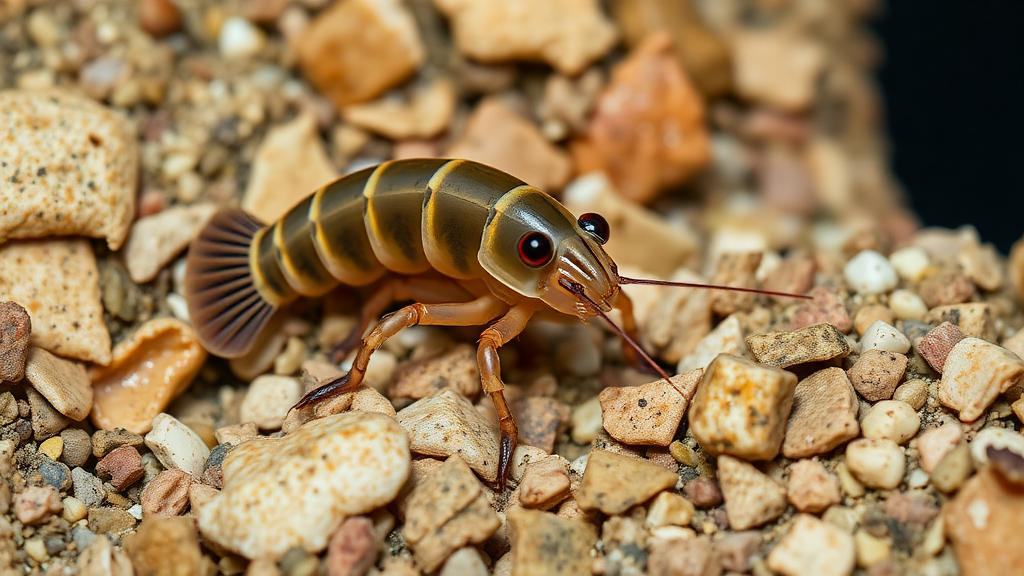
Hyperiidean amphipods are among the most important crustacean zooplankton in the open ocean, ranking third in abundance after copepods and euphausiids. Some species thrive even in cold waters, where they serve as a critical food source for marine mammals, seabirds and fish. The family Scinidae, to which Scina nana belongs, comprises small to medium-sized crustaceans ranging from 2.5 to 30 millimetres in length, excluding antennae. Their bodies are slightly flattened dorsoventrally and may be smooth, as in the genus Scina, or armed with strong denticles and keels as seen in related genera such as Ctenoscina, Spinoscina and Acanthoscina. Among the Hyperiidea, this family is the richest in species and is distributed across every region of the world ocean, from the Arctic Basin to the Antarctic.
What makes the scinids particularly intriguing is their vertical ecology. They are the most characteristic members of the mesopelagic, bathypelagic and abyssopelagic zones, living their entire lives in the water column far from the sea floor. Only a small number of species have secondarily adapted to surface waters while retaining their deep-water features. This affinity for the twilight and deeper layers is precisely what makes the Syrian record so telling: the specimens were recovered from the 200 to 500 metre depth stratum, squarely within the species’ known global ecological range.
The fieldwork behind the discovery was methodical. Between March and December 2024, researchers conducted monthly offshore surveys at two sites north of Latakia, Ras Al Basit and Umm Al-Tuyour, each with a fixed station roughly five kilometres from the coast. Using a WP2 closing net with a 200 micrometre mesh, they performed vertical hauls through six water layers reaching down to 500 metres: 0 to 10, 10 to 25, 25 to 50, 50 to 100, 100 to 200 and 200 to 500 metres. The total filtered volume was approximately 127.5 cubic metres, corresponding to a filtration rate of about 25.5 cubic metres per 100 metres of vertical tow. Samples were fixed immediately in 4 percent formalin and stored in sealed 500 millilitre containers until laboratory analysis.
The result was striking in its scarcity. Scina nana appeared only in the July samples from the 200 to 500 metre layer, represented by three females with body lengths between 3.8 and 4.1 millimetres. Such a low frequency of occurrence is consistent with the species’ reputation as a globally rare amphipod. The authoritative taxonomic database WoRMS, together with the biodiversity repositories GBIF and OBIS, contains only a small number of confirmed occurrence records for Scina nana, all from open-ocean tropical and subtropical environments outside the Mediterranean. None of these databases holds any historical or contemporary evidence of the species within the Mediterranean Basin, which strongly suggests that the Syrian specimens represent the first known occurrence of the species in the eastern Mediterranean and, indeed, in the entire Basin.
Identifying such a small and elusive animal is a demanding taxonomic exercise. The specimens were identified using the original description by Wagler from 1926, together with the standard references by Zeidler and by Vinogradov and colleagues. Mature specimens of Scina nana measure two to four millimetres, have smooth bodies without keels, and bear strong first antennae roughly equal in length to the pereon. The decisive diagnostic characters lie in the fifth pereopod: its second segment carries long curved denticles on the posterior margin, while the anterior margin is smooth apart from one or two large denticles at the base of a short distal process. The fourth segment is slightly shorter than the second and roughly twice as long as the fifth, which in turn is somewhat longer than the sixth, and the claw is very small.
Complicating matters, a second scinid species turned up in the same material. Scina similis was also detected, though only two females were isolated throughout the entire study period. This species is so morphologically similar to Scina nana that distinguishing between the two taxa requires careful anatomical examination, particularly of the terminal segments, the patterns of denticles and the number and arrangement of marginal serrations on the fifth and sixth pereopods. Unlike its rarer cousin, however, Scina similis does have a Mediterranean track record, with confirmed records from the central region of the Mediterranean and near Sicily reported by Lo Bianco in 1902 and by Stephensen in the 1910s and 1920s, and Zelickman also listed it for the Mediterranean. The Syrian specimens therefore extend the known distribution of Scina similis within the Basin while marking an entirely new occurrence for Scina nana.
The global distribution of Scina nana underscores how anomalous the Mediterranean record is. In the Atlantic, the species is known from equatorial regions down to about 33 degrees south, with captures spanning depth ranges from the surface to 2000 metres. In the Indian Ocean it has been recorded only from equatorial waters, including stations near the West Ice Shelf and several equatorial sites with tows reaching from 1500 to 2500 metres up to the surface. In the Pacific it appears only in the warmer waters of the Indo-Pacific and South China Sea region and off the Californian coast. Although it seems to inhabit near-surface waters between 100 and 500 metres, it has been found in catches from depths exceeding 2000 metres to the surface. Nowhere in this range does the Mediterranean appear.
Given this complete absence of previous Mediterranean records, the researchers interpret the appearance of Scina nana off Syria as most plausibly a recent event, supporting its classification as a non-indigenous species that has only recently entered the Basin. The rapid warming of Mediterranean waters in recent decades may have provided conditions favourable for the arrival or temporary establishment of the species. Additional factors, such as broader changes in the thermohaline structure of the eastern Mediterranean, may also have facilitated its introduction to the Syrian coast. The eastern Mediterranean has undergone well-documented physical transformations in recent decades, and a deep-pelagic tropical species appearing at depths beyond 200 metres fits the pattern of a fauna responding to shifting water-mass properties.
Whether Scina nana will persist in the Basin remains an open question, and the authors of the study are careful not to overstate the evidence. Three specimens in a single month’s sample constitute a detection, not a demonstration of establishment. But the record is a significant addition to biogeographical knowledge of holoplanktonic amphipods in the eastern Mediterranean, a region whose pelagic fauna remains comparatively under-surveyed despite more than a century of historical work by researchers such as Ruffo, Stephensen and Chevreux. The finding highlights the need for enhanced long-term monitoring programmes capable of detecting whether such arrivals can establish themselves within a rapidly changing Mediterranean ecosystem, and it serves as a reminder that even the smallest members of the ocean’s hidden midwater communities are on the move as the climate warms.
Subject of Research: First record of the rare holoplanktonic amphipod Scina nana in the eastern Mediterranean off the Syrian coast.
Article Title: First record of Scina nana Wagler, 1926 ( Crustacea , Amphipoda , Hyperiidea ) in Mediterranean Sea from the northern coastal waters north of Syria (eastern Mediterranean)
Article References: Hasan, H., Zeini, A., & Mayya, W. (2026). First record of Scina nana Wagler, 1926 (Crustacea, Amphipoda, Hyperiidea) in Mediterranean Sea from the northern coastal waters north of Syria (eastern Mediterranean). Biodiversity Data Journal, 14, Article e199166. https://doi.org/10.3897/bdj.14.e199166
Image Credits: AI Generated
Keywords: Scina nana, Amphipoda, Hyperiidea, Mediterranean Sea, Syria, zooplankton, non-indigenous species, marine biodiversity, Latakia Basin, deep-pelagic, warming, Scinidae
News Source: Drew Townsend. (October 18, 2026). Rare Tropical Amphipod Surfaces for the First Time in the Mediterranean. Scienmag.