In complementary human cellular and mouse models, pharmacological inhibition with rapamycin reduced neuronal hyperexcitability and increased seizure thresholds linked to an activating genetic variant in AKT3, according to findings published in the Orphanet Journal of Rare Diseases. The investigation focused on understanding the downstream mechanisms that trigger intractable epilepsy and megalencephaly when AKT serine/threonine kinase 3 is pathologically activated.
AKT serine/threonine kinase 3 is abundantly expressed in the brain, where activating variants lead to cortical malformations and severe megalencephaly commonly accompanied by treatment-resistant seizures. While the upstream AKT inhibitor capivasertib offers a potential targeted approach, its long-term clinical utility starting in early infancy remains constrained by adverse effects. This therapeutic limitation created an urgent requirement to identify safer downstream intervention targets within the phosphoinositide 3-kinase–AKT–mTOR signaling cascade.
To investigate these pathogenic mechanisms and evaluate potential therapeutic responses, investigators established both in vitro and in vivo disease models based on a specific heterozygous AKT3 variant, NM_005465.7:c.233 A > G (p.Q78R), identified in a patient exhibiting cortical malformations and megalencephaly. The research team generated patient-derived induced pluripotent stem cells and created isogenic control lines utilizing CRISPR/Cas9 genome-editing technology.
Following genome editing, the patient-derived stem cells and their isogenic controls were differentiated into glutamatergic neurons. In parallel, researchers established a genome-edited mouse model carrying the identical AKT3 p.Q78R variant. These dual systems allowed the team to systematically compare cellular alterations and evaluate organism-level functional vulnerabilities against control benchmarks.
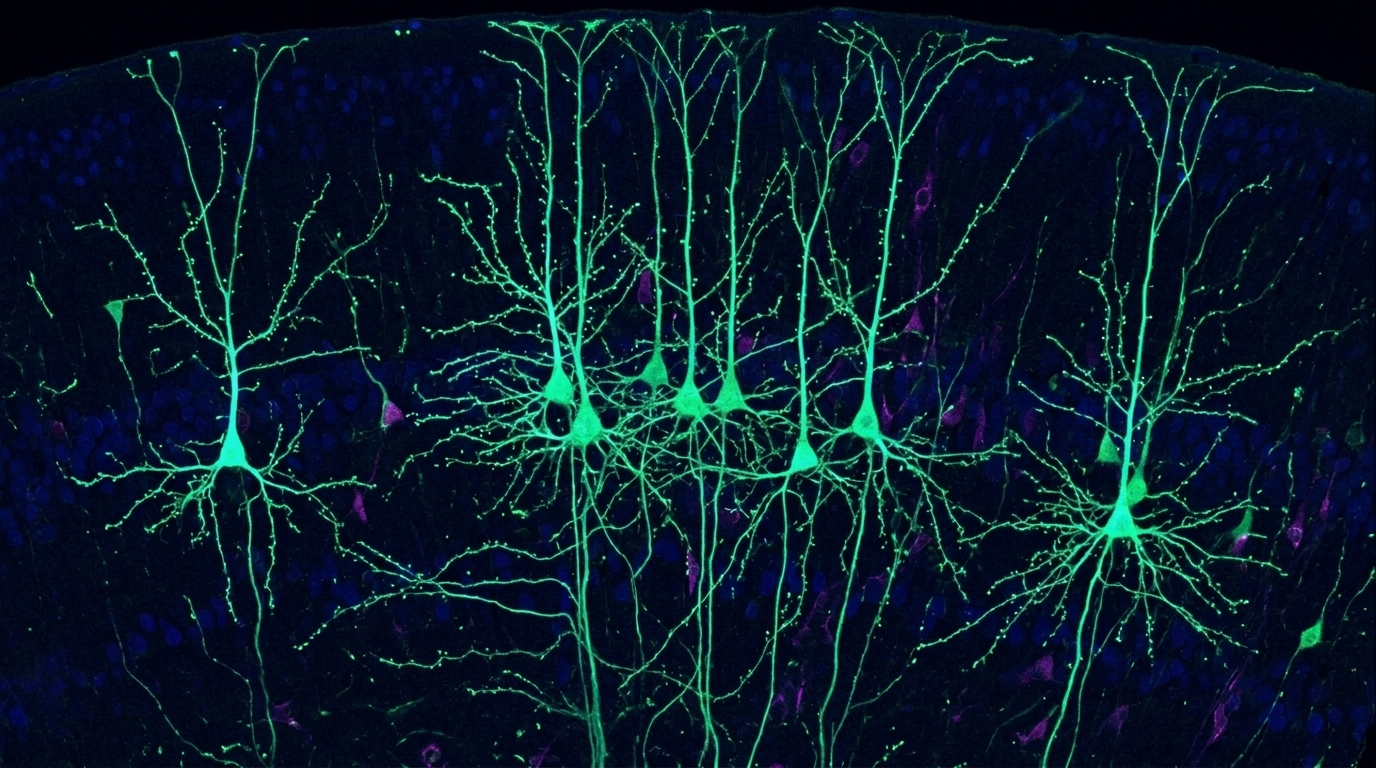
At the cellular level, the patient-derived glutamatergic neurons demonstrated notable somatic enlargement alongside elevated activity of mechanistic target of rapamycin complex 1 (mTORC1).
Transcriptomic profiling revealed that the patient-derived neurons underwent differentiation and maturation comparable to control cells, confirming that basic developmental staging remained intact. However, the analysis uncovered distinct gene expression alterations in the mutated lines, including the dysregulation of protocadherin family genes that are functionally implicated in synaptogenesis and neuronal connectivity.
The corresponding genome-edited mouse model carrying the AKT3 variant exhibited megalencephaly, marked neuronal hypertrophy, and reduced overall survival. When exposed to chemical convulsants, these mice displayed a decreased latency to chemically-induced seizures, demonstrating in vivo vulnerability to epileptogenic activity that parallels the clinical phenotype.
Administration of the mTOR inhibitor rapamycin directly counteracted these pathological features across both experimental systems.
The authors concluded that the shared cellular and behavioral rescue across human and rodent models supports targeting downstream components of the phosphoinositide 3-kinase–AKT–mTOR pathway. This pharmacological consistency provides a rational therapeutic strategy for managing intractable epilepsy driven by activating AKT3 variants.
Because adverse effects limit the long-term use of capivasertib from infancy, identifying safer downstream interventions within the phosphoinositide 3-kinase–AKT–mTOR pathway represents an important step toward targeted therapeutic strategies for AKT3-related epilepsy.
Subject of Research: Pharmacological rescue of AKT3-driven neuronal hyperexcitability and seizures using rapamycin
Article Title: Rapamycin rescues neuronal hyperexcitability and seizures driven by megalencephaly-causing AKT3 activation
Article References: Miyamoto, Y., Mori, T., Ishikawa, M., Ichise, E., Suzuki, Y., Furukawa, Y., Matsuura, A., Yamashita, S., Tozawa, T., Hasegawa, T., Morimoto, M., Iehara, T., Okano, H., Hayashi, S., & Chiyonobu, T. (2026). Rapamycin rescues neuronal hyperexcitability and seizures driven by megalencephaly-causing AKT3 activation. Orphanet Journal of Rare Diseases. https://doi.org/10.1186/s13023-026-04684-w
Image Credits: AI Generated
DOI: 10.1186/s13023-026-04684-w
Keywords: AKT3, Rapamycin, mTORC1, Megalencephaly, Intractable Epilepsy, Neuronal Hyperexcitability, Cortical Malformations, Glutamatergic Neurons, CRISPR/Cas9, Induced Pluripotent Stem Cells, Mouse Models, Protocadherins, Capivasertib, PI3K-AKT-mTOR Pathway, Synaptogenesis, Seizure Threshold
News Source: Cassandra Pierce. (November 20, 2026). Rapamycin Reduces Brain Hyperexcitability Driven by Activating AKT3 Mutation in Models. Scienmag.