• HOME
  • NEWS
  • EXPLORE
    • CAREER
      • Companies
      • Jobs
    • EVENTS
    • iGEM
      • News
      • Team
    • PHOTOS
    • VIDEO
    • WIKI
  • BLOG
  • COMMUNITY
    • FACEBOOK
    • INSTAGRAM
    • TWITTER
Saturday, May 16, 2026
BIOENGINEER.ORG
No Result
View All Result
  • Login
  • HOME
  • NEWS
  • EXPLORE
    • CAREER
      • Companies
      • Jobs
        • Lecturer
        • PhD Studentship
        • Postdoc
        • Research Assistant
    • EVENTS
    • iGEM
      • News
      • Team
    • PHOTOS
    • VIDEO
    • WIKI
  • BLOG
  • COMMUNITY
    • FACEBOOK
    • INSTAGRAM
    • TWITTER
  • HOME
  • NEWS
  • EXPLORE
    • CAREER
      • Companies
      • Jobs
        • Lecturer
        • PhD Studentship
        • Postdoc
        • Research Assistant
    • EVENTS
    • iGEM
      • News
      • Team
    • PHOTOS
    • VIDEO
    • WIKI
  • BLOG
  • COMMUNITY
    • FACEBOOK
    • INSTAGRAM
    • TWITTER
No Result
View All Result
Bioengineer.org
No Result
View All Result
Home NEWS Science News Biology

Programmable balloons pave the way for new shape-morphing devices

Bioengineer by Bioengineer
July 8, 2020
in Biology
Reading Time: 3 mins read
0
IMAGE
Share on FacebookShare on TwitterShare on LinkedinShare on RedditShare on Telegram

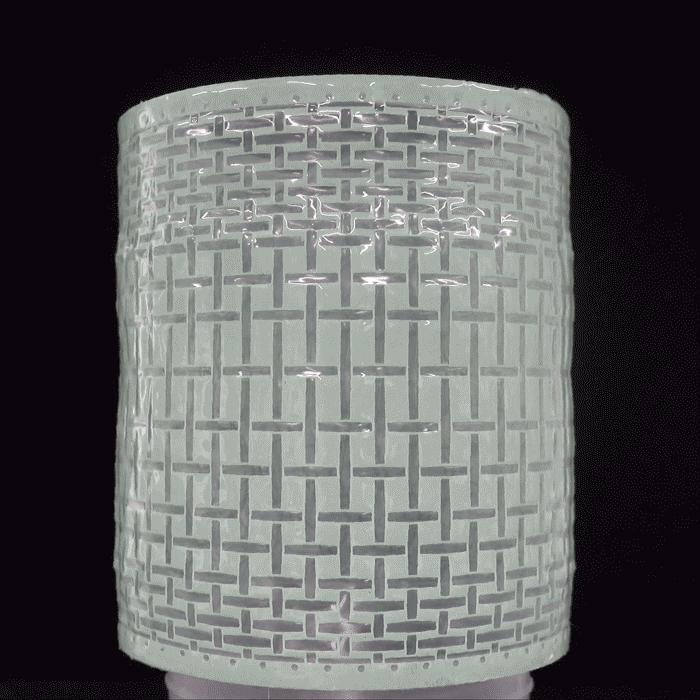
Kirigami balloons could be used in medical devices, soft robotics
IMAGE

Credit: (Image courtesy of the Bertoldi Lab/Harvard SEAS)

Balloon shaping isn’t just for kids anymore. A team of researchers from the Harvard John A. Paulson School of Engineering and Applied Sciences (SEAS) has designed materials that can control and mold a balloon into pre-programmed shapes. The system uses kirigami sheets — thin sheets of material with periodic cuts — embedded into an inflatable device. As the balloon expands, the cuts in the kirigami sheet guide the growth, permitting expansion in some places and constricting it in others. The researchers were able to control the expansion not only globally to make large-scale shapes, but locally to generate small features.

The team also developed an inverse design strategy, an algorithm that finds the optimum design for the kirigami inflatable device that will mimic a target shape upon inflation.

“This work provides a new platform for shape-morphing devices that could support the design of innovative medical tools, actuators and reconfigurable structures,” said Katia Bertoldi, the William and Ami Kuan Danoff Professor of Applied Mechanics at SEAS and senior author of the study.

The research is published in Advanced Materials.

An individual cut on a kirigami sheet contributes to the larger shape of the balloon like a pixel helps form an image on a 2D surface. The researchers found that by tuning the geometric parameters of these cuts, they could control and embed complex shapes.

“By only varying two parameters of the pixels, we can program all different kinds of crazy shapes into the kirigami balloons, including bends, twists and expansions,” said Antonio Elia Forte, a postdoctoral fellow at SEAS and co-first author of the study. “Our strategy allows us to automatically design a morphable balloon starting from the shape that you need. It’s a bottom-up approach that for the first time harnesses the elasticity of the material, not only kinematic.”

Using these parameters, the researchers developed an inverse algorithm that could mix and match pixels of different width and height, or delete certain pixels altogether, to achieve the desired shape. By manipulating the parameters of individual pixels, the researchers were able to tune shapes at a significantly smaller scale. To demonstrate this, they programmed a balloon to mimic the shape of a squash (the experiments took place around Halloween) complete with the characteristic bumps and ridges along the side.

“By controlling the expansion at every level of the kirigami balloon, we can reproduce a variety of target shapes,” Lishuai Jin, a graduate student at SEAS and co-first author of the paper.

The researchers also made kirigami balloons in the shapes of calabash gourds, hooks and vases, demonstrating that the approach is general enough to mimic any given shape.

Next, the researches aim to use these kirigami balloons as shape-changing actuators for soft robots. The work lays a foundation for the design of structures at multiple scales: from micro minimally-invasive surgical devices to macro structures for space exploration.

###

This research was co-authored by Bolei Deng and Ahmad Rafsanjani. It was supported by the National Science Foundation under Grants No. DMR-1420570 and DMR-1922321.

Media Contact
Leah Burrows
[email protected]

Original Source

https://www.seas.harvard.edu/news/2020/07/programmable-balloons-pave-way-new-shape-morphing-devices

Related Journal Article

http://dx.doi.org/10.1002/adma.202001863

Tags: BiotechnologyChemistry/Physics/Materials SciencesMaterialsNanotechnology/MicromachinesRobotry/Artificial IntelligenceTechnology/Engineering/Computer Science
Share12Tweet8Share2ShareShareShare2

Related Posts

Single mother must adapt swiftly — the survival of her colony depends on it — Biology

Single mother must adapt swiftly — the survival of her colony depends on it

May 15, 2026
Why Are Nearly Everyone Right-Handed? It Might Be Linked to How We Learned to Walk — Biology

Why Are Nearly Everyone Right-Handed? It Might Be Linked to How We Learned to Walk

May 15, 2026

Excessive Neuronal Activity Initiates Severe Autoimmune Brain Disorder

May 15, 2026

Precision Anti-Aging Strategies Focus on Eliminating Harmful Senescent Cells While Preserving Beneficial Ones

May 15, 2026
Please login to join discussion

POPULAR NEWS

  • Research Indicates Potential Connection Between Prenatal Medication Exposure and Elevated Autism Risk

    843 shares
    Share 337 Tweet 211
  • New Study Reveals Plants Can Detect the Sound of Rain

    730 shares
    Share 291 Tweet 182
  • Salmonella Haem Blocks Macrophages, Boosts Infection

    62 shares
    Share 25 Tweet 16
  • Breastmilk Balances E. coli and Beneficial Bacteria in Infant Gut Microbiomes

    58 shares
    Share 23 Tweet 15

About

We bring you the latest biotechnology news from best research centers and universities around the world. Check our website.

Follow us

Recent News

Perinatal and Early Childhood Factors in PFAPA Persistence

New Actinomycin Derivatives Target Malaria More Selectively

Mobile App Enhances Exercise for Older Adults’ Cognition

Subscribe to Blog via Email

Enter your email address to subscribe to this blog and receive notifications of new posts by email.

Join 82 other subscribers
  • Contact Us

Bioengineer.org © Copyright 2023 All Rights Reserved.

Welcome Back!

Login to your account below

Forgotten Password?

Retrieve your password

Please enter your username or email address to reset your password.

Log In
No Result
View All Result
  • Homepages
    • Home Page 1
    • Home Page 2
  • News
  • National
  • Business
  • Health
  • Lifestyle
  • Science

Bioengineer.org © Copyright 2023 All Rights Reserved.