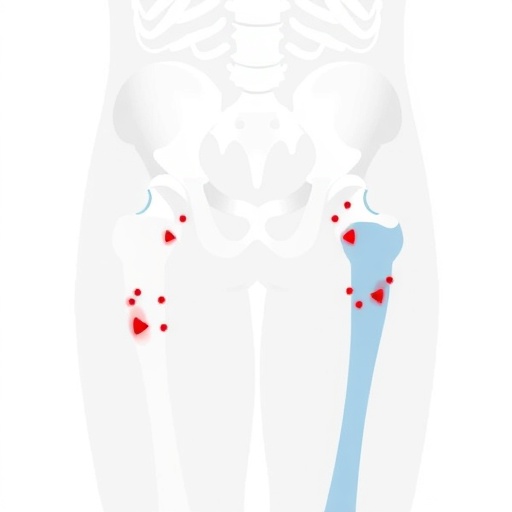
A retrospective two-center study published in BMC Geriatrics reports the development and external validation of a preoperative risk prediction model aimed at older adults undergoing hip fracture surgery. The focus is the likelihood of in-hospital major adverse cardiovascular events (MACEs), a clinically important complication that can worsen outcomes and increase length of stay.
Hip fractures are common in elderly populations, and perioperative cardiovascular instability remains a leading concern. Yet, clinicians often face limited guidance on quantifying risk before surgery. This work attempts to fill that gap by building a statistical model that can stratify patients preoperatively using routinely available clinical information.
The researchers collected retrospective data from two medical centers and used the first center to develop the prediction tool. They then tested its performance using the second center, a step designed to demonstrate external generalizability rather than restricting conclusions to a single setting.
Methodologically, the modeling framework predicts a binary in-hospital outcome—whether a patient experiences a major cardiovascular event during the hospitalization period. Candidate predictors were selected based on clinical relevance and available variables in the preoperative assessment, ensuring the tool could be deployed without additional specialized testing.
To evaluate discrimination, the team assessed how well the model distinguishes patients who did versus did not experience MACEs. Calibration analyses further examined whether predicted risks matched observed event rates across risk strata, a crucial requirement for practical decision support.
Beyond statistical accuracy, the study’s emphasis on an external validation cohort is particularly notable. Many predictive studies fail to replicate performance when applied to different hospitals, limiting real-world utility. Here, the authors report that the model maintained performance in the second center, supporting its potential clinical transfer.
If implemented, the preoperative model could help clinicians identify high-risk patients early, enabling more targeted perioperative monitoring and cardiovascular optimization. It may also inform discussions about operative timing, resource allocation, and post-surgical surveillance intensity.
As health systems increasingly use risk calculators to standardize decisions, this study adds a new candidate tool tailored specifically to the hip-fracture and older-adult context. With further prospective evaluation, the approach could become part of routine preoperative assessment pathways.
Subject of Research: Preoperative prediction of in-hospital major adverse cardiovascular events after hip fracture surgery in older adults.
Article Title: Development and external validation of a preoperative prediction model for in-hospital major adverse cardiovascular events after hip fracture surgery in older adults: a retrospective two-center study.
Article References: Luo, R., Yang, J., Du, J. et al. Development and external validation of a preoperative prediction model for in-hospital major adverse cardiovascular events after hip fracture surgery in older adults: a retrospective two-center study. BMC Geriatr (2026). https://doi.org/10.1186/s12877-026-07981-y
Image Credits: AI Generated
DOI: 10.1186/s12877-026-07981-y
Keywords: hip fracture; older adults; preoperative prediction model; major adverse cardiovascular events; external validation
Tags: clinical decision support in hip fracture surgeryelderly patient perioperative risk assessmentexternal validation of clinical prediction toolship fracture surgery risk predictionimproving outcomes in elderly orthopedic patientsin-hospital cardiovascular eventsmajor adverse cardiovascular events predictionpreoperative risk stratification modelsretrospective multicenter study in geriatricsrisk factors for perioperative cardiovascular instabilityroutine preoperative assessment variablesstatistical modeling for surgical risk prediction