A comprehensive systematic literature evaluation published in SLAS Technology by researchers Harshavardhan Movva and Priyanka Srivastava reveals that while mesenchymal stem cell vesicles have historically dominated clinical translation, induced pluripotent stem cell derived exosomes are reaching a critical inflection point in regenerative medicine. By conducting a structured literature query across PubMed covering records from 2005 to 2025, the authors identified 41,675 initial entries addressing exosome therapeutics, diagnostics, and engineering. After removing 11,822 overlapping entries, the investigators screened 29,853 unique publications, ultimately selecting 320 high-substance studies for rigorous qualitative synthesis. The analysis documents an exponential rise in general exosome research, yet studies specifically examining induced pluripotent stem cell exosome production have remained comparatively scarce, often totaling fewer than ten publications annually. However, the regulatory and translational landscape began shifting markedly in 2025, as the very first human interventional clinical trials evaluating pluripotent stem cell derived nanovesicles emerged on global trial registries.
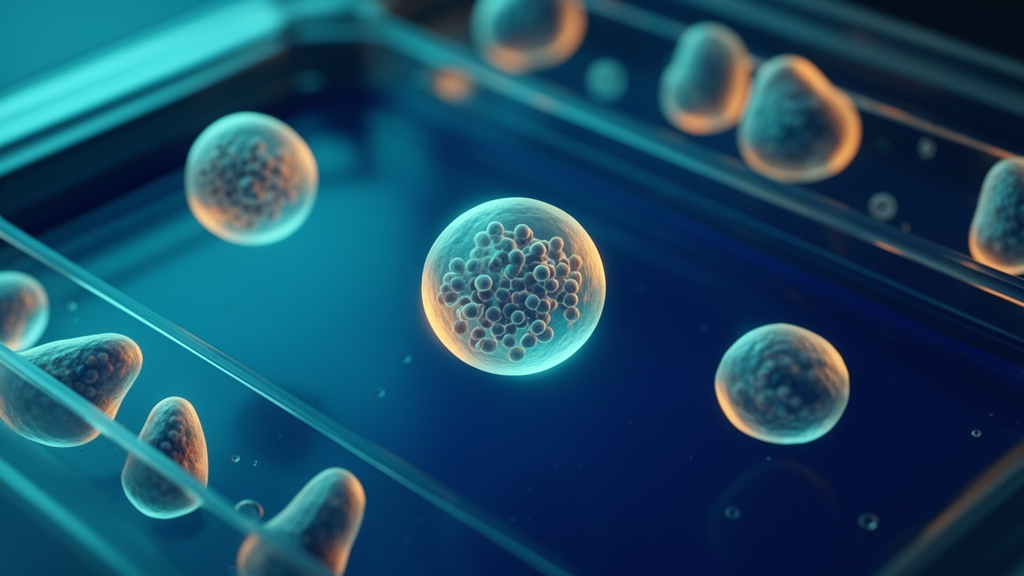
Exosomes represent an essential subpopulation of extracellular vesicles, defined as membrane-bound nanovesicles ranging between 30 and 150 nanometers in diameter. Morphologically, researchers categorize these biological nanoparticles into three primary size tiers, comprising large exosomes spanning 90 to 120 nanometers, small exosomes measuring 60 to 80 nanometers, and nanovesicles measuring 35 to 12 nanometers. Biologically, exosome biogenesis originates inside the endosomal system through inward membrane invagination. Early endosomes mature sequentially into late endosomes, which subsequently accumulate intraluminal vesicles to form multivesicular bodies. These intracellular structures are orchestrated either through the classical endosomal sorting complex required for transport pathway alongside accessory proteins like Alix, VPS4, and VTA1, or via alternative ESCRT-independent cascades before multivesicular bodies fuse with the plasma membrane to discharge their contents into extracellular space.
Structurally, the protective lipid bilayer of exosomes shields vulnerable regulatory macromolecules from surrounding enzymatic degradation while facilitating precise biological delivery to recipient cellular targets. The vesicle membrane contains a dense assembly of phospholipids including phosphatidylserine, phosphatidylethanolamine, and phosphatidylcholine, accompanied by cholesterol and sphingolipids like sphingomyelin and ceramide that stabilize membrane fluidity and structural curvature. Interspersed across this bilayer are conserved tetraspanin surface proteins, primarily CD9, CD63, CD81, and CD82, which assemble into organized functional microdomains governing target cell recognition and adhesion. The encapsulated luminal cargo carries diverse biological mediators, including metabolic enzymes, cytokines, heat shock proteins HSP70 and HSP90, cytoskeletal integrins, and sorting GTPases. Crucially, exosomes transfer regulatory nucleic acids, encompassing messenger RNA, microRNA, long non-coding RNA, and circular RNA molecules capable of altering gene transcription. Recipient cells internalize these nanovesicles through direct plasma membrane fusion, receptor-ligand docking, or endocytic uptake, whereby vesicles either release functional cargo directly into cytoplasm or face lysosomal degradation pathways.
The review demonstrates that exosomes derived from different parental cell sources possess distinct molecular payloads, functional profiles, and therapeutic capacities. Immune cell vesicles from dendritic cells, macrophages, and T lymphocytes display major histocompatibility complex molecules and costimulatory receptors, functioning primarily as specialized platforms for cancer immunotherapy, vaccine development, and autoimmune modulation rather than tissue replacement. Cancer cell derived exosomes carry oncogenic factors, microRNAs such as miR-21, and drug resistance proteins that modify the surrounding microenvironment, serving predominantly as non-invasive diagnostic biomarkers. Cardiomyocyte exosomes transport cardiac-specific microRNAs including miR-1, miR-133a, and miR-208a, while neuronal exosomes carry miR-124 and miR-9 alongside pathological proteins like tau and amyloid-beta in neurodegenerative disorders. Furthermore, fibroblast exosomes drive wound healing and collagen remodeling, endothelial vesicles modulate vascular permeability, adipocyte nanovesicles regulate metabolic homeostasis, and platelet exosomes discharge pro-angiogenic factors such as VEGF and PDGF. However, primary differentiated somatic cells cannot undergo sustained culture expansion, imposing severe limitations on manufacturing output.
Because primary somatic cell lines display finite lifespans, regenerative medicine historically concentrated on mesenchymal stem cells isolated from bone marrow, adipose tissue, umbilical cord matrix, amniotic fluid, and dental pulp. Mesenchymal stem cell derived exosomes, characterized by standard markers CD29, CD44, and CD73 alongside canonical tetraspanins, have established the most mature preclinical and clinical foundation among all extracellular vesicle platforms. Animal models confirm that mesenchymal vesicles stimulate fibroblast proliferation via SOX9 and Wnt beta-catenin signaling, suppress neuroinflammation in Alzheimer’s disease models, enhance myocardial recovery following infarction, and accelerate diabetic wound closure through the PI3K/AKT/eNOS angiogenic pathway. Despite these broad biological capabilities and a favorable safety profile compared to whole-cell transplantation, primary mesenchymal stem cells suffer from pronounced donor variability, variable tissue harvesting invasiveness, restricted expansion capacity, and rapid replicative senescence. Repeated passaging causes progressive loss of differentiation efficiency and batch-to-batch cargo variability, creating substantial manufacturing bottlenecks that hinder reproducible, commercial-scale production.
To circumvent the intrinsic constraints of primary adult stem cells, investigators are increasingly leveraging induced pluripotent stem cell technology, pioneered by Kazutoshi Takahashi and Shinya Yamanaka in 2006. Pluripotent reprogramming circumvents both the ethical dilemmas and immunological rejection associated with human embryonic stem cells, yielding parental lines endowed with virtually unlimited self-renewal capacity. In comparative laboratory evaluations, induced pluripotent stem cell platforms demonstrated up to tenfold higher extracellular vesicle yields in three-dimensional culture bioreactors relative to conventional mesenchymal cultures. Preclinical investigations highlighted in the review show human induced pluripotent stem cell exosomes accelerating corneal epithelial wound healing, outperforming mesenchymal vesicles by enhancing cell migration and elevating cyclin A and CDK2 expression. Additional animal models confirm therapeutic efficacy across calvarial bone defects, ischemic limb injury, ischemic stroke recovery in rodent and porcine systems, and hepatic ischemia-reperfusion models, where pluripotent vesicles attenuate sinusoidal congestion, downregulate inflammatory cytokines, and suppress serum transaminases via the SK1 and S1P1 signaling axis.
The translational disparity between mesenchymal and pluripotent nanovesicles is highlighted by clinical trial registry metrics analyzed throughout the review. Between 2014 and 2024, clinical investigators registered 66 clinical trials evaluating mesenchymal stem cell derived exosomes across Phase I and Phase II studies for conditions including acute respiratory distress syndrome, stroke, osteoarthritis, and coronavirus-related pulmonary inflammation. Conversely, induced pluripotent stem cell exosome candidates remained entirely confined to preclinical research until recent developments. As of 2025, at least three pioneering interventional trials evaluating induced pluripotent stem cell exosome formulations have formally registered, targeting stable vitiligo via intranasal delivery (NCT06810869), atopic dermatitis (NCT05969717), and Moyamoya disease (NCT07065409). These represent the earliest registered human clinical trials for pluripotent exosome biologics rather than whole cells. Although more than 1,200 human patients have received treatments across 115 broader pluripotent cell therapy trials without class-wide safety signals, the authors emphasize that current pluripotent exosome trials remain early, small, and lacking published efficacy data.
Overcoming commercial manufacturing bottlenecks requires transitioning from labor-intensive laboratory isolation techniques toward scalable Current Good Manufacturing Practice compliant production systems. Traditional exosome isolation has historically relied on differential ultracentrifugation, size exclusion chromatography, membrane ultrafiltration, and polymer precipitation using polyethylene glycol. However, these conventional separation techniques suffer from significant limitations, including low particle purity, lipoprotein co-isolation, vesicle shearing, and poor volumetric scalability. To achieve clinical-grade yields, modern biomanufacturing workflows are adopting advanced closed-system bioreactors, including stirred-tank reactors, hollow-fiber cartridges, and microcarrier suspensions, integrated with tangential flow filtration and continuous chromatography. Furthermore, bioengineers are actively integrating artificial intelligence and machine learning algorithms into upstream and downstream bioprocess operations.
Standardizing analytical characterization and potency assessment remains a mandatory prerequisite under the updated Minimal Information for Studies of Extracellular Vesicles 2023 guidelines. Comprehensive physical profiling requires orthogonal validation techniques, combining nanoparticle tracking analysis and dynamic light scattering for hydrodynamic particle sizing, transmission and scanning electron microscopy for biconcave morphology visualization, and atomic force microscopy for nanomechanical membrane stiffness measurements. Molecular characterization requires quantitative documentation of surface tetraspanins CD9, CD63, and CD81, ESCRT marker TSG101, alongside strict verification of the particle-to-protein ratio to establish preparation purity. Safety specifications mandate rigorous testing for endotoxins below 0.1 endotoxin units per microgram of protein, alongside twenty-one-day microbial sterility testing under aerobic and anaerobic conditions.
Despite substantial progress, translating induced pluripotent stem cell derived exosomes into approved clinical therapeutics entails resolving critical genomic and regulatory challenges. A key biological advantage is that acellular exosomes cannot form teratomas; however, parental cell genomic stability remains an essential safety parameter. Prolonged passaging of pluripotent lines frequently induces recurrent copy-number alterations across chromosomes 1, 12, 17, and 20, as well as potential residual reprogramming factors. Establishing precise thresholds where parental genomic changes meaningfully affect secretome safety remains an unresolved scientific hurdle. From a regulatory perspective, no exosome therapeutic of any cellular origin has received marketing authorization from the United States Food and Drug Administration or European Medicines Agency, with every legitimate clinical application currently restricted to investigational protocols. Meanwhile, regulatory agencies have issued public warning letters regarding unapproved commercial marketing. The authors conclude that clinical development will remain concentrated on localized dermatological applications before resolving technical, genomic, and potency assay hurdles required for systemic clinical use.
Subject of Research: Comparative therapeutic applications and clinical translation of stem cell derived exosomes
Article Title: From mesenchymal roots to pluripotent reprogramming: exosomal crossroads in regenerative medicine
Article References: Movva, H., & Srivastava, P. (2026). From mesenchymal roots to pluripotent reprogramming: exosomal crossroads in regenerative medicine. SLAS Technology, 43, Article 100474. https://doi.org/10.1016/j.slast.2026.100474
Image Credits: AI Generated
DOI: 10.1016/j.slast.2026.100474
Keywords: exosomes, induced pluripotent stem cells, mesenchymal stem cells, regenerative medicine, extracellular vesicles, bioreactor manufacturing, tangential flow filtration, MISEV2023 guidelines, clinical translation, tetraspanins, microRNA cargo, wound healing, corneal repair, potency assays, ESCRT machinery, genomic stability, biomarkers
News Source: Drew Townsend. (November 26, 2026). Pluripotent Stem Cell Exosomes Enter Clinical Trials Challenging Mesenchymal Benchmarks. Scienmag.