


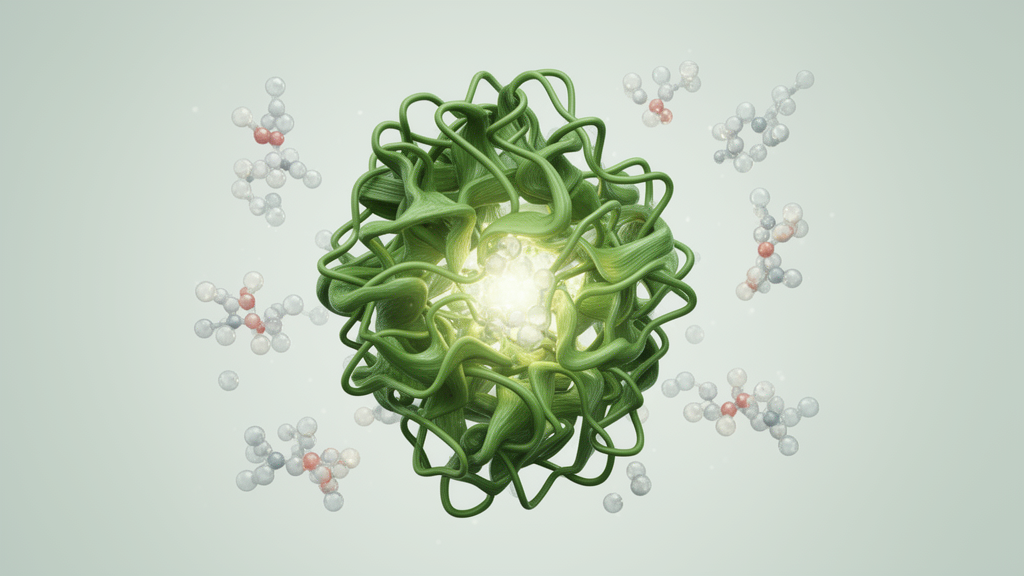
Enzymes are the molecular tools of life. They accelerate chemical reactions and can distinguish with remarkable precision between molecules that are nearly identical to one another. That selectivity underpins the production of important medicines such as penicillin and cyclosporine, yet the question of how enzymes developed this ability to tell apart similar chemical functionalities has remained difficult to answer. An international research team including researchers from Graz University of Technology (TU Graz) has now tackled the problem using a group of plant enzymes known as borneol dehydrogenases as a case study, and the results have been published in Nature Communications.
Borneol dehydrogenases, or BDHs, are plant enzymes involved, among other things, in the formation of camphor. Some members of this enzyme family can very specifically distinguish between the two mirror-image forms of the molecule 1-borneol. One of the two variants is preferentially bound by the enzyme and thereby made available for oxidation processes. This kind of high selectivity is of considerable interest for biotechnological applications, including the production of active pharmaceutical ingredients, cosmetics and fragrances, because the effects of mirror-image variants of a drug can differ significantly, and using the wrong variant can cause side effects.
“While natural enzymes recognise these mirror images with a high degree of precision, in many cases it is unclear why this function has become established through evolution and which changes in the enzyme were responsible for this,” says Robert Kourist, head of the Institute of Molecular Biotechnology at TU Graz. To trace how the selectivity of BDHs arose, the researchers drew on sequences from 97 related enzymes from 59 plant genera and used these to reconstruct various ancestral enzymes. Working with these reconstructed proteins allowed them to follow the individual stages of a possible evolutionary pathway.
The reconstruction revealed what the team describes as a significant evolutionary leap. “This revealed a significant evolutionary leap: a particular reconstructed ancestral enzyme showed little distinction between the two mirror-image forms of the molecule, whereas a later ancestral enzyme, by contrast, was highly selective,” says co-first author Jasmin Zuson from the Institute of Molecular Biotechnology. In other words, somewhere along the reconstructed lineage, an enzyme that barely discriminated between the two borneol variants gave rise to descendants capable of choosing between them with great precision.
The key to understanding that leap lay in comparing two enzyme variants in closer detail. Between them stand 19 amino acid changes, and only one of these affects the active site, the catalytic center where the chemical reaction takes place. Although that single active-site mutation did alter the enzyme’s selectivity to a measurable extent, it was not sufficient on its own. Further changes at positions outside the active site were necessary to achieve very high selectivity, indicating that the molecular machinery of discrimination is distributed across the protein rather than concentrated in one pocket.
“The results show that the function of an enzyme cannot be explained solely on the basis of its active site. Changes in other parts of the protein can, when acting in combination, have a decisive influence on the properties of the enzyme as a whole,” says Kourist. This finding challenges a common simplification in which an enzyme’s behaviour is read directly from the architecture of its catalytic center, and it highlights how mutations that appear peripheral can accumulate into functionally decisive combinations over evolutionary time.
Molecular simulations offered a possible physical explanation for the pattern. According to the study, it is not only the sequence of an enzyme’s amino acids that influences its reaction selectivity, but also its shape and mobility, which are largely determined by the periphery of the molecule. That periphery affects how an enzyme and a reactant come into contact with one another in a liquid. In the simulations, the highly selective molecular form more frequently adopted a spatial arrangement that enables a successful reaction, linking large-scale protein dynamics to the enzyme’s chemical preference.
The study thus provides new insights into how evolution gives rise to molecular precision. In the long term, the authors argue, this knowledge may also prove relevant to biotechnology. “A better understanding of the evolutionary origins of selectivity could help us to optimise enzymes more specifically for certain tasks in the future,” says Kourist. Because mirror-image selectivity matters directly to the safety and efficiency of manufacturing active pharmaceutical ingredients, enzymes, cosmetics and fragrances, the ability to engineer selectivity more rationally could carry practical weight well beyond evolutionary theory.
The work, published in Nature Communications under the title “Deciphering the evolutionary origin of the enantioselectivity of short-chain dehydrogenases from plants toward 1-borneol,” stands as a case study in how reconstructing ancestral proteins can turn a broad evolutionary question into a testable molecular narrative. By combining sequence reconstruction across 59 plant genera with structural simulation, the team showed that an enzyme’s precision is a collaborative property of the whole protein, shaped by many small changes acting together rather than by a single dramatic mutation at the catalytic center.
Subject of Research: Evolutionary origin of the mirror-image selectivity of plant borneol dehydrogenase enzymes
Article Title: How enzymes learn to distinguish between molecules
Article References: How enzymes learn to distinguish between molecules. Original publication (Bibliographic details unavailable.)
Image Credits: AI Generated
DOI: Not provided
Keywords: enzymes, borneol dehydrogenases, enantioselectivity, ancestral enzyme reconstruction, active site, protein dynamics, molecular evolution, TU Graz, Nature Communications, biotechnology, plant enzymes, pharmaceutical manufacturing
News Source: Denise Maddox. (October 29, 2026). Plant Enzymes Evolved Molecular Precision Far Beyond Their Active Sites. Scienmag.



