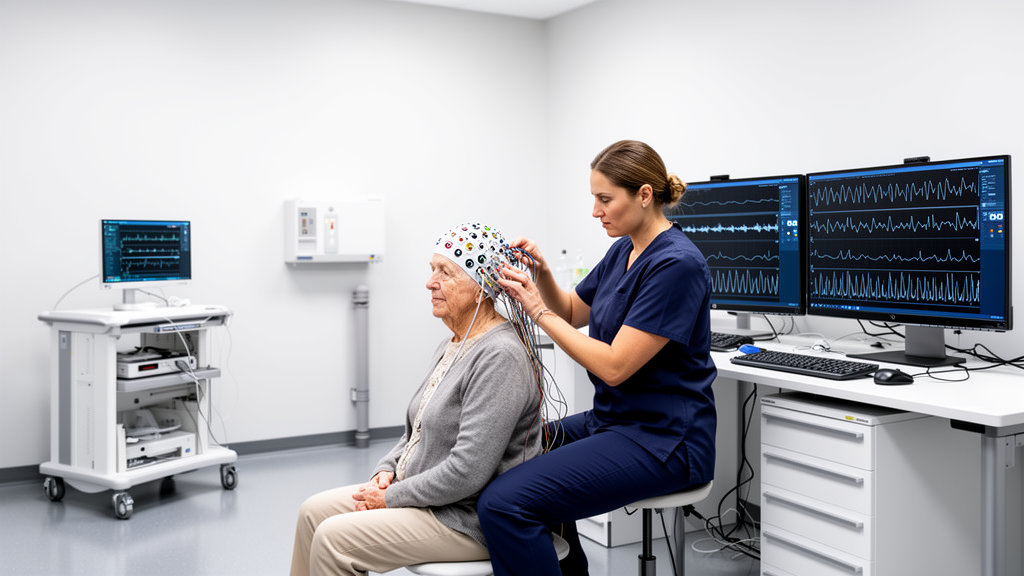
Alzheimer’s disease and related neurodegenerative diseases are entering the “Fourth paradigm” of data-driven science, yet a “data void” persists because Alzheimer’s disease pathology progresses silently for years. In a perspective review published in Human Brain, researchers argue that large-scale electroencephalography, combined with clinical and biological validation, can provide a scalable functional window onto this gap.
Current electroencephalography resources across the research landscape remain heavily fragmented by differing sampling rates ranging from 100 to 1,000 Hz, varied electrode channel configurations, incompatible file formats, and strict access restrictions. Furthermore, public datasets focused on Alzheimer’s disease are mostly small, showing a sample-size disparity with foundational electroencephalography resources.
To overcome these structural limitations, the authors outline a dual-track methodological strategy centered on rigorous data uniformity. The proposal pairs prospective standardization through a comprehensive standard operating procedure—encompassing ethics, clinical common data elements, acquisition parameters, and the standardized Brain Imaging Data Structure format—with retrospective harmonization protocols designed to integrate disparate legacy datasets.
The review also evaluates advanced computational architectures, examining Transformer-based artificial intelligence models alongside explainable artificial intelligence techniques specifically designed to prevent models from learning spurious correlations or shortcuts. Ultimately, the authors propose a collaborative research ecosystem that connects standardized electroencephalography records with longitudinal cohorts, human brain banks, and post-mortem neuropathology to support robust, interpretable, and scalable discovery engines for neurodegenerative diseases.
A central challenge highlighted in the perspective review is the marked disparity between public datasets dedicated to Alzheimer’s disease and larger foundational electroencephalography collections.
To support prospective collection under their proposed standardization framework, the authors emphasize aligning electrophysiological recordings with standardized metadata structures.
Furthermore, the authors note that deploying Transformer architectures to large electroencephalography databases requires rigorous safeguards against algorithmic artifacts.
Subject of Research: Standardization of large-scale electroencephalography databases and AI frameworks for neurodegenerative disease research
Article Title: A novel paradigm for neurodegenerative diseases: building an AI-driven large-scale electroencephalography database research
Article References: A novel paradigm for neurodegenerative diseases: building an AI-driven large-scale electroencephalography database research. Original publication (Bibliographic details unavailable.)
Image Credits: AI Generated
DOI: Not provided
Keywords: electroencephalography, Alzheimer's disease, neurodegenerative diseases, Transformer models, explainable AI, data harmonization, BIDS format, clinical data elements, brain banks, neuropathology, data-driven science, biomarkers, standard operating procedures, legacy data, Human Brain journal
News Source: Cassandra Pierce. (November 12, 2026). Perspective Review Proposes Standardized Electroencephalography Database Framework for Neurodegenerative Diseases. Scienmag.