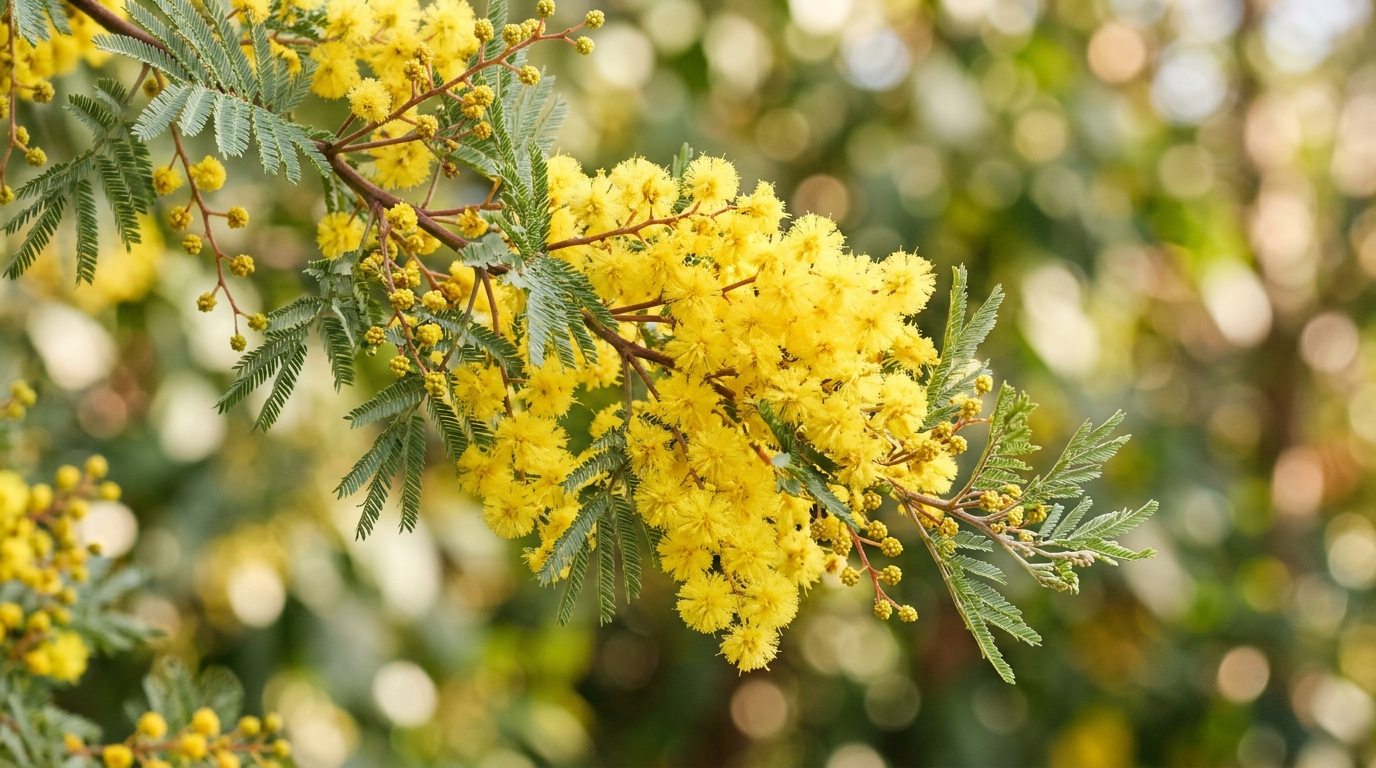
An integrated analytical framework combining untargeted metabolomics, bioassay-guided fractionation, and nuclear magnetic resonance spectroscopy has identified the specific polyphenols driving the antioxidant and antimicrobial properties of Acacia dealbata. Widely known as Silver Wattle, the leguminous tree native to southeastern Australia produces specialized metabolites across its vegetative tissues that exhibit distinct biological activities. Researchers investigating leaf and bark extracts demonstrated that polar organic extracts from leaves and intermediate-polarity extracts from bark harbor substantial concentrations of bioactive metabolites capable of neutralizing free radicals and suppressing bacterial pathogens. Moving beyond conventional bulk phytochemical measurements, the workflow mapped complex crude extracts to discrete chromatographic fractions and identified specific chemical drivers, including flavonoid glycosides, flavan-3-ols, and condensed tannins. The findings establish that the biological potency of A. dealbata tissues is governed by chemical divergence between foliage and outer protective bark, providing an empirical basis for the species’ ecological resilience and documented traditional uses.
Acacia dealbata occupies a notable ecological niche within the Acacia genus, which encompasses woody species recognized for environmental resilience across arid, semi-arid, and temperate ecosystems. While historical records document traditional therapeutic uses of Acacia foliage and bark by Aboriginal peoples, comprehensive phytochemical characterization of A. dealbata has remained limited. Previous investigations into the species primarily relied on crude extracts evaluated via aggregate colorimetric assays, measuring total phenolic, flavonoid, or tannin contents. Although these surveys confirmed the presence of secondary metabolites, bulk assays cannot resolve individual molecular structures, leaving the specific compounds responsible for biological activity unknown. Furthermore, earlier chemical evaluations often utilized gas chromatography-mass spectrometry, an approach well-suited for non-polar volatiles but inadequate for detecting thermally labile or polar polyphenols without chemical derivatization. Overcoming these historical analytical limitations required an untargeted liquid chromatography-tandem mass spectrometry strategy capable of comprehensively resolving intact, polar secondary metabolites directly from complex botanical matrices.
To establish a controlled comparative profile, leaf and bark tissues were collected from mature trees in Geelong, Victoria. Fresh samples were frozen immediately at negative twenty degrees Celsius, freeze-dried, and ground with liquid nitrogen into uniform analytical powders. The extraction strategy evaluated sequential solvent partitioning against a single-solvent extraction scheme using 100-gram aliquots. In the sequential method, powdered biomass was extracted successively with n-heptane, ethyl acetate, methanol, and deionized water at a one-to-five solid-to-solvent ratio under ultrasonication and stirring. For single-solvent extraction, biomass was extracted with a ternary mixture of water, acetonitrile, and isopropanol in a 2:3:3 volume ratio. Gravimetric yields ranged from 1.72 to 14.23 percent in leaf tissues and 0.61 to 20.85 percent in bark tissues. In both organs, non-polar n-heptane produced the lowest extract mass, while methanol produced the highest yield in leaves and the ternary solvent mixture afforded the highest yield in bark.
Because n-heptane selectively extracts lipophilic waxes, lipids, and fatty acids, it served as an initial defatting step, and its extracts were excluded from subsequent biological evaluation. The remaining four extracts from leaf and bark tissues underwent quantitative colorimetric profiling for total phenolic and total flavonoid content. Phenolic concentrations were measured via the Folin-Ciocalteu assay expressed in gallic acid equivalents, while flavonoid concentrations were quantified using the aluminium chloride method in quercetin equivalents. Bark extracts exhibited substantially higher phenolic and flavonoid concentrations than leaf tissues across all solvent systems. Among leaf preparations, the ternary mixture and methanol extracts demonstrated the highest phenolic and flavonoid levels, with no significant difference between them. In bark, the ethyl acetate extract displayed the highest concentrations of phenolics and flavonoids, followed by the ternary mixture and methanol extracts, whereas aqueous extracts showed the lowest values, underscoring the influence of solvent polarity on phenolic extraction.
Antioxidant capacity was evaluated across the eight non-heptane extracts using three distinct in vitro assays: DPPH radical scavenging, ferric reducing antioxidant power, and phosphomolybdenum total antioxidant capacity. In the DPPH assay, the leaf methanol extract and bark ethyl acetate extract exhibited the lowest half-maximal inhibitory concentration values. The leaf methanol extract demonstrated radical scavenging activity with no statistically significant difference from the pure reference standard, L-ascorbic acid. Correspondingly, bark ethyl acetate extract showed potent radical scavenging comparable to ascorbic acid, followed closely by the bark ternary mixture extract. In the ferric reducing and total antioxidant capacity assays, the leaf methanol and bark ethyl acetate extracts again produced the greatest activities within their respective tissues. Across all samples, reducing power and total antioxidant activity remained significantly lower than pure ascorbic acid, reflecting mechanistic differences between free-radical hydrogen donation and single-electron transfer reducing pathways in complex natural mixtures.
Antimicrobial screening was performed using the agar disc diffusion method against five test microorganisms: Gram-positive Geobacillus sp. and Staphylococcus aureus, Gram-negative Escherichia coli and Pseudomonas aeruginosa, and the yeast Saccharomyces cerevisiae. Sterile paper discs loaded with 100 micrograms of extract were evaluated against chloramphenicol and fluconazole positive controls. Crude extracts displayed selective antimicrobial activity that varied between plant tissues. Leaf extracts showed limited overall potency, with ethyl acetate and water extracts producing weak inhibition only against Geobacillus sp., while the methanol extract showed notable activity against Pseudomonas aeruginosa. In contrast, bark extracts demonstrated broader antibacterial actions: the ethyl acetate extract inhibited Geobacillus sp., Staphylococcus aureus, and Pseudomonas aeruginosa, whereas other bark extracts selectively inhibited Geobacillus sp. and Pseudomonas aeruginosa. None of the extracts inhibited Escherichia coli, likely due to outer membrane permeability barriers, and all crude plant extracts displayed lower potency than reference commercial antibiotics.
Based on bioassay outcomes, the leaf methanol and bark ethyl acetate extracts were selected for preparative high-performance liquid chromatography fractionation. Leaf methanol extract yielded 17 fractions monitored at 380 nanometers, while bark ethyl acetate extract yielded 10 time-based fractions collected every five minutes. Re-testing of these fractions demonstrated enhanced biological potency in specific chromatographic cuts. In the DPPH assay, seven leaf fractions exhibited potent radical scavenging with half-maximal inhibitory concentrations below 9 micrograms per milliliter, with fraction LF-13 showing activity statistically equivalent to ascorbic acid. Bark fractions BF-4, BF-5, and BF-6 demonstrated the strongest radical scavenging. In antimicrobial testing, leaf fraction LF-7 produced a 20-millimeter zone of inhibition against Pseudomonas aeruginosa, followed by LF-12 with a 17-millimeter zone. Among bark fractions, BF-4 was the sole fraction active against Staphylococcus aureus, while several bark fractions inhibited Geobacillus sp. and Pseudomonas aeruginosa, demonstrating that fractionation effectively enriched antibacterial phytoconstituents.
Untargeted metabolomics profiling was conducted using ultra-high-performance liquid chromatography coupled to high-resolution Orbitrap mass spectrometry in positive and negative electrospray modes. Data were processed in MZmine, while feature-based molecular networking was carried out in GNPS2. In silico structural predictions from SIRIUS were combined with taxonomically informed metabolite annotation in R, which re-ranked candidate structures using natural product repositories including COCONUT and LOTUS. Natural product classification identified shikimates and phenylpropanoids, particularly flavonoids, as the most abundant superclass across both tissues. In leaf extracts, polar solvents extracted abundant flavonoids, amino acids, and alkaloids, whereas ethyl acetate concentrated lipophilic terpenoids. In bark extracts, ethyl acetate contained the greatest diversity of flavonoids, triterpenoids, and polyketides.
Quantitative targeted liquid chromatography-tandem mass spectrometry using eleven authenticated reference standards provided definitive verification of the primary polyphenols residing within active fractions. The panel evaluated catechin, epigallocatechin, quercetin, myricetin, luteolin, naringenin, apigenin, genistein, rutin, isorhamnetin, and procyanidin B2 in negative electrospray mode. Rutin was identified as the predominant polyphenol in leaf tissues, reaching 57.9 micrograms per milligram in bioactive fraction LF-9, significantly exceeding concentrations reported in other Acacia species. In contrast, bark fractions were dominated by flavan-3-ols and condensed tannins, with fraction BF-3 containing 144 micrograms per milligram of catechin and fraction BF-4 containing 252 micrograms per milligram of procyanidin B2. Untargeted analysis of leaf fraction LF-13 revealed an abundance of flavonoid O-glycosides, including kaempferol-3-O-glucoside and protocatechuic glucoside, while active bark fraction BF-6 was enriched with higher molecular weight proanthocyanidin oligomers that were not represented among the targeted reference standards.
Structural characterization by two-dimensional nuclear magnetic resonance spectroscopy, encompassing COSY, HSQC, and HMBC experiments acquired at 500 megahertz, confirmed the divergent chemical classes between active bark and leaf fractions. Spectral analysis assisted by the NMRMine workflow established that bark fractions BF-4 through BF-6 exhibited dense aromatic spin systems spanning proton shifts between 5.9 and 7.1 parts per million and carbon shifts between 95 and 130 parts per million, diagnostic of flavan-3-ols and proanthocyanidins. In contrast, leaf fraction LF-13 was dominated by oxygenated aliphatic networks with a diagnostic anomeric cross-peak at 5.52 and 102.8 parts per million, confirming the predominance of flavonoid O-glycosides.
Subject of Research: Metabolomic and bioassay-guided identification of bioactive polyphenols from Acacia dealbata tissues
Article Title: Metabolomics and bioassay-guided characterization identifies bioactive polyphenols in Acacia dealbata leaf and bark extracts
Article References: Hossain, M. S., Fernando, H. N., Hande, M., Adcock, J. L., & Callahan, D. L. (2026). Metabolomics and bioassay-guided characterization identifies bioactive polyphenols in Acacia dealbata leaf and bark extracts. Metabolomics, 22(6), Article 182. https://doi.org/10.1007/s11306-026-02558-7
Image Credits: AI Generated
DOI: 10.1007/s11306-026-02558-7
Keywords: Acacia dealbata, Silver Wattle, metabolomics, polyphenols, flavonoids, proanthocyanidins, rutin, catechin, procyanidin B2, antioxidant activity, antimicrobial activity, liquid chromatography-mass spectrometry, nuclear magnetic resonance, bioassay-guided fractionation, DPPH assay, molecular networking, TIMA
News Source: Drew Townsend. (November 14, 2026). Acacia dealbata Extracts Yield Bioactive Polyphenols Targeting Oxidation and Bacterial Strains. Scienmag.