• HOME
  • NEWS
  • EXPLORE
    • CAREER
      • Companies
      • Jobs
    • EVENTS
    • iGEM
      • News
      • Team
    • PHOTOS
    • VIDEO
    • WIKI
  • BLOG
  • COMMUNITY
    • FACEBOOK
    • INSTAGRAM
    • TWITTER
Tuesday, July 7, 2026
BIOENGINEER.ORG
No Result
View All Result
  • Login
  • HOME
  • NEWS
  • EXPLORE
    • CAREER
      • Companies
      • Jobs
        • Lecturer
        • PhD Studentship
        • Postdoc
        • Research Assistant
    • EVENTS
    • iGEM
      • News
      • Team
    • PHOTOS
    • VIDEO
    • WIKI
  • BLOG
  • COMMUNITY
    • FACEBOOK
    • INSTAGRAM
    • TWITTER
  • HOME
  • NEWS
  • EXPLORE
    • CAREER
      • Companies
      • Jobs
        • Lecturer
        • PhD Studentship
        • Postdoc
        • Research Assistant
    • EVENTS
    • iGEM
      • News
      • Team
    • PHOTOS
    • VIDEO
    • WIKI
  • BLOG
  • COMMUNITY
    • FACEBOOK
    • INSTAGRAM
    • TWITTER
No Result
View All Result
Bioengineer.org
No Result
View All Result
Home NEWS Science News Biology

Penn State receives five-year $3.7 million grant to study virus evolution

Bioengineer by Bioengineer
February 10, 2020
in Biology
Reading Time: 2 mins read
0
IMAGE
Share on FacebookShare on TwitterShare on LinkedinShare on RedditShare on Telegram

IMAGE

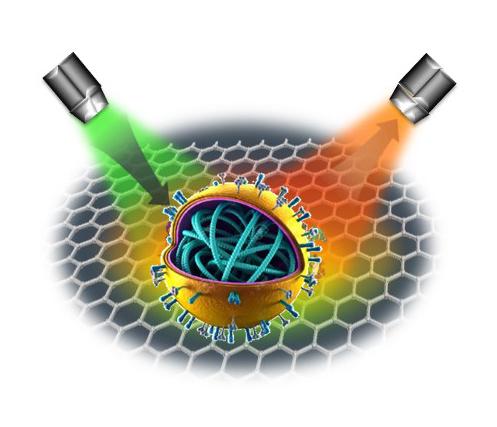
Credit: Terrones lab/Penn State


The evolution of viruses will be the focus of a five-year $3.7 million dollar grant from the National Science Foundation’s new program on convergence research, to an interdisciplinary team led by Penn State. The grant is in two phases, depending on successful completion of phase one milestones.

This convergence grant brings together disciplines that have not worked together before to solve problems of high complexity with societal impact. Penn State is one of 11 universites to receive a convergence grant.

“Convergence is not the same as multidisciplinary research,” according to principal researcher Mauricio Terrones, Verne M. Willaman Professor of Physics. “Convergence is the deep dive into establishing communication pathways and new protocols that results in the emergence of a new field. In our project we have a virologist, an engineer, a physicist/chemist, a spectroscopist, and a data scientist.”

The team is trying to work on the very complicated problem of the evolution of viruses. They plan to do this by effectively capturing the viruses and using a laser to record the vibrations of atoms and molecules that make up the surface of the viruses. As a virus mutates, its surface changes and the frequency of the vibrations change, thus leading to the evolution of new strains of contagious viruses.

Each year, one in five people around the globe are infected with epidemic strains of influenza, leading to half a million deaths. Early detection of new strains that can cause a pandemic is crucial, but current methodology requires extensive laboratory equipment housed in specialized centers with methods that are slow and costly. The Penn State-New York University team proposes to develop a handheld device that will quickly and cheaply detect evolving viruses in the field.

Because the changes in the virus surface are minute, the team will require data science and machine learning to create a database to differentiate between emerging strains.

“Our virologist, Elodie Ghedin from NYU, is a leading expert on influenza and virus evolution,” said Terrones. “She will provide us with the viruses. She can track down viruses from the 1800s to now and see how the virus mutates over time.

“Five years from now we hope to create a center for viruses in plants, animals and humans,” Terrones added.

In addition to Terrones and Ghedin, other members of the team include Sharon Huang, associate professor of information science and technology, Ying-Tin Yeh assistant research professor of physics, and Shenxi Huang, assistant professor of electrical engineering and biomedical engineering all at Penn State.

###

Media Contact
A’ndrea Elyse Messer
[email protected]
814-865-5689

Tags: BiologyInfectious/Emerging DiseasesVaccinesVirology
Share12Tweet8Share2ShareShareShare2

Related Posts

Here are a few rewritten headlines for a science magazine post, each with a slightly different tone: Intriguing & poetic: How do organs sculpt themselves? Sea stars hold the secret Direct & research-focused: Sea stars reveal the hidden rules of organ formation Metaphorical & inviting: Tiny architects beneath the waves: What sea stars teach us about building organs Short & punchy: Star-shaped clues to how our organs take shape Question-led: Could a sea star show us how organs form? Elegant & feature-style: The body’s blueprint, glimpsed in a sea star’s arm

July 6, 2026
Bacteria evolve faster with unconventional gene copies — Biology

Bacteria evolve faster with unconventional gene copies

July 6, 2026

Neighbours rewire soil feedback via root microbiome shifts

July 6, 2026

Evolution-Inspired Biosensors Revolutionize Lipid Tracking in Real Time

July 2, 2026
Please login to join discussion

POPULAR NEWS

  • Detection of EDCs in Breast Milk and Infant Urine Up to Six Months Highlights Early Exposure Risks

    77 shares
    Share 31 Tweet 19
  • New Drug Candidate Developed at McMaster Shows Potential for Treating Brain Cancer

    58 shares
    Share 23 Tweet 15
  • Saying Goodbye to PGY-6: Pediatric Fellowship Realities

    103 shares
    Share 41 Tweet 26
  • KTU Researchers Explore Ultrasound’s Role in Enhancing Blood Flow Beyond Diagnostics

    53 shares
    Share 21 Tweet 13

About

We bring you the latest biotechnology news from best research centers and universities around the world. Check our website.

Follow us

Recent News

Flame retardant BDE-209 targets molecularly linked to ulcerative colitis

Ultra-high frequency particle impacts mimic rockbursts to shatter hard rock

Kidney transplant outcomes in older adults studied by German researchers

Subscribe to Blog via Email

Enter your email address to subscribe to this blog and receive notifications of new posts by email.

Join 83 other subscribers
  • Contact Us

Bioengineer.org © Copyright 2023 All Rights Reserved.

Welcome Back!

Login to your account below

Forgotten Password?

Retrieve your password

Please enter your username or email address to reset your password.

Log In
No Result
View All Result
  • Homepages
    • Home Page 1
    • Home Page 2
  • News
  • National
  • Business
  • Health
  • Lifestyle
  • Science

Bioengineer.org © Copyright 2023 All Rights Reserved.