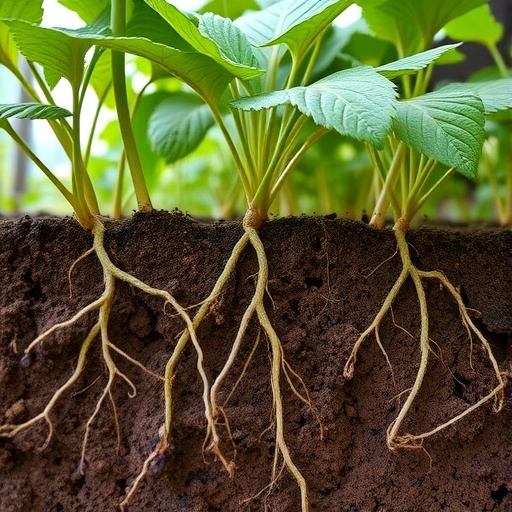
In a revelation that fundamentally reshapes our understanding of how plants interact, a team of researchers has discovered that the microscopic communities living on roots act as covert intermediaries, allowing neighbouring plants to rewire each other’s relationships with the soil. For decades, ecologists have grappled with two seemingly distinct forces that govern plant communities: direct competition or facilitation between neighbours for light, water, and nutrients, and the cryptic, delayed effects mediated by soil microbes—the realm of plant–soil feedbacks. The latter occurs because plants cultivate specific bacteria, fungi, and other microorganisms around their roots, and when these soil legacies are encountered by the next generation, they can either boost or suppress growth. While both neighbour interactions and soil microbiomes are known to be immensely powerful drivers of ecosystem dynamics, they have stubbornly remained siloed in experimental and theoretical frameworks, leaving a gaping hole in our mechanistic grasp of nature’s tapestry. The new study, published in Nature Plants, elegantly bridges this chasm, demonstrating for the first time that the very presence of a different plant species next to a focal plant triggers a profound restructuring of its root-associated bacterial community, shifting it towards the neighbour’s characteristic microbiome, and that this microbial convergence serves as the causal engine driving altered growth outcomes.
The experimental design, led by researchers Kuerban, Gomes, and Bezemer, was a masterclass in disentangling complex causality, employing a sophisticated plant–soil feedback approach using six grassland species that were grown in three distinct soil backgrounds. The scientists used sterile soil as a microbial blank slate, soil that had been previously conditioned by the same species (conspecific legacy soil), and soil conditioned by a different species (heterospecific legacy soil). Crucially, each focal plant was either grown alone or with one of five different neighbour species. The first striking observation was that in the absence of microbes, in the sterile soil, the presence of a neighbour hammered the focal plant’s growth mercilessly. This is the classic picture of direct, resource-based competition, where plants, unshielded by any microbial buffering, engage in a zero-sum battle for nutrients and space, resulting in strong growth suppression. However, the moment soil microbes entered the picture, this narrative of ruthless competition was flipped on its head entirely; the growth penalty imposed by neighbours was significantly alleviated, revealing that microorganisms act as a potent buffer against direct competitive onslaught.
The alleviation of neighbour-induced growth suppression was not a uniform phenomenon but was exquisitely tuned by soil history. In soils carrying a microbial legacy of the focal plant itself, the growth benefit from microbial presence was present, but it was in the soils with heterospecific legacies—those conditioned by a different plant species—that the transformation was most dramatic. Here, the microbial community seemed to be even more adept at mediating a détente between the competing plants. The consequence of this legacy-modulated microbial mediation was a remarkable shift in the performance hierarchy. In many instances, a focal plant growing next to a heterospecific neighbour not only overcame the expected competitive drag but actually achieved a size equal to, or even surpassing, that of a solitary plant growing without any neighbour. This challenges the foundational assumption that competition inherently reduces individual fitness, indicating that the microbial consortia nurtured by a different species can provide such potent facilitative effects that they can completely offset the costs of resource sharing or direct interference.
The scientists then turned their analytical lens to the bacterial communities themselves, employing high-throughput sequencing to resolve the architecture of the root-associated microbiome. What they uncovered was nothing short of a microbial identity theft in real-time. When a focal plant grew next to a heterospecific neighbour, its root bacterial community underwent a striking taxonomic restructuring, progressively converging towards the microbial profile of the neighbouring plant’s root community. This neighbour-induced microbial reassembly was not random noise; it was a directional shift that rewired the core microbial network of the focal plant. Even more compellingly, the extent of this convergence was itself dependent on the soil legacy. The convergence was strongest when the focal plant was embedded in soil that already carried the microbial legacy of that heterospecific neighbour, suggesting a synergistic alignment between the historical soil memory and the live signal from the neighbouring root system. This means that plant roots are not merely passive substrates for microbial colonisation but are dynamic interfaces where the chemical and physical whispers of a neighbour can orchestrate profound community-level changes in the microbiota.
The most critical breakthrough came when the researchers correlated these microbial shifts directly with plant performance. The degree to which a focal plant’s bacterial community shifted towards that of its neighbour’s proved to be an astonishingly accurate predictor of the focal plant’s growth response. This statistical linkage transcends mere correlation; it positions the microbiome reassembly not as a side effect of altered growth, but as a mechanistic mediator. If the neighbour’s microbiome is particularly enriched in bacteria that can solubilise recalcitrant phosphorus, synthesise a limiting growth hormone, or suppress a latent pathogen, then the focal plant’s acquisition of this microbial complement via convergence would directly translate into the tissue-building biochemistry that manifests as increased biomass. This predictive relationship provides a quantitative framework, offering a glimpse of a future where community dynamics can be modelled not just by tracking plant traits, but by tracking the metagenomic trajectories of their symbiont clouds.
To move beyond correlation and firmly establish causation, the research team executed a decisive inoculation experiment, a gold-standard test in microbiome science. They carefully cultured the natural bacterial communities that had assembled on the roots of focal plants subjected to different neighbour and soil legacy treatments. These cultured consortia were then used to inoculate a new generation of plants grown in sterile conditions, thereby isolating the microbial community as the sole variable. The results were starkly illuminating: the growth responses of these inoculated plants faithfully recapitulated the patterns observed in the primary experiment. Plants that received the bacterial community characteristic of a focal plant that had experienced heterospecific neighbour facilitation grew larger, proving that the reassembled microbiome carried the functional capacity to drive the growth benefits. This causal validation shatters any remaining doubt that the bacterial reassembly is a passive passenger; it is the driver of the vehicle, steering the plant’s physiological trajectory in response to the social environment underground.
The study’s implications cascade deeply into our understanding of the mechanisms underpinning plant diversity and coexistence. A central paradox in ecology is how so many competing species manage to coexist without a few superior competitors driving all others to extinction. The mechanism revealed here—where a heterospecific neighbour both directly competes and indirectly benefits a plant by steering its microbiome towards a more beneficial configuration—can generate the stabilising forces necessary for coexistence. If a plant species becomes too abundant, its soil legacy would become dominated by its own pathogens, but simultaneously, rare heterospecific neighbours would experience a powerful microbial uplift from the common species’ soil, giving them a competitive edge and preventing exclusion. This is a frequency-dependent feedback loop with the microbiome acting as a dynamic tuning fork, resonating with the community’s taxonomic composition to harmonize the survival of multiple species.
Zooming inward to the molecular scale, the study shines a bright light on the cryptic chemical dialogue that likely orchestrates this microbial restructuring. Plant roots continually exude a vast and chemically diverse array of primary and secondary metabolites—sugars, organic acids, phenolics, flavonoids, and strigolactones—that serve as the carbon currency and signaling molecules for the rhizosphere marketplace. When a heterospecific neighbour’s roots intermingle, even without direct physical contact, the diffusive chemical fingerprint of its exudates can be sensed by the focal plant or directly by the microbial community, triggering a cascade of transcriptional and metabolic adjustments. It is plausible that the focal plant, upon detecting a foreign exudate profile, alters its own exudation pattern, effectively adjusting its microbial recruitment strategy. Alternatively, the mobile bacteria themselves, navigating the porous soil matrix, integrate the chemical signals from both root systems and self-organise into a hybrid community structure optimized for the combined exudate landscape.
Digging deeper into the functional ecology of the restructured microbiome, the bacteria that converged onto the focal plant from the heterospecific neighbour’s community likely brought with them a repertoire of beneficial functional genes that the focal plant’s native microbiota lacked. These could include clusters of genes for the biosynthesis of auxins, cytokinins, or gibberellins that directly stimulate root meristem activity and cell elongation, effectively supercharging the plant’s intrinsic growth programme. Equally critical might be the lateral transfer of genes for the degradation of allelopathic chemicals, enzymes that detoxify the root environment and convert a chemical warfare agent into a nitrogen source. Furthermore, if the neighbour’s microbiome is particularly adept at activating systemic induced resistance pathways, the focal plant could become profoundly more resilient to opportunistic soil pathogens, diverting energy from costly defense synthesis into growth—a shift that would register as a substantial biomass gain even in the presence of resource competition.
The concept of soil legacy is itself transformed by these findings from a static, inherited property into a dynamic, socially malleable trait. Traditionally, plant–soil feedback has been viewed as a historical echo: a plant grows, modifies the soil biome, and the next plant experiences that modification. This research injects the present social context into that historical equation. The “legacy” is not a fixed record but a starting condition whose expression is modulated by the current neighbour. In heterospecific legacy soil, the microbial community is primed to associate with a different plant host; thus, when that host appears as a neighbour and its root-derived chemical signals diffuse through the soil matrix, the microbiome already positioned in the legacy is rapidly activated and assembled onto the focal plant root. The soil’s memory therefore acts as a catalyst, accelerating and intensifying the neighbour-induced convergence, creating a seamless temporal integration of past community composition and present community structure.
This re-framing has profound implications for the restoration ecology of grasslands, which are among the most biodiverse yet threatened terrestrial ecosystems on Earth. Standard restoration practices often focus on the above-ground assembly of plant species mixtures without a deep consideration of the hidden microbial landscape. The study suggests that the success of a re-introduced plant population might hinge critically on the immediate neighbourhood composition and the microbial legacies present in the soil. Introducing a target species into a patch with a carefully selected nurse neighbour and a soil history conditioned by that nurse plant could dramatically enhance establishment success, as the neighbour’s microbiome would converge onto the target seedling, providing a bespoke microbial armour and growth-promoting factory. Conversely, planting into a sterile post-disturbance soil, devoid of this living inoculum, removes this beneficial mechanism entirely, enforcing the harsh competitive dynamics that often doom nascent restoration efforts.
Agricultural science, too, should take sharp notice of this underground social network, which opens a revolutionary avenue for designing intercropping systems that are not just based on above-ground resource complementarity but on directed microbiome engineering. For decades, intercropping of cereals with legumes has exploited the nitrogen-fixing services of rhizobia, but this study suggests a far broader palette of bacterial functions can be harnessed. By selecting crop pairings where one species’ root exudates trigger the co-cultured species’ microbiome to converge towards a configuration rich in nutrient-scavenging or growth-promoting bacteria, farmers could amplify yields without increasing chemical inputs. This biologically-tuned strategy could lead to crop combinations that are iteratively refined using metagenomic data, where the “compatibility” of two varieties is measured not just in bushels per acre but in the beta-diversity convergence coefficient of their root bacterial communities.
The study’s methodological rigour in parsing bacterial community restructuring from other potential mechanisms is noteworthy. By using a triple-factorial design of soil legacy (sterile, conspecific, heterospecific), neighbour identity, and focal plant identity, the researchers could partition variance with exceptional clarity. The inclusion of sterile soil as a baseline was particularly ingenious, as it explicitly quantified the competitive effect in the complete absence of microbes, providing the counterfactual against which microbial buffering could be measured. Moreover, the re-inoculation experiment elegantly sidesteps the confounding effects of nutrient depletion, physical soil structure changes, or other uncharacterized soil properties that often plague soil feedback studies, locking the causal arrow directly onto the bacterial community. This sets a new experimental benchmark for the field, demonstrating that ecological microbiology must move beyond descriptive community surveys and into rigorous manipulative causal networks to truly understand how the natural world functions.
Peering into the genomic and metatranscriptomic future, the next logical advance will be to identify the specific bacterial strains and functional genes that are the trucks and cargo of this interspecies microbial trade. Single-cell sequencing and high-resolution metabolomics would allow a mapping of the precise metabolic handshakes occurring as a Pseudomonas strain, originally thriving on a neighbour’s root, colonizes the focal plant and begins synthesizing indole-3-acetic acid in response to the new host’s signal. Understanding the chemical lexicon that plants use to plastically re-engineer their microbiomes in response to a neighbour could even allow us to synthesize “neighbourhood” signal molecules, spritzing a crop with a community-altering spray that tricks its roots into assembling the most beneficial consortium possible, regardless of what is planted adjacent. This is not mere science fiction; it is the logical translational endpoint of the discovery that plant–plant interactions are fundamentally tripartite, with the microbiome as the dynamic third player that integrates and transduces the signals of community structure.
Ultimately, this work compels a profound philosophical shift in how we perceive a plant. No longer can a plant be considered an autonomous individual in ecology; it is a holobiont whose functional boundaries expand and contract with social context. Its growth, defense, and reproduction are not solely the outputs of its own genome but are emergent properties of a complex, socially-sensitive, interspecies network. The neighbour’s identity, filtered through the soil’s microbial memory, becomes as integral to the plant’s phenotype as light intensity or water availability. The invisible, bustling metropolis of the rhizosphere is thus a constant conversation, a molecular market and signaling network where the boundaries between one plant and another blur. This study provides a solid, experimentally rigorous foundation for this radical new view, demonstrating that the unseen majority in the soil do not just react to the plant community above them; they actively mediate the terms of engagement, rewriting the rules of competition and cooperation on the fly, and in doing so, they quietly choreograph the vibrant diversity of life we see carpeting our grasslands.
Subject of Research: The mechanistic role of neighbour-plant-induced root microbiome restructuring in mediating plant–soil feedback and plant–plant interactions, using six grassland species in sterile, conspecific legacy, and heterospecific legacy soils, complemented by a controlled bacterial inoculation experiment.
Article Title: Neighbours rewire plant–soil feedback patterns via reshaping root microbiomes
Article References:
Kuerban, M., Gomes, S.I.F. & Bezemer, T.M. Neighbours rewire plant–soil feedback patterns via reshaping root microbiomes.
Nat. Plants (2026). https://doi.org/10.1038/s41477-026-02338-0
Image Credits: AI Generated
DOI: https://doi.org/10.1038/s41477-026-02338-0
Keywords: plant–soil feedback, root microbiome, bacterial community reassembly, plant–plant interactions, soil legacy, neighbour effects, microbial convergence, grassland ecology, inoculation experiment, coexistence mechanisms