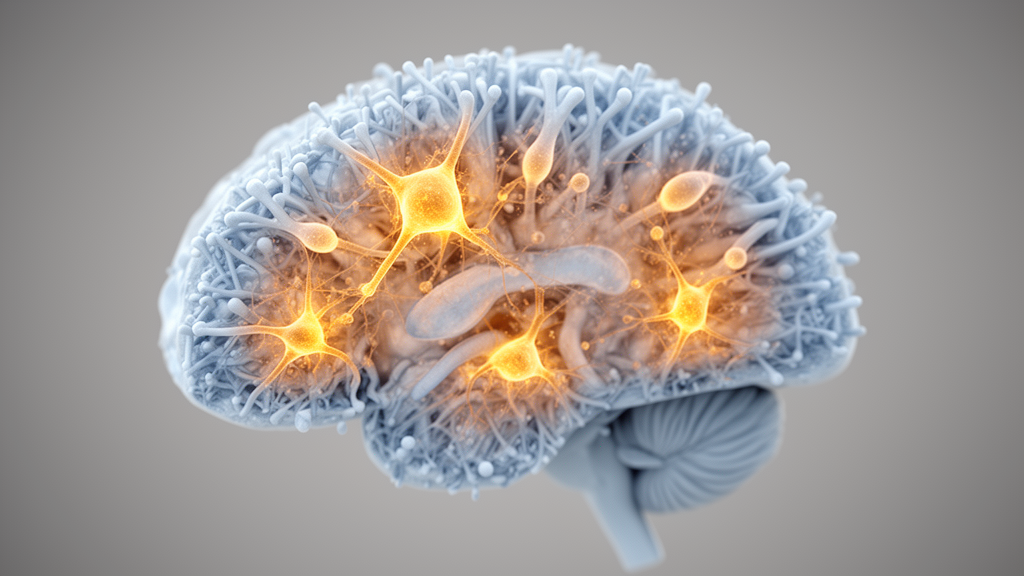
A new study in Cell & Bioscience reports that a single molecular circuit involving the calcium-binding protein parvalbumin may help explain why more than 60 percent of people with epilepsy experience cognitive impairment. Working with a chronic epileptic mouse model, researchers found that levels of parvalbumin, the NMDA receptor subunit GluN1, and the kinase CaMKIIα all dropped in the hippocampus of epileptic mice, and that restoring parvalbumin signaling improved both memory performance and neuronal survival.
Behavioral testing confirmed significant impairment in the epileptic animals, and histological examination of the hippocampus revealed substantial neuronal loss, consistent with the damage that accumulates in seizure-prone brain tissue.
The study's starting point was that parvalbumin-positive inhibitory neurons express the NMDA receptor subunit GluN1, and that the interaction between GluN1 and CaMKIIα is closely linked to both cognitive function and epilepsy. The researchers set out to test whether a parvalbumin–GluN1–CaMKIIα pathway could be a mechanistic link between seizures and memory dysfunction.
Western blot analysis of hippocampal tissue showed significantly decreased protein levels of parvalbumin, GluN1 and CaMKIIα in the epileptic mice. Immunofluorescence staining then showed that parvalbumin colocalizes with both GluN1 and CaMKIIα in the same cells, placing all three molecules in a common cellular compartment.
To move from correlation to causation, the researchers delivered adeno-associated viruses directly into the hippocampus to manipulate parvalbumin. These experiments demonstrated that parvalbumin status directly regulates the expression of GluN1 and CaMKIIα, positioning the protein upstream of the receptor–kinase pair rather than merely changing alongside it.
The functional consequences were striking. Overexpressing parvalbumin reduced seizure susceptibility, ameliorated cognitive impairment and rescued neuronal damage in the epileptic mice. Silencing parvalbumin through RNA interference produced the opposite effects, worsening the picture in the same model. This bidirectional pattern strengthens the argument that parvalbumin is not simply a passive casualty of epileptic injury but an active participant in the cognitive decline that accompanies it.
The most mechanistically revealing experiment involved chemogenetics. In epileptic mice whose parvalbumin had been silenced, the researchers selectively activated parvalbumin-positive neurons using chemogenetic tools. This activation restored phosphorylated CaMKIIα levels, enhanced the molecular binding between GluN1 and CaMKIIα, and rescued the cognitive impairment. In other words, driving the activity of these inhibitory neurons could compensate for the loss of parvalbumin protein itself, and the rescue tracked with the restoration of the GluN1–CaMKIIα interaction.
The authors conclude that parvalbumin mediates epilepsy-associated cognitive impairment by regulating CaMKIIα autophosphorylation and its interaction with GluN1. Because both overexpressing parvalbumin and selectively activating parvalbumin-positive neurons alleviated the impairment in mice, the pathway offers a potential therapeutic target, one that acts on inhibitory interneuron signaling rather than on seizure suppression alone.
Several caveats frame these findings. The work relies on a chemically induced chronic epilepsy model in mice, and the study is reported as an accepted manuscript shared early for faster access, subject to further edits before the final version of record. The authors themselves describe the pathway as providing a theoretical framework for therapeutic intervention rather than a validated treatment.
Subject of Research: The role of parvalbumin-positive interneurons and the CaMKIIα–GluN1 interaction in epilepsy-associated cognitive impairment
Article Title: Parvalbumin participates in epilepsy-associated cognitive impairment by regulating CaMKIIα–GluN1 interaction
Article References: Liu, C., Gong, C., Zheng, S., Sun, L., He, M., Yang, K., Lu, Y., Huang, L., Liu, Y., Wang, D., & Wu, Y. (2026). Parvalbumin participates in epilepsy-associated cognitive impairment by regulating CaMKIIα–GluN1 interaction. Cell & Bioscience. https://doi.org/10.1186/s13578-026-01675-z
Image Credits: AI Generated
DOI: 10.1186/s13578-026-01675-z
Keywords: epilepsy, cognitive impairment, parvalbumin, hippocampus, GluN1, CaMKIIα, NMDA receptor, interneurons, chemogenetics, mouse model, AAV, seizures
News Source: Drew Townsend. (October 28, 2026). Parvalbumin Protein Loss Linked to Epilepsy-Related Cognitive Impairment in Mice. Scienmag.