Chinese mugwort leaf, the dried foliage of Artemisia argyi and one of the oldest medicinal herbs in China, is routinely sterilized with cobalt-60 gamma irradiation before it reaches pharmacies and processing lines. A new exploratory study has mapped, compound by compound, what those radiation doses actually do to the leaf’s essential oil and to its ability to kill bacteria. The researchers found that moderate doses of 3.0 and 6.0 kilogray left the volatile profile of the oil largely intact, while a high dose of 9.0 kilogray substantially remodeled it, and that irradiation shifted the oil’s antibacterial performance in ways that depended strongly on which bacterium was tested and which measurement method was used.
The team, based at Hunan University of Chinese Medicine and Hunan University of Medicine, collected mugwort leaves from three geographically distinct sites in Huaihua, Hunan Province, in June 2025. Species identity was confirmed against the Pharmacopoeia of the People’s Republic of China, and a voucher specimen was deposited in the university herbarium. Dried leaf samples from three independent biological batches were divided into four groups and sealed in sterile polyethylene bags before being irradiated at a professional facility in Changsha at absorbed doses of 0, 3.0, 6.0, and 9.0 kilogray. Calibrated alanine dosimeters placed at the geometric center of representative bags confirmed that measured doses fell within five percent of the targets, and all treatments were carried out at ambient temperature.
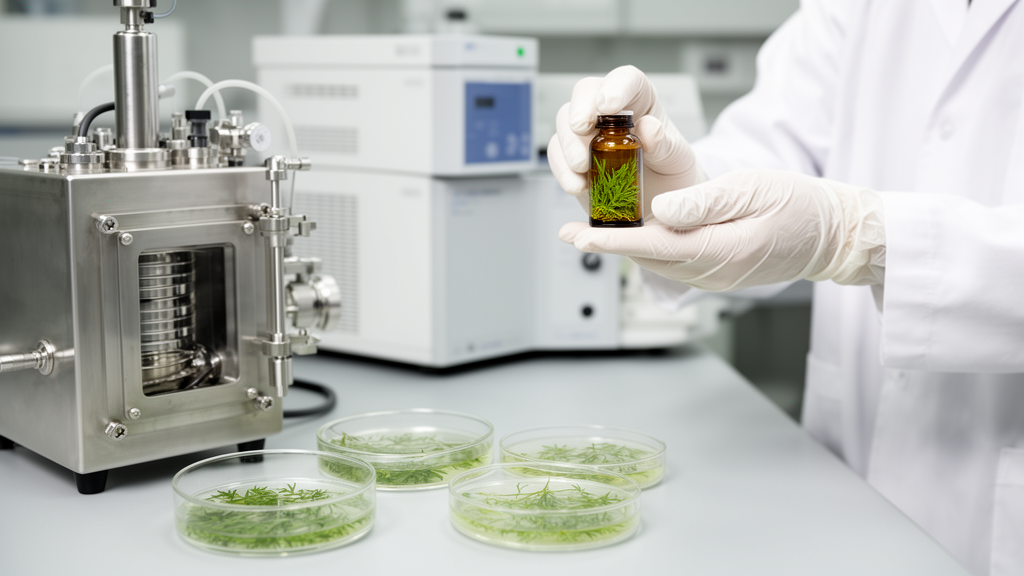
To capture the chemistry, the researchers extracted essential oil by hydrodistillation in a Clevenger-type apparatus, boiling 500 grams of dried leaf in water for six hours. Extraction yields were similar across all four groups, ranging from 1.9 to 2.1 percent by weight, which suggests that irradiation did not substantially change how much oil could be recovered. The volatile compounds released from each oil were then profiled with gas chromatography coupled to ion mobility spectrometry, a fast and highly sensitive headspace technique. Across the four dose groups, the analysis tentatively identified 111 headspace-derived volatile organic compounds, including 21 alcohols, 21 aldehydes, 19 ketones, 14 ethers, 14 heterocycles, 12 terpenes, five aromatic hydrocarbons, three sulfur-containing compounds, and two acids.
The multivariate statistics told a consistent story. In principal component analysis, cluster analysis, and partial least-squares discriminant analysis, the samples irradiated at 3.0 and 6.0 kilogray clustered tightly together and shared highly similar volatile signal patterns, marked by elevated signals for compounds such as dimethyl disulfide, pentanal, acetaldehyde, and methyl acetate. The untreated control and the 9.0 kilogray group each formed separate clusters. The high-dose samples showed increased relative signals for oxygenated and terpenoid compounds including 1,8-cineole, hexanal, 3-carene, 6-methyl-5-hepten-2-one, and p-cymene, while the control samples showed comparatively low signals for compounds such as myrcene, alpha-terpinene, alpha-phellandrene, and beta-pinene. The substantial compositional shift therefore appears to occur within the interval between 6 and 9 kilogray.
The PLS-DA model, built with 200-fold cross-validation, achieved an R-squared-Y of 0.993 and a Q-squared of 0.888, and a permutation test showed no obvious overfitting. Variable importance in projection scores above one flagged more than twenty candidate discriminator compounds, including d-camphor, gamma-terpinene, benzaldehyde, carvone, acetic acid, and several pyrazines, which the authors propose as potential indicators for distinguishing irradiation doses. The authors themselves caution, however, that with only three biological replicates per group, this multivariate analysis is an observational exploratory tool and cannot provide definitive evidence about the physicochemical changes irradiation causes.
On the biological side, the essential oils were tested against Escherichia coli ATCC 25922 and methicillin-resistant Staphylococcus aureus ATCC 43300 using three complementary assays. In agar disc diffusion, all four oils inhibited both bacteria, but the optimum dose differed by strain. The oil from the 6.0 kilogray group produced the largest inhibition zone against E. coli, measuring 16.0 plus or minus 0.1 millimeters, while the oil from the 3.0 kilogray group produced the largest zone against MRSA, at 16.1 plus or minus 0.1 millimeters. The authors note that diffusion-based and broth dilution assays differ substantially in how volatile, lipophilic compounds behave and become available to the bacteria, which is a well-recognized caveat in essential-oil testing.
The broth dilution results added nuance. Against E. coli, the minimum inhibitory concentration of the control oil was 0.4 percent, while the irradiated oils from 3.0, 6.0, and 9.0 kilogray all reached 0.2 percent. Against MRSA, the control and 3.0 kilogray oils had an MIC of 0.2 percent, whereas the 6.0 and 9.0 kilogray oils lowered it to 0.1 percent, with corresponding improvements in minimum bactericidal concentration. The half-maximal inhibitory concentrations, or IC50 values, followed their own dose-dependent patterns: against E. coli they were 1.095, 0.054, 0.169, and 0.047 parts per thousand for the 0, 3, 6, and 9 kilogray oils respectively, while against MRSA they were 0.118, 0.217, 0.284, and 0.246 parts per thousand. In other words, irradiation generally enhanced activity against E. coli, but its effect on MRSA depended on which endpoint was measured.
To link chemistry to function, the team ran Pearson correlations between the differential volatile markers and the IC50 values. Alpha-phellandrene showed a strong negative correlation with the IC50 against MRSA, with a coefficient of minus 0.99 at p below 0.05, making it a candidate marker associated with anti-MRSA activity, while pyrazine showed a positive correlation of 0.96. For E. coli, cis-3-hexenyl acetate showed an extremely strong negative correlation of minus 0.99 at p below 0.01, and 1-octen-3-one, beta-pinene, and alpha-thujone also correlated negatively. The authors emphasize that these correlations indicate covariation only and do not establish that any single compound causes the antibacterial effect; purified-compound studies would be needed to confirm direct activity.
Mechanistically, the authors hypothesize that the volatile changes arise from physical radiolytic reactions rather than biological metabolism, since dried medicinal materials contain no viable cells. High-dose irradiation increased the relative abundance of oxygenated terpenoids such as linalool, alpha-terpineol, and carvone, a pattern that could fit a classical radiolysis mechanism in which gamma radiation cleaves monoterpene hydrocarbons and promotes oxygenated derivatives. The authors stress, however, that they obtained no direct evidence for monoterpene cleavage, and that this proposed mechanism remains speculative pending further experimental confirmation.
The study also carries practical limitations that the authors lay out plainly. Headspace GC-IMS preferentially captures high-vapor-pressure compounds, so the data represent headspace-accessible fractions of the distilled oil rather than the full liquid-phase composition or the in-situ volatiles of irradiated raw leaves. Peak intensities are semi-quantitative relative signals, not absolute concentrations, and hydrodistillation itself can induce minor thermal modification of volatiles, although uniform extraction conditions kept all groups comparable. The work did not measure microbial inactivation efficiency directly, so the relationship between dose, decontamination, and volatile composition remains to be explored. Within those bounds, the findings suggest that doses in the 3 to 6 kilogray range, which are already the levels frequently applied to herbal materials, preserve the volatile composition of mugwort leaf oil while still improving selected antibacterial endpoints, offering a data-driven reference for choosing irradiation doses in mugwort processing and quality preservation.
Subject of Research: Effects of cobalt-60 gamma irradiation on the volatile compounds and antibacterial activity of Artemisia argyi leaf essential oil
Article Title: An exploratory study on the influence of 60Co irradiation on the volatile organic components and antibacterial activity of Artemisia argyi Folium
Article References: Xie, P., Tian, C., Liu, Y., Dai, Y., Liu, Y., Huang, D., & Cao, L. (2026). An exploratory study on the influence of 60Co irradiation on the volatile organic components and antibacterial activity of Artemisia argyi Folium. Frontiers in Chemistry, 14, Article 2004768. https://doi.org/10.3389/fchem.2026.2004768
Image Credits: AI Generated
DOI: 10.3389/fchem.2026.2004768
Keywords: cobalt-60 irradiation, Artemisia argyi, essential oil, GC-IMS, volatile organic compounds, antibacterial activity, MRSA, Escherichia coli, alpha-phellandrene, herbal medicine decontamination, radiolysis, food irradiation
News Source: Bethany Barker. (October 29, 2026). Gamma Irradiation Reshapes the Volatile Chemistry and Antibacterial Power of Mugwort Leaf Oil. Scienmag.