• HOME
  • NEWS
  • EXPLORE
    • CAREER
      • Companies
      • Jobs
    • EVENTS
    • iGEM
      • News
      • Team
    • PHOTOS
    • VIDEO
    • WIKI
  • BLOG
  • COMMUNITY
    • FACEBOOK
    • INSTAGRAM
    • TWITTER
Saturday, June 27, 2026
BIOENGINEER.ORG
No Result
View All Result
  • Login
  • HOME
  • NEWS
  • EXPLORE
    • CAREER
      • Companies
      • Jobs
        • Lecturer
        • PhD Studentship
        • Postdoc
        • Research Assistant
    • EVENTS
    • iGEM
      • News
      • Team
    • PHOTOS
    • VIDEO
    • WIKI
  • BLOG
  • COMMUNITY
    • FACEBOOK
    • INSTAGRAM
    • TWITTER
  • HOME
  • NEWS
  • EXPLORE
    • CAREER
      • Companies
      • Jobs
        • Lecturer
        • PhD Studentship
        • Postdoc
        • Research Assistant
    • EVENTS
    • iGEM
      • News
      • Team
    • PHOTOS
    • VIDEO
    • WIKI
  • BLOG
  • COMMUNITY
    • FACEBOOK
    • INSTAGRAM
    • TWITTER
No Result
View All Result
Bioengineer.org
No Result
View All Result
Home NEWS Science News Biology

Parasitic fungi keep harmful blue-green algae in check

Bioengineer by Bioengineer
June 9, 2020
in Biology
Reading Time: 2 mins read
0
IMAGE
Share on FacebookShare on TwitterShare on LinkedinShare on RedditShare on Telegram

IMAGE

Credit: Angelina Tittmann, IGB

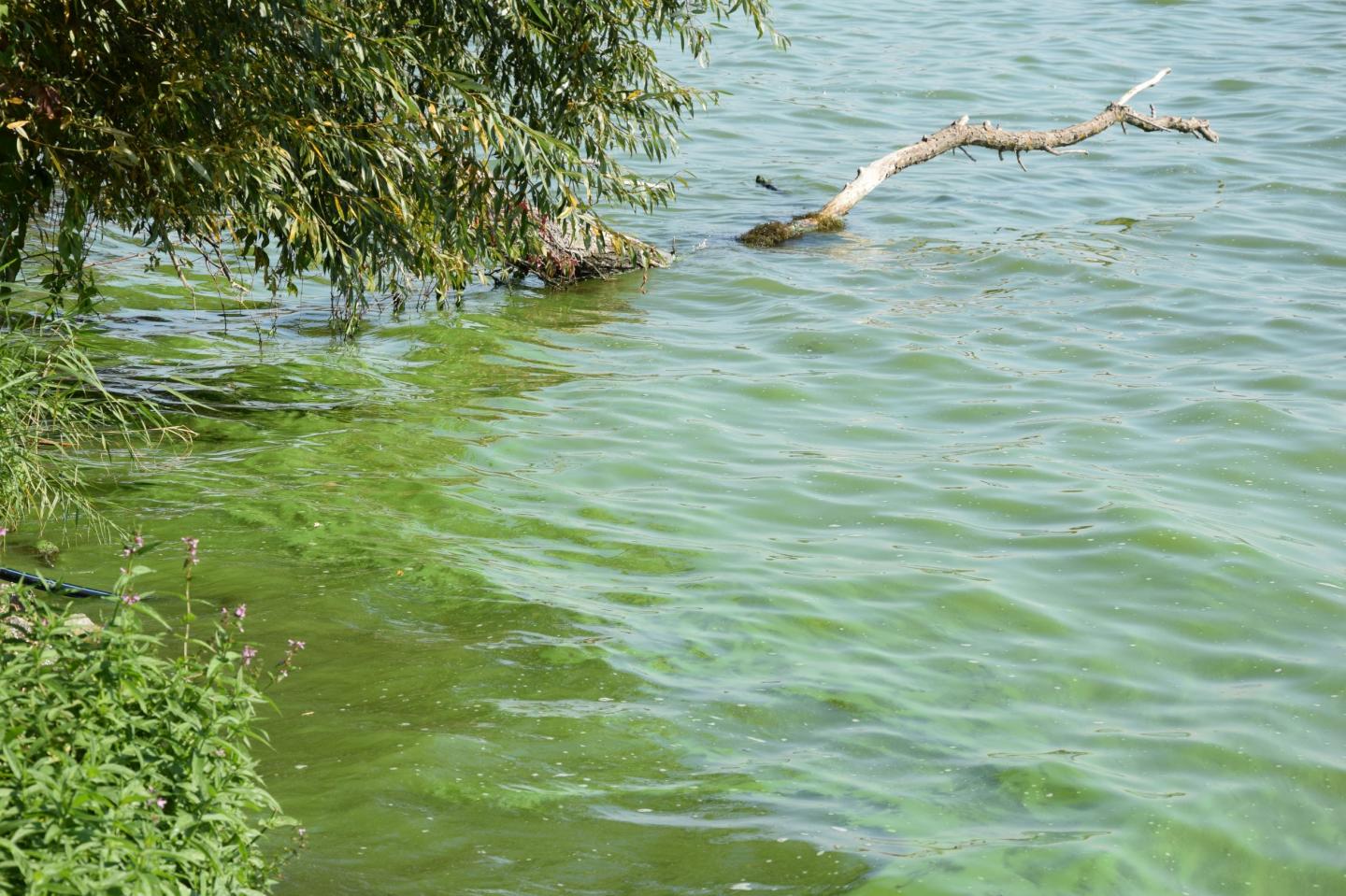
When a lake is covered with green scums during a warm summer, cyanobacteria – often called blue-green algae – are usually involved. Mass development of such cyanobacteria is bad for water quality because they can deprive the water of oxygen and produce toxins. But cyanobacteria can become sick, when for instance infected by fungal parasites. Researchers from the Leibniz-Institute of Freshwater Ecology and Inland Fisheries (IGB) found out that these infections do not only kill cyanobacteria, they also make them easier to consume for their natural predators. Fungal parasites thus help to slow down the growth of blue-green algae.

Blue-green algal blooms are an increasing problem in waterbodies worldwide: Higher temperatures and growing nutrient loads lead to excessive growth of cyanobacteria. These mass developments affect water quality because many cyanobacteria produce toxins and reduce the oxygen concentration in the water, sometimes leading to death of fish and other aquatic organisms.

The international team led by IGB found that algal growth can be controlled by parasitic fungi. “Many of these algae have long filamentous shapes or grow in colonies, which makes them difficult to be eaten by their natural predators”, explains Dr. Thijs Frenken, first author of the study and researcher at IGB and the University of Windsor in Canada. Chytrids, a very common group of fungi, often infect cyanobacteria. The researchers have now shown that, in addition to infecting and killing algae, the fungi “chop” the algae into shorter pieces, making them easier to be eaten by small aquatic organisms. “We knew that fungal infections reduce the growth of cyanobacteria, but now we know that they also make them easier prey”, says IGB researcher Dr. Ramsy Agha, head of the study.

Fungi as food supplements for zooplankton

The researchers showed that in addition to “chopping” infected cyanobacteria filaments and making them more vulnerable to predation by small organisms in the water, zooplankton, parasitic fungi themselves serve as a valuable food supplement. Chytrid fungi contain various fats and oils that are an important part of the diet of small freshwater organisms and are not present in blue-green algae. Parasitic fungi therefore serve as an important dietary connection between different levels of aquatic food webs.

“These results show how parasites, although usually perceived as something bad, also have important positive effects on the functioning of aquatic ecosystems”, says Professor Justyna Wolinska, head of the IGB research group Disease Evolutionary Ecology.

###

Media Contact
Ramsy Agha
[email protected]

Original Source

https://www.fv-berlin.de/en/info-for/the-media-and-public/news/parasitaere-pilze-halten-schaedliche-blaualgen-in-schach

Related Journal Article

http://dx.doi.org/10.1002/lno.11474

Tags: BacteriologyBiodiversityBiologyClimate ChangeEcology/EnvironmentHydrology/Water ResourcesMarine/Freshwater BiologyMicrobiologyMycologyParasitology
Share12Tweet8Share2ShareShareShare2

Related Posts

Natural Hallucinogens: Evolution’s Ecological Tools, Not Mere Chemical Byproducts

June 25, 2026

This Famous Butterfly Revealed: Three Distinct Species Hidden in One

June 25, 2026

Scientists Attack Soybean Cyst Nematode by Starving Its Food Source

June 25, 2026

Decoding the Secret Code of a Crucial Immune Sensor

June 24, 2026
Please login to join discussion

POPULAR NEWS

  • Saying Goodbye to PGY-6: Pediatric Fellowship Realities

    103 shares
    Share 41 Tweet 26
  • Multi-Hospital Study Reveals Long Covid Burden Is Twice as High as Current Estimates

    92 shares
    Share 36 Tweet 23
  • Detection of EDCs in Breast Milk and Infant Urine Up to Six Months Highlights Early Exposure Risks

    77 shares
    Share 31 Tweet 19
  • New Drug Candidate Developed at McMaster Shows Potential for Treating Brain Cancer

    58 shares
    Share 23 Tweet 15

About

We bring you the latest biotechnology news from best research centers and universities around the world. Check our website.

Follow us

Recent News

Tracking Lanthanide-Labeled Microplastics in Plants

POSTECH Researchers Slash Cost of Reconstituted Cell-Free Systems by 95%

AI and Physics Collaborate to Design Advanced Hydrogen Storage Materials

Subscribe to Blog via Email

Success! An email was just sent to confirm your subscription. Please find the email now and click 'Confirm' to start subscribing.

Join 82 other subscribers
  • Contact Us

Bioengineer.org © Copyright 2023 All Rights Reserved.

Welcome Back!

Login to your account below

Forgotten Password?

Retrieve your password

Please enter your username or email address to reset your password.

Log In
No Result
View All Result
  • Homepages
    • Home Page 1
    • Home Page 2
  • News
  • National
  • Business
  • Health
  • Lifestyle
  • Science

Bioengineer.org © Copyright 2023 All Rights Reserved.