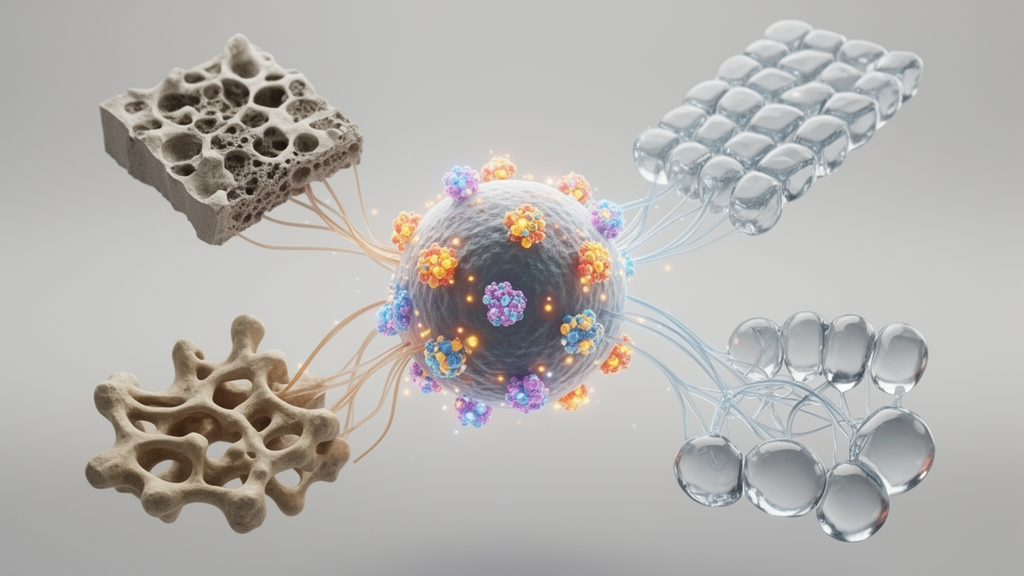
A narrative literature review published in Frontiers in Endocrinology details how oxytocin and its corresponding receptor direct mesenchymal stem cell lineage commitment, highlighting documented roles in promoting osteogenesis and chondrogenesis while curbing adipogenesis. Mesenchymal stem cells, multipotent stromal populations capable of forming osteoblasts, chondrocytes, and adipocytes, are widely investigated as therapeutic instruments for bone and joint repair. Their clinical effectiveness in musculoskeletal disorders such as osteoporosis, osteoarthritis, and acute cartilage defects has frequently been restricted by cellular senescence, chronic inflammation, donor variability, and hostile local microenvironments. Although oxytocin was classically identified as a hypothalamic neuroendocrine peptide regulating social behavior, uterine contraction, and lactation, accumulating experimental evidence indicates that peripheral oxytocin receptor signaling actively governs tissue homeostasis. Researchers at the University of Occupational and Environmental Health in Japan evaluated original laboratory investigations published through May 2026, summarizing molecular interactions through which oxytocin modulates stem cell fate and preserves cellular viability.
The authors assembled literature by conducting structured searches across PubMed and Google Scholar, using combinations of terms including oxytocin, oxytocin receptor, mesenchymal stem cells, differentiation, osteogenesis, adipogenesis, chondrogenesis, and musculoskeletal regeneration. The search window spanned from database inception through May 2026 without a lower date threshold, capturing foundational endocrine studies alongside modern stem cell and tissue engineering protocols. The scope was explicitly limited to English-language original research papers investigating the oxytocin and oxytocin receptor axis in mesenchymal stem cell biology, supported by mechanistic evaluations in differentiated tissues to supply physiological context. Review articles were excluded as primary evidence. From this retrieved corpus, the authors synthesized experimental findings across distinct cell sources, concentrating primarily on bone marrow-derived mesenchymal stem cells and adipose-derived stem cells while identifying critical mechanistic and translational gaps.
Functional responses to oxytocin depend upon the oxytocin receptor, a G protein-coupled receptor expressed across reproductive organs, metabolic tissues, and mesenchymal lineages. Depending on ambient ligand concentrations and cellular environments, the activated receptor couples to intracellular G proteins, primarily Gαq/11 and Gαi/o. Classical activation triggers the Gαq-linked phospholipase C cascade, stimulating intracellular calcium mobilization, whereas Gαi/o-dependent signaling connects to downstream extracellular signal-regulated kinases. In isolated rat oxidative skeletal muscle, receptor stimulation suppresses cellular proteolysis through an inositol trisphosphate receptor and calcium-dependent pathway linked with Akt and FoxO1 signaling. Investigations in aged mice further demonstrate that combined administration of oxytocin and an activin receptor-like kinase 5 inhibitor attenuates exercise-induced muscular and cardiac fibrosis. In stem cells, oxytocin stimulation engages mitogen-activated protein kinase pathways, phosphoinositide 3-kinase signaling, and bone morphogenetic protein cascades, coordinating survival, migration, and lineage commitment.
Direct responsiveness to oxytocin in mesenchymal populations was verified in cell culture experiments evaluating medium-modified adipose-derived stromal cells and bone marrow stromal cells. Researchers recorded dose-dependent intracellular calcium spikes following oxytocin exposure, which were fully abolished by the selective receptor antagonist d(CH2)5OVT, confirming that the observed cellular activation required specific receptor engagement. Subsequent work demonstrated that oxytocin receptor expression dynamically fluctuates as multipotent progenitors undergo differentiation, upregulating during osteogenic induction while declining during adipogenesis. Beyond guiding cell fate, oxytocin signaling triggers cytoprotective adaptations. When bone marrow-derived stem cells underwent hypoxia and serum deprivation, oxytocin preconditioning stimulated pro-survival signaling cascades, specifically the PI3K/Akt and ERK1/2 pathways. This pharmacological stimulation elevated glucose metabolism, improved proliferation, limited apoptotic death, and upregulated reparative mediators, including vascular endothelial growth factor, heat shock protein 27, and tissue inhibitor of metalloproteinase-1.
The role of oxytocin in promoting bone formation represents the most comprehensively documented differentiation pathway covered in the review. In human adipose-derived stem cells and bone marrow-derived mesenchymal stem cells, oxytocin exposure and treatment with the agonist carbetocin prompted alkaline phosphatase activity, accelerated mineralized matrix deposition, and elevated osteogenic transcript expression. Researchers detected transient phosphorylation of ERK1/2 following ligand binding, establishing a link between downstream kinase cascades and osteogenic differentiation. In bone marrow progenitors isolated from twelve-month-old and twenty-four-month-old female rats, administration of 100 nanomolar oxytocin restored deficient osteogenic capacity. Treated cells demonstrated earlier mineralized nodule formation, enhanced alkaline phosphatase activity, and elevated expression of bone morphogenetic protein 2, bone sialoprotein, osteopontin, and osteocalcin, alongside increased endogenous oxytocin and receptor transcripts in cultures from both adult and aged donors.
Independent evaluations in human adipose-derived stem cells corroborated this osteogenic enhancement across varied concentrations. In culture experiments testing doses of 100, 500, and 1000 nanomolar oxytocin, investigators noted concentration-dependent increases in receptor mRNA abundance and calcium matrix deposition visualized by Alizarin Red staining, occurring without impairing baseline cell viability. Because physiological aging shifts stem cell differentiation toward marrow adiposity at the expense of skeletal mass, maintaining balance between osteoblast and adipocyte formation is crucial. Under dual-lineage differentiation conditions, oxytocin signaling redirected human mesenchymal progenitors toward bone-forming lineages while actively suppressing adipogenic differentiation. Exposure to oxytocin downregulated early expression of peroxisome proliferator-activated receptor gamma, the primary transcription factor driving adipogenesis, indicating that receptor activation counters age-associated commitments to fat accumulation.
The review examined emerging links between oxytocin pathways and cellular senescence markers, though findings indicate distinct mechanisms across cell types. In cultured human dermal fibroblasts, oxytocin treatment mitigated senescence phenotypes induced by cellular stress, decreasing p16 and p21 expression alongside senescence-associated beta-galactosidase activity by stimulating the ERK and Nrf2 antioxidant axis. However, observations in human adipose-derived stem cells demonstrated that while oxytocin exposure increased senescence-associated beta-galactosidase activity, it did not alter expression of classical senescence genes such as telomerase reverse transcriptase or BMI-1. The investigators concluded that elevated beta-galactosidase staining in stem cells may reflect heightened lysosomal biogenesis and protective autophagic flux rather than true replicative arrest, underscoring that cellular responses to oxytocin depend heavily on cell lineage and baseline physiological states.
Evidence directly establishing oxytocin as a promoter of cartilage differentiation emerged in human adipose-derived and bone marrow-derived stem cells treated with 30 nanomolar oxytocin or carbetocin. Both undifferentiated progenitors and chondrogenic lineages maintained functional oxytocin receptors. Stimulation boosted extracellular matrix production, significantly increasing glycosaminoglycan deposition and upregulating aggrecan, cartilage oligomeric matrix protein, and transcription factor SOX9, while suppressing the fibrotic marker collagen type I alpha 1. In three-dimensional pellet cultures mimicking physiological cell condensation, oxytocin treatment enhanced protein levels of SOX9 and type II collagen while inducing collagen type X expression. When challenged with inflammatory interleukin-1 beta, oxytocin-treated pellets maintained aggrecan synthesis and exhibited diminished levels of ADAMTS-4, an aggrecanase that degrades articular cartilage during joint disease.
Protective anti-catabolic effects have similarly been confirmed in mature articular chondrocytes harvested from human joints. Investigators demonstrated that human articular chondrocytes express oxytocin receptors and that ligand binding shields cartilage structural integrity against inflammatory destruction. Under stimulation with tumor necrosis factor-alpha, oxytocin attenuated type II collagen breakdown by suppressing matrix metalloproteinase-1 and matrix metalloproteinase-13 through a mechanism involving the JAK2 and STAT1 signaling pathway. These parallel findings indicate a dual therapeutic role in joint biology, wherein oxytocin signaling simultaneously promotes de novo chondrogenesis in uncommitted stem cells while shielding existing extracellular matrix components from cytokine-driven proteolytic digestion in arthritic joints.
Translating these cellular findings to joint repair has prompted development of local biomaterial delivery platforms designed to overcome the peptide hormone’s short systemic half-life. Systemic peptide administration fails to maintain sustained therapeutic concentrations within joint cavities and risks off-target clearance. To address this pharmacokinetic limitation, researchers engineered a sustained-release hyaluronic acid methacrylate hydrogel loaded with oxytocin. In vitro testing at doses of 3 and 6 nanograms per milliliter preserved bone marrow stem cell viability and elevated expression of SOX9, COL2A1, and aggrecan while increasing anti-inflammatory factors and diminishing pro-inflammatory markers. When injected into a rat cartilage defect model, the oxytocin-loaded hydrogel accelerated articular tissue resurfacing, demonstrating that local sustained biomaterial release can guide repair in vivo.
The review also surveyed non-skeletal mesenchymal contexts, noting that oxytocin influences cell fate in a microenvironment-dependent manner. In human bone marrow stromal cells, oxytocin exposure alone failed to initiate myogenic differentiation, but myogenic conversion occurred when cells were seeded onto a structured polycaprolactone scaffold, highlighting the role of mechanical cues. Conversely, in dental pulp-derived stromal cells, pharmacological inhibition of the oxytocin receptor actually enhanced mineralization and stimulated expression of odontogenic markers including RUNX2, dentin matrix acidic phosphoprotein 1, and dentin sialophosphoprotein, likely mediated through Yes-associated protein signaling. These contrasting outcomes demonstrate that the oxytocin and oxytocin receptor axis does not act as a universal differentiation switch, but functions as a context-dependent modulator governed by anatomical origin and physical microenvironments.
Looking toward clinical translation, the authors emphasized synovial mesenchymal stem cells as prime candidates for oxytocin-assisted cartilage therapies. Synovium-derived progenitors possess higher baseline proliferative capacity and greater chondrogenic differentiation potential than stem cells harvested from bone marrow, adipose tissue, periosteum, or skeletal muscle. Critical research questions remain unresolved, including whether synovial stem cells maintain functional oxytocin receptor density, how oxytocin intersects with canonical TGF-beta and SMAD signaling, and whether cells from diseased human donors retain responsiveness. Establishing optimal dosing windows, exposure durations, and carrier biomaterials, such as peptide amphiphile nanofibers, will be necessary to determine whether oxytocin-primed stem cell therapies can achieve durable structural cartilage repair in living joints.
Subject of Research: Oxytocin receptor signaling in mesenchymal stem cell differentiation and musculoskeletal regeneration
Article Title: Oxytocin/oxytocin receptor signaling in mesenchymal stem cell differentiation: current evidence and future perspectives on osteogenesis, adipogenesis, and chondrogenesis
Article References: Nishimura, H., Shimizu, T., Suzuki, H., Murata, Y., Maruyama, T., Ueta, Y., & Uchida, S. (2026). Oxytocin/oxytocin receptor signaling in mesenchymal stem cell differentiation: current evidence and future perspectives on osteogenesis, adipogenesis, and chondrogenesis. Frontiers in Endocrinology, 17, Article 1943817. https://doi.org/10.3389/fendo.2026.1943817
Image Credits: AI Generated
DOI: 10.3389/fendo.2026.1943817
Keywords: oxytocin, oxytocin receptor, mesenchymal stem cells, osteogenesis, adipogenesis, chondrogenesis, musculoskeletal regeneration, cartilage repair, bone regeneration, stem cell differentiation, synovial stem cells, biomaterial delivery, hydrogel scaffolds, cellular senescence, extracellular matrix, alkaline phosphatase, paracrine signaling
News Source: Drew Townsend. (November 15, 2026). Oxytocin Receptor Pathways Guide Stem Cell Differentiation Toward Bone and Cartilage. Scienmag.