• HOME
  • NEWS
  • EXPLORE
    • CAREER
      • Companies
      • Jobs
    • EVENTS
    • iGEM
      • News
      • Team
    • PHOTOS
    • VIDEO
    • WIKI
  • BLOG
  • COMMUNITY
    • FACEBOOK
    • INSTAGRAM
    • TWITTER
Thursday, November 19, 2026
BIOENGINEER.ORG
No Result
View All Result
  • Login
  • HOME
  • NEWS
  • EXPLORE
    • CAREER
      • Companies
      • Jobs
        • Lecturer
        • PhD Studentship
        • Postdoc
        • Research Assistant
    • EVENTS
    • iGEM
      • News
      • Team
    • PHOTOS
    • VIDEO
    • WIKI
  • BLOG
  • COMMUNITY
    • FACEBOOK
    • INSTAGRAM
    • TWITTER
No Result
View All Result
Bioengineer.org
No Result
View All Result
Home NEWS Science News Biology

Overwintering Honeybees Generally Show Higher RNA Editing Levels in Exploratory Study

by
November 19, 2026
in Biology
Reading Time: 2 mins read
0
Overwintering Honeybees Generally Show Higher RNA Editing Levels in Exploratory Study

Overwintering Honeybees Generally Show Higher RNA Editing Levels in Exploratory Study

Share on FacebookShare on TwitterShare on LinkedinShare on RedditShare on Telegram

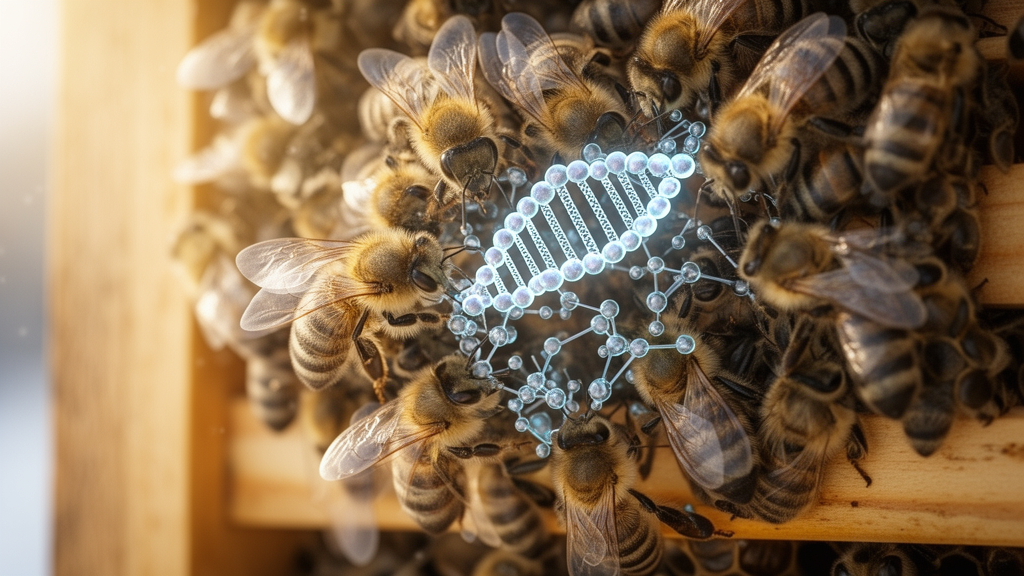
A recent exploratory study of honeybee head transcriptomes has identified significant seasonal remodeling of the A-to-I RNA editome, suggesting a molecular basis for the physiological shifts observed during overwintering. Honeybees, known for their remarkable phenotypic plasticity, transition from short-lived spring workers to long-lived individuals capable of surviving winter, though the underlying regulatory mechanisms have remained poorly defined. By analyzing transcriptomic data from both spring and overwintering Apis mellifera workers, researchers sought to determine whether A-to-I RNA editing is remodeled in workers during overwintering.

The study utilized 1,528 previously identified RNA editing sites to compare head transcriptomes from two paired honeybee colonies. Researchers focused on identifying differential editing sites (DESs) and assessing editing levels across seasonal states. In these exploratory comparisons, overwintering samples generally showed higher editing levels than spring samples at shared callable sites. Within each colony, the observed differences between the winter and spring worker groups showed a correlation between the two replicates, highlighting a consistent seasonal trend in RNA modification patterns within the sampled populations.

Library-level statistical analyses identified 22 DESs shared between the winter and spring comparisons, with 20 of these sites exhibiting higher editing levels in the winter groups. Analysis of the genes associated with these differential sites revealed an enrichment in biological functions related to neuronal excitability, synaptic function, ion channels, and RNA processing.

To investigate the evolutionary context of these findings, the research team examined whether similar editing patterns were conserved in other Hymenoptera, specifically the bumblebee Bombus terrestris and the red imported fire ant Solenopsis invicta. The discovery that some seasonal DESs are evolutionarily conserved across these species suggests that RNA editing may represent a shared functional mechanism for environmental adaptation and seasonal regulation. This evolutionary perspective reinforces the potential importance of these editing events beyond a single species.

While these findings provide new insights into the molecular candidates associated with the overwintering state, the study remains exploratory in nature. The authors emphasize that the results are based on sampling from two specific colonies and that further biological validation is necessary to confirm the functional roles of these RNA editing sites. Continued research will be required to establish a causal link between these editing changes, seasonal phenotypic plasticity, and the broader survival strategies utilized by honeybees in varying environmental conditions.

Subject of Research: Transcriptomic analysis of seasonal A-to-I RNA editing in Apis mellifera workers.

Article Title: Seasonal remodeling of A-to-I RNA editome in honeybee reveals neuronally associated and evolutionarily conserved recoding

Article References: Zou, Y., Gao, X., Li, C., Li, X., Cai, W., Li, H., Peng, L., Zhou, X., Luo, S., & Duan, Y. (2026). Seasonal remodeling of A-to-I RNA editome in honeybee reveals neuronally associated and evolutionarily conserved recoding. BMC Genomics. https://doi.org/10.1186/s12864-026-13553-6

Image Credits: AI Generated

DOI: 10.1186/s12864-026-13553-6

Keywords: Honeybee, Apis mellifera, RNA editing, A-to-I editing, overwintering, seasonal adaptation, phenotypic plasticity, transcriptomics, neuronal excitability, synaptic function, ion channels, RNA processing, Hymenoptera, evolutionary conservation, gene regulation

News Source: Gavin Prescott. (November 19, 2026). Overwintering Honeybees Generally Show Higher RNA Editing Levels in Exploratory Study. Scienmag.

Tags: A-to-I editingApis melliferaevolutionary conservationGene regulationhoneybeeHymenopteraion channelsneuronal excitabilityoverwinteringphenotypic plasticityRNA editingRNA processingseasonal adaptationsynaptic functionTranscriptomics
Share12Tweet7Share2ShareShareShare1

Related Posts

Dual Piezo Channel Framework Distinguishes Spinal Disc Degeneration From Pain

Dual Piezo Channel Framework Distinguishes Spinal Disc Degeneration From Pain

November 19, 2026
Scientists Establish New Spider Genus Microcallobius Across East Asia

Scientists Establish New Spider Genus Microcallobius Across East Asia

November 19, 2026

Novel MYH11 Splice Variant Linked to Recurrent Fetal Megacystis in Family

November 19, 2026

Stream Fish Invasions Reshape Metacommunities Across Nine Distinct Diversity Dimensions

November 19, 2026

POPULAR NEWS

  • Study Finds Autism Diagnosed in Twenty-Eight Percent of Children With Neurofibromatosis Type 1

    Study Finds Autism Diagnosed in Twenty-Eight Percent of Children With Neurofibromatosis Type 1

    29 shares
    Share 12 Tweet 7
  • Esketamine with Pulsed Radiofrequency Alleviates Neuropathic Pain in Herpes Zoster Patients

    29 shares
    Share 12 Tweet 7
  • Fences Restrict Movement and Alter Space Use in Endangered Masai Giraffes

    29 shares
    Share 12 Tweet 7
  • Stem Cell Delivery Repairs Post-Stroke Endoplasmic Reticulum Dynamics in Rat Model

    29 shares
    Share 12 Tweet 7

About

We bring you the latest biotechnology news from best research centers and universities around the world. Check our website.

Follow us

Recent News

Researchers Design Quality Indicator System for Integrated Chinese and Western Medicine Hospitals

Automated Echocardiography Artificial Intelligence Cuts Analysis Time While Preserving Ejection Fraction Accuracy

Brain Structural Alterations Show Marked Regional Heterogeneity Across Insomnia and Depression

Subscribe to Blog via Email

Enter your email address to subscribe to this blog and receive notifications of new posts by email.

Join 89 other subscribers
  • Contact Us

Bioengineer.org © Copyright 2023 All Rights Reserved.

Welcome Back!

Login to your account below

Forgotten Password?

Retrieve your password

Please enter your username or email address to reset your password.

Log In
No Result
View All Result
  • Homepages
    • Home Page 1
    • Home Page 2
  • News
  • National
  • Business
  • Health
  • Lifestyle
  • Science

Bioengineer.org © Copyright 2023 All Rights Reserved.