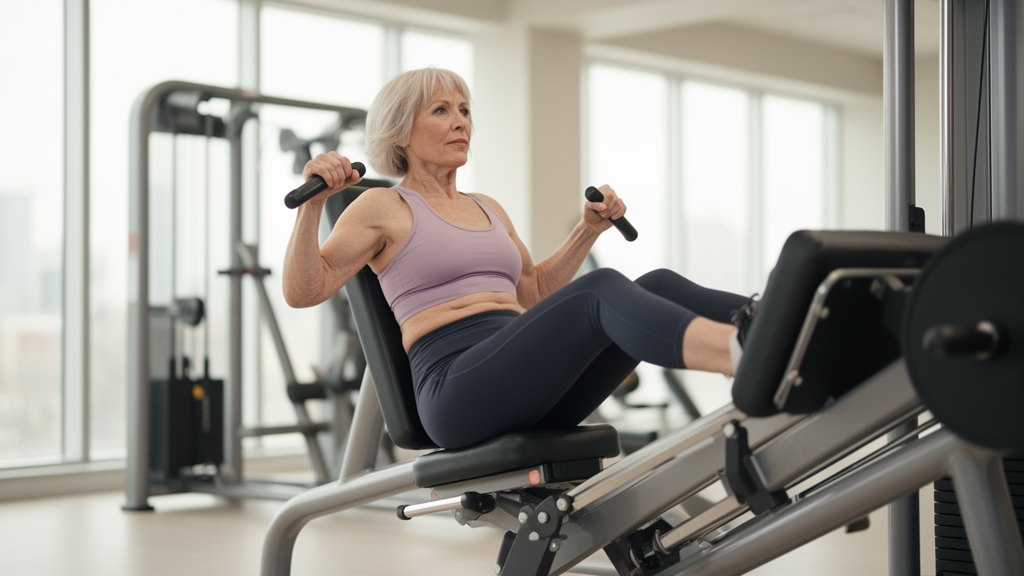
A single session of body weight resistance training produced measurable drops in heart rate and blood pressure among postmenopausal women, but the time of day the exercise was performed made no statistically significant difference between groups, according to a randomized study published in the Bulletin of Faculty of Physical Therapy. The findings, drawn from eighty four women assigned to morning exercise, evening exercise, or a control group, suggest that even one bout of resistance training can transiently influence cardiovascular measures in this population, while offering no evidence that morning or evening sessions are superior to one another.
The research team, led by Priyanka Yadav and Minaxi Saini, set out to address an underexplored question in women’s health: whether the timing of exercise, often called diurnal variation, changes the physiological benefits of resistance training for postmenopausal females. The authors note that exercise is a vital intervention for managing complications arising from the hormonal transition of menopause, yet the optimal time of day for that exercise remains a matter of conflicting views in the recent literature. Their registered trial, listed under CTRI registration number CTRI/2024/03/063728, was designed to test the hypothesis that resistance training would produce different effects on cardiorespiratory functions depending on when it was performed.
The rationale for focusing on postmenopausal women is grounded in the physiological shifts that accompany menopause. Hormonal changes during this transition drive structural, physiological, and psychological changes that leave women more vulnerable to cardiovascular disease, metabolic syndrome, pulmonary diseases, urinary tract infections, incontinence, and bone loss. The study’s introduction reports that postmenopausal females face nearly two to three times the risk of cardiovascular disease compared with premenopausal females, owing to hormonal changes and vascular remodelling. Autonomic dysfunction during menopause contributes to elevated resting heart rate and blood pressure, and hypertension is prevalent in roughly forty to fifty percent of postmenopausal women, affecting their quality of life.
Pulmonary function also deteriorates across the menopausal transition. Hormonal changes, together with aging, impair breathing capacity as the elasticity of the alveoli degrades, producing declines in measures such as forced expiratory volume in one second, forced vital capacity, and peak expiratory flow rate. Because regular exercise is known to benefit health, cardiorespiratory function, and quality of life in postmenopausal women, and because weight training in particular has been found effective for cardiovascular function, pulmonary function, muscular strength, and body composition in this group, the authors identified resistance training as a practical intervention whose timing could be meaningfully tested.
To conduct the trial, the researchers screened five hundred twenty three participants and enrolled eighty four naturally menopausal females, randomly allocating them through an opaque envelope method into three groups: a morning exercise group, an evening exercise group, and a control group. All participants completed the required sessions, and all eighty four were included in the final analysis. Participants with a history of respiratory, cardiovascular, neurological, musculoskeletal, or visual or hearing impairment were excluded, as were women with stage two hypertension and uncontrolled diabetes mellitus or those on insulin therapy. The morning session ran between six and nine in the morning, while the evening session ran between four and seven in the evening.
The intervention itself was a single session of self body weight resistance training lasting thirty to forty five minutes. Each session began with a five to ten minute warm up of stretching and walking, followed by seven body weight exercises targeting large muscle groups: wall push ups, wall squats, sit ups with hands on the sides, bridging, pull downs, trunk extension in quadruped with hand raise, and heel raises. Participants performed three sets of each exercise with six to eight repetitions per set and two minutes of rest between sets, then finished with a five to ten minute cool down of walking. Intensity was monitored with the Modified Borg Category Ratio scale, with participants instructed to maintain a perceived exertion between four and six, corresponding to moderate to hard effort. Breathing was cued deliberately, with deep inhalation during eccentric activity and pursed lip exhalation during concentric activity. Control participants carried out their usual activities in a temperature controlled room while refraining from exertional physical activity.
Outcome measures captured both pulmonary and cardiac function before the intervention and five minutes after it. Pulmonary function was assessed with desktop spirometry following American Thoracic Society quality standard guidelines, recording forced vital capacity and forced expiratory volume in one second from a minimum of three efforts, with the best reading used for analysis. Heart rate was measured with a pulse oximeter, and systolic and diastolic blood pressure were measured with a traditional sphygmomanometer and stethoscope by the same qualified physiotherapist, with three readings averaged for analysis. Data were analysed in SPSS version 21.0, with normality assessed by the Shapiro Wilk test, within group comparisons performed with t tests, and between group comparisons performed with F tests, using a significance threshold of p less than or equal to 0.05.
The results revealed a clear split between pulmonary and cardiac outcomes. For pulmonary function, there was no statistically significant change either within groups or between groups, with p values above 0.05 throughout. For cardiac function, no statistically significant differences emerged between the three groups. Within group comparisons, however, told a more nuanced story. Heart rate showed a statistically significant reduction in both the morning and evening exercise groups, with p values reported at 0.0001 and 0.004 respectively. Systolic blood pressure dropped significantly in the evening group, with p equal to 0.008, while diastolic blood pressure fell significantly in the morning group, with p equal to 0.001. The evening group also recorded lower heart rate than the morning group, though that difference was not statistically significant, a pattern the authors link to the circadian variation of heart rate reported in earlier research.
In their discussion, the authors attribute the absence of pulmonary changes to the single session design, noting that improvements in lung function reported in previous studies involved longer training periods, such as eight weeks of multimodal exercise or six weeks of resistance work with breathing techniques, and that a recent systematic review and meta analysis found physical activity of any kind effective for cardiorespiratory function among postmenopausal females. Physiological adaptations in the lung, including increased expiratory muscle strength, altered lung compliance, reduced airway resistance, and synthesis of the contractile proteins myosin and actin, are proportional to the workload, duration, type, and frequency of exercise, and a single session is insufficient to produce them. The blood pressure reductions, by contrast, align with evidence that one bout of resistance exercise can induce a transient reduction in blood pressure. The authors propose that evening exercise may increase melatonin, influencing cardiac autonomic modulation, and that exercise raises nitric oxide production by lowering plasma endothelin one levels, with increased blood flow contributing to reduced blood pressure.
The study’s conclusion is deliberately restrained: because no statistically significant differences emerged between the groups for either pulmonary or cardiac function, superiority of any exercise time cannot be established, and both null hypotheses were accepted. The authors acknowledge key limitations, including the single session intervention, the absence of follow up owing to time constraints, and reliance on self reported menopausal status rather than hormonal verification. They also note that greater systolic blood pressure reduction appeared in the evening group while greater diastolic blood pressure reduction appeared in the morning group, findings they suggest may relate to circadian variation of cardiovascular functions. Future research, they write, should examine longer durations of resistance training, include follow up to evaluate sustained effects, extend to other age groups and male participants, and explore diurnal variation in athletes and with exercise protocols based on specific cadence.
Subject of Research: Diurnal variation in a single bout of resistance training and cardiopulmonary function in postmenopausal women
Article Title: Effect of diurnal variation in single bout of resistance training on cardiopulmonary functions among postmenopausal females
Article References: Yadav, P., & Saini, M. (2026). Effect of diurnal variation in single bout of resistance training on cardiopulmonary functions among postmenopausal females. Bulletin of Faculty of Physical Therapy, 31(1), Article 32. https://doi.org/10.1186/s43161-026-00364-9
Image Credits: AI Generated
DOI: 10.1186/s43161-026-00364-9
Keywords: postmenopausal women, resistance training, diurnal variation, heart rate, blood pressure, pulmonary function, spirometry, exercise timing, cardiopulmonary function, randomized trial, body weight exercise, circadian rhythm
News Source: Ophelia Keating. (October 30, 2026). One Resistance Session Alters Blood Pressure and Heart Rate in Postmenopausal Women. Scienmag.