• HOME
  • NEWS
  • EXPLORE
    • CAREER
      • Companies
      • Jobs
    • EVENTS
    • iGEM
      • News
      • Team
    • PHOTOS
    • VIDEO
    • WIKI
  • BLOG
  • COMMUNITY
    • FACEBOOK
    • INSTAGRAM
    • TWITTER
Thursday, July 2, 2026
BIOENGINEER.ORG
No Result
View All Result
  • Login
  • HOME
  • NEWS
  • EXPLORE
    • CAREER
      • Companies
      • Jobs
        • Lecturer
        • PhD Studentship
        • Postdoc
        • Research Assistant
    • EVENTS
    • iGEM
      • News
      • Team
    • PHOTOS
    • VIDEO
    • WIKI
  • BLOG
  • COMMUNITY
    • FACEBOOK
    • INSTAGRAM
    • TWITTER
  • HOME
  • NEWS
  • EXPLORE
    • CAREER
      • Companies
      • Jobs
        • Lecturer
        • PhD Studentship
        • Postdoc
        • Research Assistant
    • EVENTS
    • iGEM
      • News
      • Team
    • PHOTOS
    • VIDEO
    • WIKI
  • BLOG
  • COMMUNITY
    • FACEBOOK
    • INSTAGRAM
    • TWITTER
No Result
View All Result
Bioengineer.org
No Result
View All Result
Home NEWS Science News Biology

Nutrient pollution and ocean warming negatively affect early life of corals

Bioengineer by Bioengineer
March 4, 2020
in Biology
Reading Time: 2 mins read
0
IMAGE
Share on FacebookShare on TwitterShare on LinkedinShare on RedditShare on Telegram

IMAGE

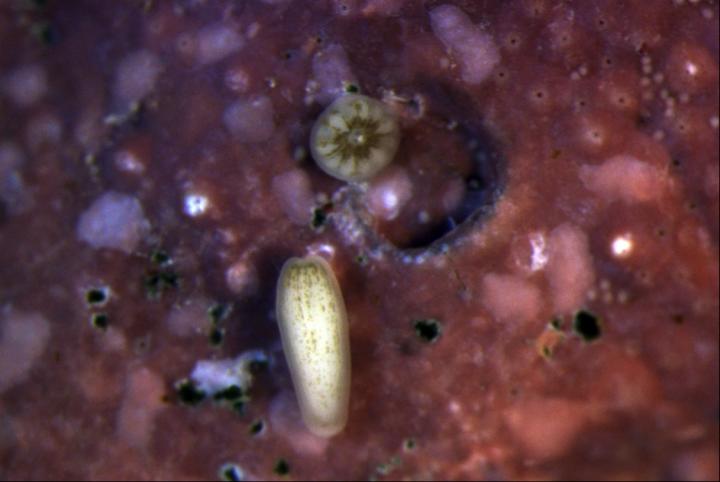
Credit: Raphael Ritson-Williams


Corals are constantly exposed to multiple environmental stressors at any given time. On a global scale, climate change is increasing seawater temperatures which can cause coral to bleach. Locally, land-use practices can cause poor water quality run-off of land-based fertilizers and sediment washing over our coral reefs. A new study conducted by researchers at the University of Hawai’i at Mānoa School of Ocean and Earth Science and Technology (SOEST) found the survival and development of coral larvae in their first few days of life was negatively affected by elevated nutrients and a modest increase in water temperature.

Before reef corals build their hard, rocky skeletons they actually start their life as tiny, gelatinous larvae adrift in waters adjacent to coral reefs. The research team used larvae of three common Hawaiian coral species, starting at less than one-day old, and exposing them to various combinations of low or high nutrients and water temperatures. At the end of five days, the team determined how the individual and interacting stressors impacted coral during the first days of the life cycle for each species.

In particular, when nitrogen was high, coral larva showed the lowest survivorship. However, when phosphate was also added, the negative effects of nitrate were lessened. Surprisingly warming didn’t reduce survivorship, but the interaction of high temperature with nutrients affected larval growth, generally reducing larval size. This showed that nutrients can have serious impacts on coral larvae, but importantly the imbalance of nutrients and their interactions with temperature can harm corals at very early stages.

“The study also revealed that the way corals reproduce and other biological differences among larvae influence how they respond to environmental change,” said Chris Wall, study co-author and postdoctoral researcher at SOEST’s Pacific Biosciences Research Center. “The impacts of warming and elevated nutrients were greatest on small larvae that develop outside the parents, called broadcast spawners, and dependent on whether the larvae had already formed a relationship with their symbiotic algae. And interestingly, those larger larvae that develop inside their parents, called brooders, were quite resistant to warming and nutrient spikes.”

In adult corals, nutrient pollution can increase the negative effects of ocean warming, such as increasing the severity of coral bleaching. As marine heat waves and bleaching events have already become more common because of climate change, it is critical that conservationists and managers consider how reducing different forms of local impacts like pollution – such as nitrogen and phosphate from residential and agricultural runoff- can significantly affect adult corals and also the viability of coral larvae.
 
“Understanding the impacts of stressors on adult corals has been a primary focus of coral research, but this is just one piece of the puzzle,” said study co-author Madeline Piscetta. “In order to gain a comprehensive understanding of how temperature and nutrients will shape coral reefs, we need to examine these interactions across all life history stages.”

###

Media Contact
Marcie Grabowski
[email protected]
808-956-3151

Related Journal Article

http://dx.doi.org/10.1007/s00338-020-01905-x

Tags: BiologyClimate ChangeDevelopmental/Reproductive BiologyEcology/EnvironmentMarine/Freshwater BiologyOceanographyPollution/RemediationPopulation Biology
Share12Tweet8Share2ShareShareShare2

Related Posts

Evolution-Inspired Biosensors Revolutionize Lipid Tracking in Real Time — Biology

Evolution-Inspired Biosensors Revolutionize Lipid Tracking in Real Time

July 2, 2026
New Study Reveals How to Reduce Risk of Dangerous Wildlife Encounters This Summer — Biology

New Study Reveals How to Reduce Risk of Dangerous Wildlife Encounters This Summer

July 2, 2026

Hepatic IFRD1 Alleviates Metabolic Dysfunction-Linked Steatohepatitis Through the GLUD1/α-KG Pathway

July 2, 2026

Intricate Food Webs Support Ecosystem Health and Stability

July 2, 2026
Please login to join discussion

POPULAR NEWS

  • Detection of EDCs in Breast Milk and Infant Urine Up to Six Months Highlights Early Exposure Risks

    77 shares
    Share 31 Tweet 19
  • Saying Goodbye to PGY-6: Pediatric Fellowship Realities

    103 shares
    Share 41 Tweet 26
  • New Drug Candidate Developed at McMaster Shows Potential for Treating Brain Cancer

    58 shares
    Share 23 Tweet 15
  • KTU Researchers Explore Ultrasound’s Role in Enhancing Blood Flow Beyond Diagnostics

    53 shares
    Share 21 Tweet 13

About

BIOENGINEER.ORG

We bring you the latest biotechnology news from best research centers and universities around the world. Check our website.

Follow us

Recent News

Steatosis Drives Liver Metastasis Diversity in CRC

Unlocking the Mysteries of Alzheimer’s Disease

Pensoft Introduces New Peer-Reviewed Journal of Regeneration to Advance Restorative Biology Across Species

Subscribe to Blog via Email

Enter your email address to subscribe to this blog and receive notifications of new posts by email.

Join 83 other subscribers
  • Contact Us

Bioengineer.org © Copyright 2023 All Rights Reserved.

Welcome Back!

Login to your account below

Forgotten Password?

Retrieve your password

Please enter your username or email address to reset your password.

Log In
No Result
View All Result
  • Homepages
    • Home Page 1
    • Home Page 2
  • News
  • National
  • Business
  • Health
  • Lifestyle
  • Science

Bioengineer.org © Copyright 2023 All Rights Reserved.