In a groundbreaking advancement published in the latest issue of Oncotarget, researchers have unveiled compelling evidence supporting the potent anticancer effects of polyisoprenylated cysteinyl amide inhibitors (PCAIs) in pancreatic cancer cells, specifically those harboring mutant forms of the KRAS oncogene. This study, conducted by a dedicated team from Florida A&M University College of Pharmacy and Pharmaceutical Sciences, marks a significant stride towards developing broadly effective targeted therapies for one of the most lethal malignancies worldwide: pancreatic ductal adenocarcinoma (PDAC).
PDAC’s notoriety largely stems from the ubiquitous presence of KRAS mutations, which drive tumor progression and confer resistance to conventional treatments. Historically, efforts to develop therapeutics targeting KRAS have met substantial obstacles, especially due to the heterogeneity of KRAS mutations across patients. Current precision medicines primarily focus on specific KRAS variants, like KRASG12C, but their limited scope leaves a critical unmet need for agents capable of addressing the multiplicity of KRAS mutant phenotypes prevalent in pancreatic cancer. The emergence of PCAIs represents an innovative avenue to confront these challenges.
The researchers embarked on in-depth investigations to ascertain the molecular underpinnings of PCAIs’ anticancer actions. Using a panel of pancreatic cancer cell lines engineered to express diverse KRAS mutations, their experiments illuminated the multifaceted impact of PCAIs on cancer cell viability, motility, and signaling pathways. Central to their discoveries was the lead compound NSL-YHJ-2-27, exhibiting striking efficacy at low micromolar concentrations. Remarkably, at just 1 micromolar, the compound inhibited over 90% of cancer cell migration, underscoring its profound potential as a therapeutic agent against metastasis.
A detailed biochemical analysis revealed that PCAIs mediate their effects through the depletion of monomeric G-proteins RAC1 and RHOA, which are essential regulators of cytoskeletal architecture and cellular motility. By disrupting the actin filament network, PCAIs induce morphological changes that culminate in cell rounding and detachment, phenomena closely linked to a programmed cell death pathway known as anoikis. This unleashing of cytoskeletal dysfunction is pivotal for curtailing cancer cell invasion and dissemination within the tumor microenvironment.
Surprisingly, the compounds did not inhibit, but rather hyperactivated the downstream signaling cascades traditionally implicated in KRAS-driven oncogenesis, specifically the MAPK and PI3K/AKT pathways. This counterintuitive finding suggests that PCAIs co-opt these pathways to trigger an overload of proliferative signals, eventually leading to cellular stress and self-destruction. Such hyperactivation correlates with elevated reactive oxygen species (ROS) production, caspase enzymatic activation, and increased expression of pro-apoptotic protein BAX, culminating in widespread apoptosis.
Extensive transcriptomic profiling further characterized the genomic landscape shifts induced by PCAI treatment. Notably, the expression of tumor suppressor genes was upregulated, whereas genes promoting cancer cell survival and metastasis were downregulated, highlighting an orchestrated reprogramming of the cancer genome toward a less aggressive state. These transcriptional alterations reinforce the multifaceted nature of PCAIs’ mechanisms, bridging signaling perturbations with gene regulation.
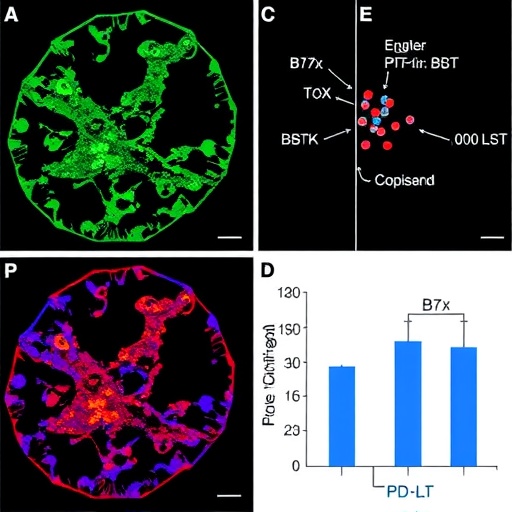
The scientific team also validated their in vitro findings in three-dimensional tumor spheroid models, which more closely emulate the complex spatial and cellular heterogeneity found in actual tumors. PCAI-treated spheroids exhibited marked disintegration and diminished invasive capacity while displaying pronounced apoptotic signatures. This modeling substantiates the relevance of PCAIs’ anticancer activity in biologically realistic settings beyond traditional monolayer cultures.
From a clinical translation perspective, PCAIs promise to fill a critical void by targeting a broad spectrum of KRAS mutations, bypassing the specificity limitations of current KRAS inhibitors. Given the prevalence of multiple mutant KRAS variants within pancreatic tumors, the ability of PCAIs to modulate various downstream effectors simultaneously offers a strategic advantage. Their mechanism—inducing a lethal hyperactivation of key pathways rather than suppressing them—represents a novel paradigm that could redefine therapeutic interventions in KRAS-driven cancers.
Moreover, these findings illuminate the intricate balance cancer cells maintain between survival and death signaling, demonstrating how pushing oncogenic pathways beyond their threshold can induce cell demise. This insight may fuel the design of innovative drugs exploiting similar vulnerabilities in other hard-to-treat malignancies with complex mutational profiles.
The study authors underscore that while PCAIs show great promise, further research is warranted to elucidate their full pharmacological profiles, optimize their drug-like properties, and evaluate their efficacy in preclinical animal models. Such endeavors could pave the way for clinical trials assessing PCAIs as next-generation targeted therapies capable of improving survival outcomes in pancreatic cancer patients, who currently face dismal prognoses.
In summary, this landmark research advances our understanding of how polyisoprenylated cysteinyl amide inhibitors disrupt pancreatic cancer biology. By orchestrating depletion of critical G-proteins, hyperactivation-induced apoptosis via MAPK and PI3K/AKT pathways, and gene expression reprogramming, PCAIs emerge as versatile agents with substantial therapeutic potential. Their development represents a beacon of hope against the daunting challenges posed by KRAS mutant pancreatic cancers, heralding a new era of precision oncology with broader efficacy and improved patient impact.
Subject of Research: Cells
Article Title: The anticancer effects of PCAIs in pancreatic cancer cells involve MAPK and PI3K/AKT pathways hyperactivation
News Publication Date: 3-Jun-2026
Web References: https://doi.org/10.18632/oncotarget.28879
Image Credits: Copyright: © 2026 Ofosu-Asante et al. This is an open access article distributed under the terms of the Creative Commons Attribution License (CC BY 4.0).
Keywords: cancer, PCAIs, PDAC, MAPK, PI3K/AKT, KRAS
Tags: experimental cancer drug developmentFlorida A&M University cancer researchKRAS mutant phenotypes in PDACKRAS-driven pancreatic cancer therapynovel pancreatic cancer compoundsovercoming KRAS mutation heterogeneitypancreatic cancer cell death mechanismspancreatic ductal adenocarcinoma treatmentPCAIs anticancer effectspolyisoprenylated cysteinyl amide inhibitorstargeted therapies for lethal malignanciestargeting KRAS mutations in cancer