


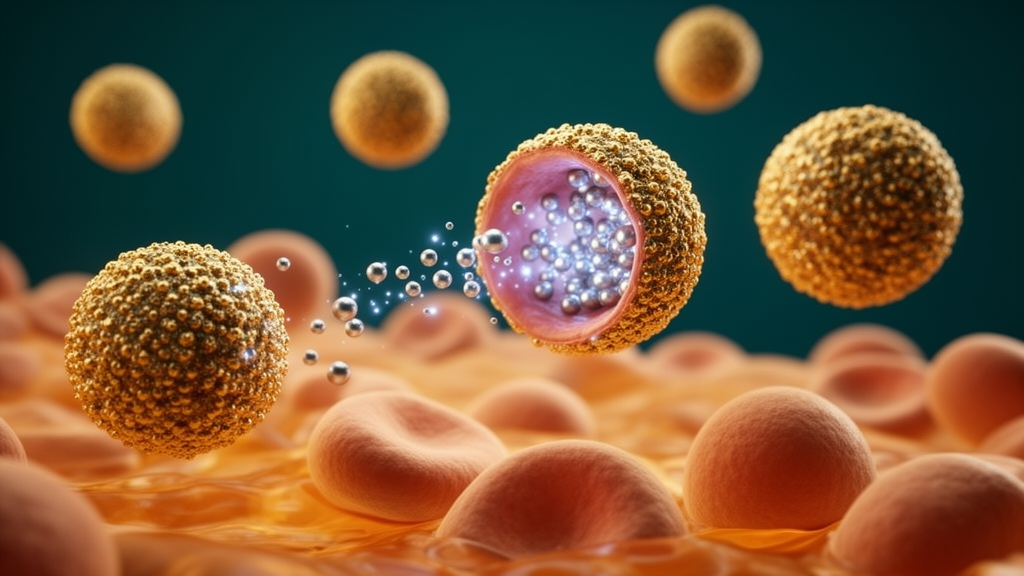
Cisplatin has been a mainstay of chemotherapy for decades, but its clinical usefulness is constrained by three stubborn problems: systemic toxicity that damages healthy tissue, resistance that cancer cells acquire over time, and poor selectivity for tumor cells. A research team led by Jasleen Kaur, Mohit Kamboj and Simran Preet reports in Cancer Nanotechnology a possible workaround, describing solid lipid nanoparticles decorated with the antimicrobial peptide nisin and loaded with cisplatin for simultaneous delivery of both agents.
The formulation, abbreviated Nis + Cis-SLNs, was tested in vitro against two epithelial cancer cell lines: human epidermoid carcinoma cells (A431) and breast adenocarcinoma cells (MCF-7). According to the abstract, the developed carriers showed monodisperse spherical morphology, high encapsulation efficiency and sustained release of their payloads, the basic pharmaceutical properties needed for a co-delivery system to function reproducibly.
The central result is a synergistic cytotoxic effect. When nisin and cisplatin traveled together inside the lipid particles, the combination killed the cultured cancer cells more effectively than the free, unencapsulated forms of either compound alone. The authors attribute this synergy to the nanoparticles hitting three cellular targets at once: they suppressed proliferation, promoted apoptosis and stimulated the generation of reactive oxygen species, the chemically reactive molecules that oxidative-stress-based therapies exploit to damage tumor cells.
Mechanistically, the treated cells showed hallmarks of the intrinsic, or mitochondrial, apoptotic pathway. Nis + Cis-SLNs upregulated caspase-3, the executioner enzyme that dismantles the cell from within, and Bax, a pro-apoptotic protein, while suppressing Bcl-2, an anti-apoptotic protein that normally helps cancer cells survive. This shift in the Bax-to-Bcl-2 balance is a classic molecular signature of mitochondria-driven programmed cell death.
Beyond direct killing, the study probed an immunological angle. Conditioned media, the nutrient fluid collected from tumor cells after treatment, were applied to macrophages. Media derived from cells treated with the nanoparticle formulation were associated with reduced M2 macrophage polarization. M2 macrophages are the wound-healing, immunosuppressive subset that tumors recruit to build a protective microenvironment, so dampening their formation hints at a possible role in immunomodulation of the tumor microenvironment, though this remains an indirect, cell-culture-level observation rather than evidence of an immune response in a living organism.
The authors frame the work as a dose-sparing strategy. By enhancing cisplatin’s efficacy at reduced doses, the co-delivery system could, in principle, lower the exposure that drives the drug’s notorious kidney, nerve and hearing toxicities while maintaining or improving tumor kill. The abstract positions Nis + Cis-SLNs as a promising co-delivery approach that might improve therapeutic outcomes, language that reflects potential rather than demonstrated clinical benefit.
Several caveats temper the enthusiasm. All findings come from two cell lines and macrophage co-culture experiments; no animal or human data are reported in the abstract. Solid lipid nanoparticles are a well-established carrier class, biocompatible lipid matrices that solidify at body temperature, but translating formulation parameters such as encapsulation efficiency and release kinetics into tolerated and effective dosing requires preclinical and eventually clinical testing that has not yet been done for this system.
Nisin itself is an interesting partner for cisplatin. It is a bacterially produced peptide long used as a food preservative, and it has attracted research interest for anticancer properties, making it a plausible biological active rather than an inert coating. Its presence on the nanoparticle surface, described as decoration, suggests it may contribute its own cytotoxic or membrane-disrupting activity alongside the platinum drug, although the abstract does not detail the precise contribution of each component to the observed synergy.
The study appears as an open-access article published on 16 August 2026, shared early to provide faster access to peer-reviewed, accepted research, with a version that remains subject to further edits before the final Version of Record replaces it. For now, the work stands as an early-stage formulation study: a lipid nanocarrier that packages a chemotherapy drug with a peptide, kills cultured carcinoma cells more potently than the free drugs, and leaves open the question of whether the same synergy and immune effects will hold in animals and, eventually, patients.
Subject of Research: Co-delivery of cisplatin and nisin using solid lipid nanoparticles to enhance cytotoxicity against epithelial cancer cell lines in vitro
Article Title: Improved anticancer efficacy of cisplatin co-delivered with nisin-decorated solid lipid nanoparticles
Article References: Kaur, J., Kamboj, M., Misra, C., Raza, K., Das, B., Kaushal, N., & Preet, S. (2026). Improved anticancer efficacy of cisplatin co-delivered with nisin-decorated solid lipid nanoparticles. Cancer Nanotechnology. https://doi.org/10.1186/s12645-026-00416-8
Image Credits: AI Generated
DOI: 10.1186/s12645-026-00416-8
Keywords: cisplatin, nisin, solid lipid nanoparticles, drug delivery, A431 cells, MCF-7 cells, apoptosis, reactive oxygen species, M2 macrophage polarization, tumor microenvironment, chemotherapy, nanomedicine
News Source: Nathaniel Bowman. (October 30, 2026). Nisin-Coated Lipid Nanoparticles Boost Cisplatin’s Cancer-Killing Power in Cell Studies. Scienmag.



