• HOME
  • NEWS
  • EXPLORE
    • CAREER
      • Companies
      • Jobs
    • EVENTS
    • iGEM
      • News
      • Team
    • PHOTOS
    • VIDEO
    • WIKI
  • BLOG
  • COMMUNITY
    • FACEBOOK
    • INSTAGRAM
    • TWITTER
Thursday, June 25, 2026
BIOENGINEER.ORG
No Result
View All Result
  • Login
  • HOME
  • NEWS
  • EXPLORE
    • CAREER
      • Companies
      • Jobs
        • Lecturer
        • PhD Studentship
        • Postdoc
        • Research Assistant
    • EVENTS
    • iGEM
      • News
      • Team
    • PHOTOS
    • VIDEO
    • WIKI
  • BLOG
  • COMMUNITY
    • FACEBOOK
    • INSTAGRAM
    • TWITTER
  • HOME
  • NEWS
  • EXPLORE
    • CAREER
      • Companies
      • Jobs
        • Lecturer
        • PhD Studentship
        • Postdoc
        • Research Assistant
    • EVENTS
    • iGEM
      • News
      • Team
    • PHOTOS
    • VIDEO
    • WIKI
  • BLOG
  • COMMUNITY
    • FACEBOOK
    • INSTAGRAM
    • TWITTER
No Result
View All Result
Bioengineer.org
No Result
View All Result
Home NEWS Science News Chemistry

New study reveals the secret of magmatic rocks consisting of only one mineral

Bioengineer by Bioengineer
March 2, 2020
in Chemistry
Reading Time: 3 mins read
0
IMAGE
Share on FacebookShare on TwitterShare on LinkedinShare on RedditShare on Telegram

Geologists from Wits University in Johannesburg, South Africa, have come up with an original explanation of how nature may produce an intriguing class of magmatic rocks that are made up of only one type of mineral
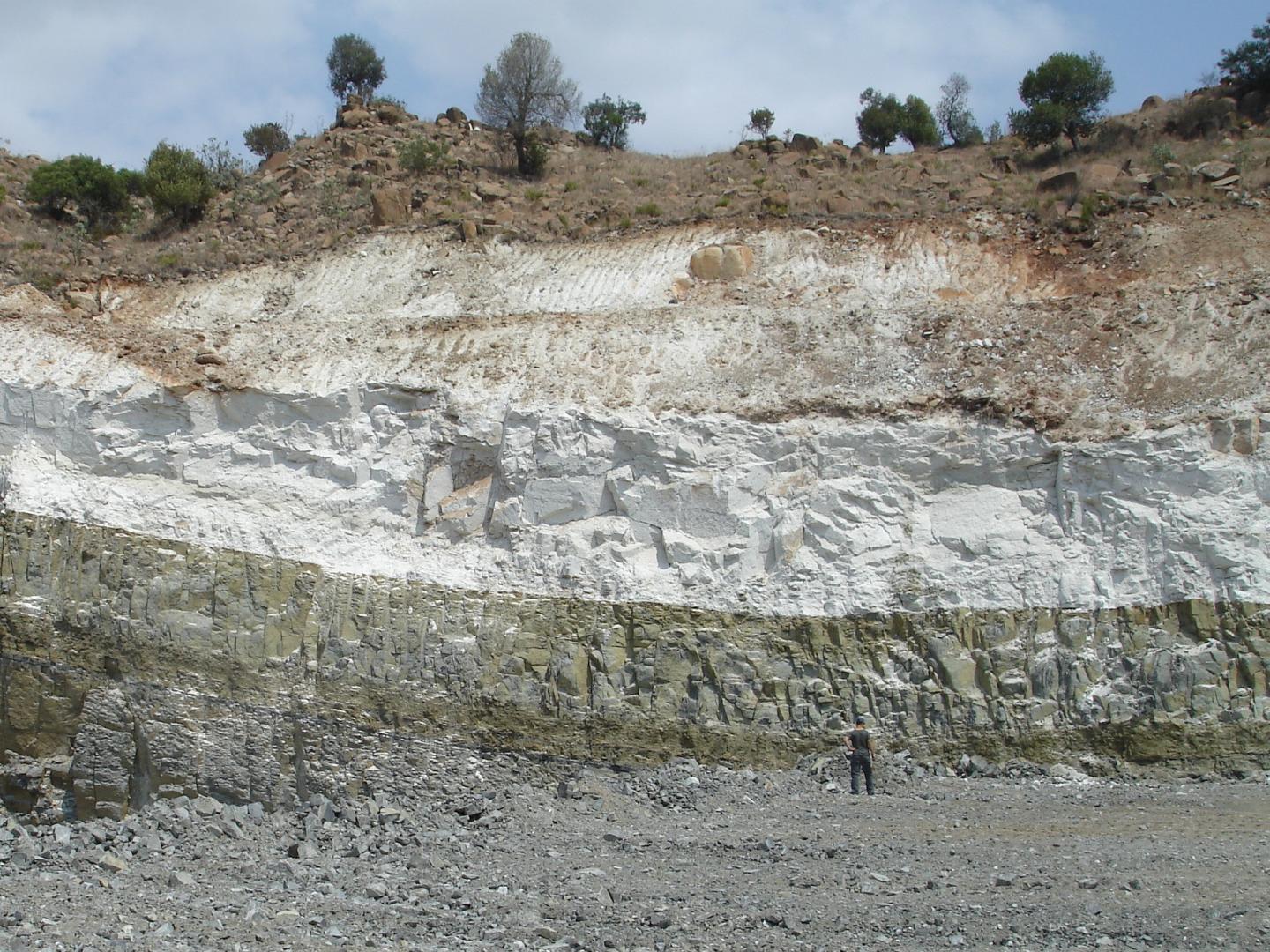
IMAGE

Credit: Wits University


Geologists from Wits University in Johannesburg, South Africa, have come up with an original explanation of how nature may produce an intriguing class of magmatic rocks that are made up of only one type of mineral.

The magmatic minerals are stored at great depth in the Earth and are delivered from there into the shallow intrusions close to the planet’s surface in the form of magmas – essentially hot liquids of molten minerals. On cooling, these magmas crystallise to form rocks that are commonly composed of several types of minerals.

However, some of these magmas crystallise into rocks that consist of only one mineral. A typical example is anorthosite – a magmatic rock that is made up of only one mineral called plagioclase – a component that is currently considered to be important for glass fibre manufacturing.

Anorthosites occur as very prominent, white-coloured layers in many layered intrusions worldwide and, in particular, are common for the famous platinum-rich Bushveld Complex in South Africa – the largest basaltic magma chamber in the Earth’s crust – in which these layers extend for hundreds of kilometres.

For years, geologists have been puzzling about how these remarkable layers of pure anorthosites are produced.

“There were many attempts to solve this issue involving various processes that operate within the shallow magma chambers, but they were not particularly successful,” says Professor Rais Latypov from the School of Geosciences at Wits University.

However, Latypov and his team have now found an elegant solution to this long-standing petrological puzzle.

“We took a radically different approach and started searching for a mechanism to generate melts saturated in plagioclase alone outside of the shallow magma chambers,” says Rais Latypov.

“We realised that some melts rising up from deep-seated magma chambers may become saturated in plagioclase alone. This happens in response to decompression as the melts ascend from the depth towards the Earth’s surface.” This research was published a paper in Scientific Reports.

When these magmas arrive into a shallow magma chamber and cool there, they may crystallise stratiform layers of pure plagioclase composition like the ones we observe in the Bushveld Complex.

Latypov and his team believe that their work represents a significant advance in the understanding of the Earth’s magmatic systems.

“This study provides a long-missing bridge between volcanology – where we mostly deal with the generation of melts and their ascent – and igneous petrology that mainly focuses on crystallisation of these melts within magma chambers,” says Latypov.

“We can now paint a much better picture of how some of Earth’s valuable minerals are derived from the Earth’s depth and deposited in the form of monomineralic layers in the shallow intrusions, thus making them much easier to access.”

###

Media Contact
Schalk Mouton
[email protected]
27-827-399-637

Related Journal Article

http://dx.doi.org/10.1038/s41598-020-60778-w

Tags: Earth ScienceGeographyGeology/SoilGeophysicsGeophysics/GravityMaterialsNatureOld WorldScience/MathTemperature-Dependent Phenomena
Share12Tweet8Share2ShareShareShare2

Related Posts

International Team Including Dresden Scientists Develops Novel Designer Proteins for Advanced Study of Living Tissue

June 25, 2026

New Study Uncovers Key Factors Driving Water Chemistry in Nanoscale Environments

June 25, 2026

Plasma Technology Extends Catalyst Lifespan in Hydrogen Production

June 24, 2026

Electric Field and Oxygen Spillover Collaborate to Control Electrode Migration in SOECs

June 24, 2026
Please login to join discussion

POPULAR NEWS

  • Saying Goodbye to PGY-6: Pediatric Fellowship Realities

    103 shares
    Share 41 Tweet 26
  • Multi-Hospital Study Reveals Long Covid Burden Is Twice as High as Current Estimates

    92 shares
    Share 36 Tweet 23
  • Detection of EDCs in Breast Milk and Infant Urine Up to Six Months Highlights Early Exposure Risks

    77 shares
    Share 31 Tweet 19
  • New Drug Candidate Developed at McMaster Shows Potential for Treating Brain Cancer

    58 shares
    Share 23 Tweet 15

About

We bring you the latest biotechnology news from best research centers and universities around the world. Check our website.

Follow us

Recent News

Chiral Laser Gyroscopes Surpass Lock-In Limit

Boosting Genomic Equity: Africa’s National Genome Projects

Bee- and Ant-Inspired Swarm Robots Poised to Revolutionize Future Mining

Subscribe to Blog via Email

Enter your email address to subscribe to this blog and receive notifications of new posts by email.

Join 82 other subscribers
  • Contact Us

Bioengineer.org © Copyright 2023 All Rights Reserved.

Welcome Back!

Login to your account below

Forgotten Password?

Retrieve your password

Please enter your username or email address to reset your password.

Log In
No Result
View All Result
  • Homepages
    • Home Page 1
    • Home Page 2
  • News
  • National
  • Business
  • Health
  • Lifestyle
  • Science

Bioengineer.org © Copyright 2023 All Rights Reserved.