• HOME
  • NEWS
  • EXPLORE
    • CAREER
      • Companies
      • Jobs
    • EVENTS
    • iGEM
      • News
      • Team
    • PHOTOS
    • VIDEO
    • WIKI
  • BLOG
  • COMMUNITY
    • FACEBOOK
    • INSTAGRAM
    • TWITTER
Monday, December 1, 2025
BIOENGINEER.ORG
No Result
View All Result
  • Login
  • HOME
  • NEWS
  • EXPLORE
    • CAREER
      • Companies
      • Jobs
        • Lecturer
        • PhD Studentship
        • Postdoc
        • Research Assistant
    • EVENTS
    • iGEM
      • News
      • Team
    • PHOTOS
    • VIDEO
    • WIKI
  • BLOG
  • COMMUNITY
    • FACEBOOK
    • INSTAGRAM
    • TWITTER
  • HOME
  • NEWS
  • EXPLORE
    • CAREER
      • Companies
      • Jobs
        • Lecturer
        • PhD Studentship
        • Postdoc
        • Research Assistant
    • EVENTS
    • iGEM
      • News
      • Team
    • PHOTOS
    • VIDEO
    • WIKI
  • BLOG
  • COMMUNITY
    • FACEBOOK
    • INSTAGRAM
    • TWITTER
No Result
View All Result
Bioengineer.org
No Result
View All Result
Home NEWS Science News Immunology

New potential approach to treat atopic dermatitis

Bioengineer by Bioengineer
March 18, 2019
in Immunology
Reading Time: 2 mins read
0
IMAGE
Share on FacebookShare on TwitterShare on LinkedinShare on RedditShare on Telegram

IMAGE

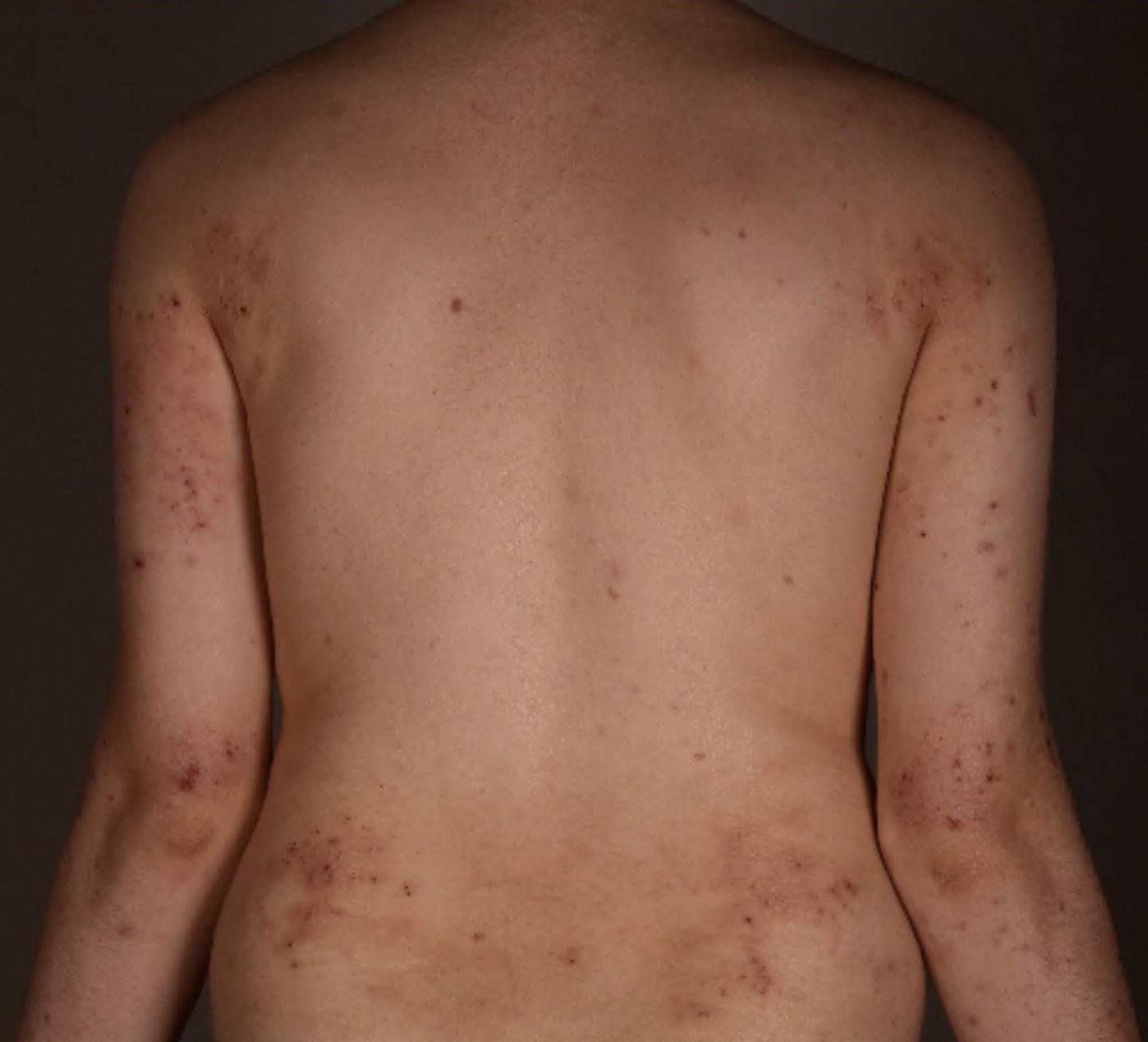
Credit: (Image: Dermatologische Klinik, USZ)

The skin of humans and animals is densely populated by fungi. It is suspected that a small yeast species called Malassezia, which besides bacteria and viruses is part of the microflora of healthy skin, strengthens the body’s defenses and prepares the immune system for dangerous pathogens – much like certain bacteria do. Unlike with the bacteria, however, little has so far been known about the physiological processes that keep the ubiquitous fungus in check.

Immunologists at the University of Zurich have now shown that our immune system is responsible for maintaining the balance on our skin. The researchers were able to demonstrate that, in mice as well as in humans, Malassezia fungi stimulate the immune system to produce the cytokine interleukin-17. “If this cytokine isn’t released or if the immune cells that produce interleukin-17 are missing, there is nothing to stop the fungus from growing and infesting the skin,” explains Salomé LeibundGut-Landmann, professor of immunology and head of the immunology section at the Vetsuisse Faculty of UZH.

Fungus can encourage skin allergy

But what happens when the balance between the fungus and the immune system on the surface of our body is lost? There is some evidence that the usually harmless Malassezia fungus plays a role when it comes to atopic dermatitis. In this chronic inflammatory skin allergy, which affects up to 20 percent of children and 10 percent of adults, the immune system overreacts to antigens from the environment, for example house dust mites. This can lead to eczema, which is characterized by dry, inflamed and itching skin lesions, typically on the neck, forearms and legs. It is also one of the most common skin diseases in dogs.

The current study confirms that interleukin-17 production by certain immune cells, which normally provide protection against uncontrolled fungal growth on the skin, also contribute to the development of symptoms characteristic for atopic dermatitis. The fungus becomes an allergen on the skin, so to speak, and triggers an overreaction of the immune system with the respective inflammatory characteristics. This finding is supported by experiments with cells from atopic dermatitis patients carried out in cooperation with the University Hospital Zurich and ETH Zurich.

Treatment with therapeutic antibodies

“The findings of our study suggest that therapeutic antibodies that neutralize the effect of interleukin-17 could be an effective treatment for atopic dermatitis. These antibodies already exist and are being used to treat psoriasis with great success,” says LeibundGut-Landmann.

However, it remains to be studied why the immune response against the Malassezia fungus can become pathological and why the normally protective mechanisms break down in atopic dermatitis patients.

###

Media Contact
Salomé LeibundGut-Landmann
[email protected]

Original Source

https://www.media.uzh.ch/en/Press-Releases/2019/Skin-fungi.html

Related Journal Article

http://dx.doi.org/10.1016/j.chom.2019.02.002

Tags: DermatologyImmunology/Allergies/AsthmaInfectious/Emerging DiseasesMedicine/HealthMycologyParasitologyPhysiology
Share13Tweet8Share2ShareShareShare2

Related Posts

IMAGE

UMass Amherst grad student awarded fellowship for food allergy research

July 23, 2021
IMAGE

Less-sensitive COVID-19 tests may still achieve optimal results if enough people tested

July 22, 2021

Public trust in CDC, FDA, and Fauci holds steady, survey shows

July 20, 2021

USC study shows male-female differences in immune cell function

July 19, 2021
Please login to join discussion

POPULAR NEWS

  • New Research Unveils the Pathway for CEOs to Achieve Social Media Stardom

    New Research Unveils the Pathway for CEOs to Achieve Social Media Stardom

    203 shares
    Share 81 Tweet 51
  • Scientists Uncover Chameleon’s Telephone-Cord-Like Optic Nerves, A Feature Missed by Aristotle and Newton

    120 shares
    Share 48 Tweet 30
  • Neurological Impacts of COVID and MIS-C in Children

    106 shares
    Share 42 Tweet 27
  • MoCK2 Kinase Shapes Mitochondrial Dynamics in Rice Fungal Pathogen

    67 shares
    Share 27 Tweet 17

About

We bring you the latest biotechnology news from best research centers and universities around the world. Check our website.

Follow us

Recent News

Plasma Gelsolin, MRI Radiomics: Predicting Platinum Resistance

Integrating Omics Data for Consistent Metabolic Models

Arabinoxylan Enhances Brain Signaling in Post-Stroke Depression

Subscribe to Blog via Email

Enter your email address to subscribe to this blog and receive notifications of new posts by email.

Join 69 other subscribers
  • Contact Us

Bioengineer.org © Copyright 2023 All Rights Reserved.

Welcome Back!

Login to your account below

Forgotten Password?

Retrieve your password

Please enter your username or email address to reset your password.

Log In
No Result
View All Result
  • Homepages
    • Home Page 1
    • Home Page 2
  • News
  • National
  • Business
  • Health
  • Lifestyle
  • Science

Bioengineer.org © Copyright 2023 All Rights Reserved.