• HOME
  • NEWS
  • EXPLORE
    • CAREER
      • Companies
      • Jobs
    • EVENTS
    • iGEM
      • News
      • Team
    • PHOTOS
    • VIDEO
    • WIKI
  • BLOG
  • COMMUNITY
    • FACEBOOK
    • INSTAGRAM
    • TWITTER
Tuesday, June 30, 2026
BIOENGINEER.ORG
No Result
View All Result
  • Login
  • HOME
  • NEWS
  • EXPLORE
    • CAREER
      • Companies
      • Jobs
        • Lecturer
        • PhD Studentship
        • Postdoc
        • Research Assistant
    • EVENTS
    • iGEM
      • News
      • Team
    • PHOTOS
    • VIDEO
    • WIKI
  • BLOG
  • COMMUNITY
    • FACEBOOK
    • INSTAGRAM
    • TWITTER
  • HOME
  • NEWS
  • EXPLORE
    • CAREER
      • Companies
      • Jobs
        • Lecturer
        • PhD Studentship
        • Postdoc
        • Research Assistant
    • EVENTS
    • iGEM
      • News
      • Team
    • PHOTOS
    • VIDEO
    • WIKI
  • BLOG
  • COMMUNITY
    • FACEBOOK
    • INSTAGRAM
    • TWITTER
No Result
View All Result
Bioengineer.org
No Result
View All Result
Home NEWS Science News

NASA-NOAA satellite sees Amphan’s eye obscured

Bioengineer by Bioengineer
May 19, 2020
in Science News
Reading Time: 2 mins read
0
IMAGE
Share on FacebookShare on TwitterShare on LinkedinShare on RedditShare on Telegram

IMAGE

Credit: NASA/NOAA/UWM-CIMISS, William Straka III

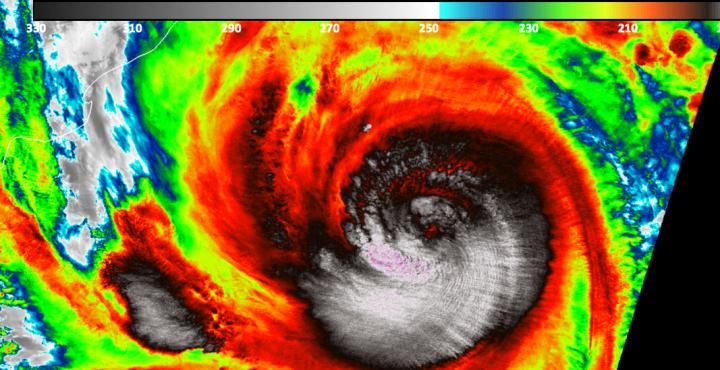
Early on May 18, 2020, Tropical Cyclone Amphan was a Category 5 storm in the Northern Indian Ocean. On May 19, satellite data from NASA-NOAA’s Suomi NPP satellite revealed that the storm has weakened and the eye was covered by high clouds.

When NASA-NOAA’s Suomi NPP satellite passed over Tropical Cyclone Amphan on May 18 at 4:28 p.m. EDT (2028 UTC), infrared imagery revealed very cold cloud top temperatures and an obscured eye. The higher the cloud top, the colder it is, and the stronger the storm. The VIIRS instrument found several areas within where cloud top temperatures were as cold as minus 80 degrees Fahrenheit (minus 62.2 Celsius), indicating powerful storms. Storms with cloud tops that cold have been found to generate heavy rainfall.

The Joint Typhoon Warning Center noted, “Satellite imagery also revealed that the eyewall is open on the eastern side of the eye, indicative of the easterly vertical shear and mid-level dry air moving into the tropical cyclone.”

On May 19 at 5 a.m. EDT (0900 UTC), Tropical Cyclone Amphan was located near latitude 16.5 degrees north and longitude 86.8 degrees east, that is about 377 nautical miles south-southwest of Kolkata, India. Amphan was moving to the north-northeast and had maximum sustained winds near 110 knots.

Amphan is weakening as it moves north-northeast. The storm is forecast to make landfall near Kolkata on May 20 soon after 2 a.m. EDT (0600 UTC), according to the Joint Typhoon Warning Center.

###

Typhoons/hurricanes are the most powerful weather events on Earth. NASA’s expertise in space and scientific exploration contributes to essential services provided to the American people by other federal agencies, such as hurricane weather forecasting.

By Rob Gutro 

NASA Goddard Space Flight Center

Media Contact
Rob Gutro
[email protected]

Original Source

https://blogs.nasa.gov/hurricanes/2020/05/19/amphan-northern-indian-ocean-3/

Tags: Atmospheric ChemistryAtmospheric ScienceClimate ChangeClimate ScienceEarth ScienceMeteorologyTechnology/Engineering/Computer ScienceTemperature-Dependent PhenomenaWeather/Storms
Share12Tweet8Share2ShareShareShare2

Related Posts

Indiana University Biologists Discover Molecular Mechanism Driving Spread of Antibiotic Resistance Genes in Bacteria — Technology and Engineering

Indiana University Biologists Discover Molecular Mechanism Driving Spread of Antibiotic Resistance Genes in Bacteria

June 30, 2026
Biochar-Based Materials Offer Promising Solution for Sustainable Uranium Recovery in Nuclear Energy — Chemistry

Biochar-Based Materials Offer Promising Solution for Sustainable Uranium Recovery in Nuclear Energy

June 30, 2026

Experimental Treatment Shows Promise in Improving Outcomes for ARDS Patients

June 30, 2026

Early Asian Mammals Prioritized Strength Over Bite Power, Tooth Fossil Analysis Reveals

June 30, 2026
Please login to join discussion

POPULAR NEWS

  • Saying Goodbye to PGY-6: Pediatric Fellowship Realities

    103 shares
    Share 41 Tweet 26
  • Detection of EDCs in Breast Milk and Infant Urine Up to Six Months Highlights Early Exposure Risks

    77 shares
    Share 31 Tweet 19
  • New Drug Candidate Developed at McMaster Shows Potential for Treating Brain Cancer

    58 shares
    Share 23 Tweet 15
  • KTU Researchers Explore Ultrasound’s Role in Enhancing Blood Flow Beyond Diagnostics

    53 shares
    Share 21 Tweet 13

About

We bring you the latest biotechnology news from best research centers and universities around the world. Check our website.

Follow us

Recent News

Indiana University Biologists Discover Molecular Mechanism Driving Spread of Antibiotic Resistance Genes in Bacteria

Biochar-Based Materials Offer Promising Solution for Sustainable Uranium Recovery in Nuclear Energy

Experimental Treatment Shows Promise in Improving Outcomes for ARDS Patients

Subscribe to Blog via Email

Enter your email address to subscribe to this blog and receive notifications of new posts by email.

Join 82 other subscribers
  • Contact Us

Bioengineer.org © Copyright 2023 All Rights Reserved.

Welcome Back!

Login to your account below

Forgotten Password?

Retrieve your password

Please enter your username or email address to reset your password.

Log In
No Result
View All Result
  • Homepages
    • Home Page 1
    • Home Page 2
  • News
  • National
  • Business
  • Health
  • Lifestyle
  • Science

Bioengineer.org © Copyright 2023 All Rights Reserved.