• HOME
  • NEWS
  • EXPLORE
    • CAREER
      • Companies
      • Jobs
    • EVENTS
    • iGEM
      • News
      • Team
    • PHOTOS
    • VIDEO
    • WIKI
  • BLOG
  • COMMUNITY
    • FACEBOOK
    • INSTAGRAM
    • TWITTER
Saturday, May 16, 2026
BIOENGINEER.ORG
No Result
View All Result
  • Login
  • HOME
  • NEWS
  • EXPLORE
    • CAREER
      • Companies
      • Jobs
        • Lecturer
        • PhD Studentship
        • Postdoc
        • Research Assistant
    • EVENTS
    • iGEM
      • News
      • Team
    • PHOTOS
    • VIDEO
    • WIKI
  • BLOG
  • COMMUNITY
    • FACEBOOK
    • INSTAGRAM
    • TWITTER
  • HOME
  • NEWS
  • EXPLORE
    • CAREER
      • Companies
      • Jobs
        • Lecturer
        • PhD Studentship
        • Postdoc
        • Research Assistant
    • EVENTS
    • iGEM
      • News
      • Team
    • PHOTOS
    • VIDEO
    • WIKI
  • BLOG
  • COMMUNITY
    • FACEBOOK
    • INSTAGRAM
    • TWITTER
No Result
View All Result
Bioengineer.org
No Result
View All Result
Home NEWS Science News

NASA-NOAA satellite finds Tropical Storm Lorenzo organizing 

Bioengineer by Bioengineer
September 24, 2019
in Science News
Reading Time: 2 mins read
0
IMAGE
Share on FacebookShare on TwitterShare on LinkedinShare on RedditShare on Telegram

IMAGE

Credit: NASA/NOAA/NRL

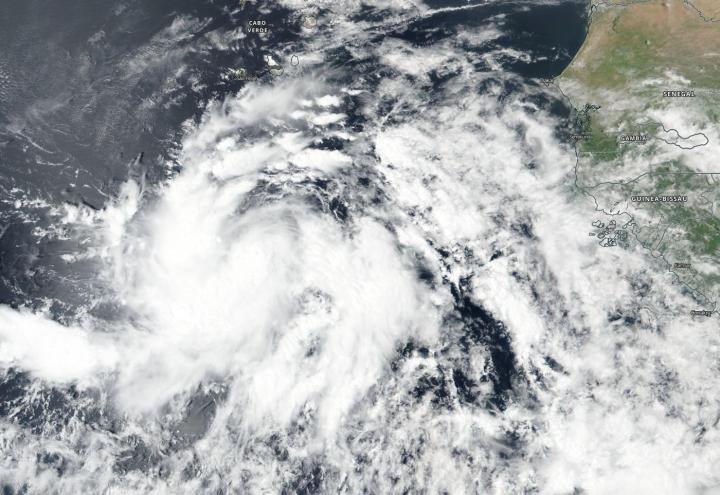
Tropical Storm Lorenzo continued to strengthen and appeared more organized on visible imagery from NASA-NOAA’s Suomi NPP satellite.

The shape of the storm is a clue to forecasters that a storm is either strengthening or weakening. If a storm takes on a more rounded shape it is getting more organized and strengthening. Conversely, if it becomes less rounded or elongated, it is a sign the storm is weakening.

On Sept. 24, the Visible Infrared Imaging Radiometer Suite (VIIRS) instrument aboard Suomi NPP provided a visible image of Lorenzo and showed it had become more organized over the previous 24 hours. The VIIRS image showed that many curved bands of thunderstorms have formed around the low-level center and there is a newly formed central dense overcast. A microwave image taken in the overnight hours showed that Lorenzo already had a very small central core.

NOAA’s National Hurricane Center or NHC said Lorenzo is located near latitude 12.0 degrees north and longitude 28.0 degrees west. Lorenzo is centered about 301 miles (500 km) southwest of the southwestern most Cabo Verde Islands. Lorenzo is moving toward the west-northwest near 16 mph (26 kph). This general motion with some decrease in forward speed is expected for the next couple of days, followed by a turn to the northwest on Thursday. Maximum sustained winds have increased to near 65 mph (100 kph) with higher gusts. The estimated minimum central pressure is 999 millibars.

Conditions seem to be ripe for further intensification because Lorenzo is moving over warm waters, is surrounded by humid mid-level air, and is only dealing with weak to moderate wind shear (outside winds that if strong enough can weaken a storm). Lorenzo is forecast to become a hurricane later today, Sept. 24. NHC forecasters said that Lorenzo could become a major hurricane on Thursday, Sept. 26.

###

Hurricanes are the most powerful weather event on Earth. NASA’s expertise in space and scientific exploration contributes to essential services provided to the American people by other federal agencies, such as hurricane weather forecasting.

For updated forecasts. Visit: http://www.nhc.noaa.gov

By Rob Gutro 

NASA’s Goddard Space Flight Center

Media Contact
Rob Gutro
[email protected]

Original Source

https://blogs.nasa.gov/hurricanes/2019/09/24/lorenzo-atlantic-ocean-2/

Tags: Atmospheric ChemistryAtmospheric ScienceClimate ChangeClimate ScienceEarth ScienceMeteorologyTechnology/Engineering/Computer ScienceTemperature-Dependent PhenomenaWeather/Storms
Share13Tweet8Share2ShareShareShare2

Related Posts

REM Sleep Breathing, Metabolism, and Memory Linked — Technology and Engineering

REM Sleep Breathing, Metabolism, and Memory Linked

May 16, 2026
Machine Learning Detects Flow Instability in Channels — Technology and Engineering

Machine Learning Detects Flow Instability in Channels

May 16, 2026

LTBP4 Deficiency Reduces Heart Failure in Male Mice

May 16, 2026

Lifespan Brain Development in Congenital Heart Disease

May 16, 2026
Please login to join discussion

POPULAR NEWS

  • Research Indicates Potential Connection Between Prenatal Medication Exposure and Elevated Autism Risk

    843 shares
    Share 337 Tweet 211
  • New Study Reveals Plants Can Detect the Sound of Rain

    730 shares
    Share 291 Tweet 182
  • Salmonella Haem Blocks Macrophages, Boosts Infection

    62 shares
    Share 25 Tweet 16
  • Breastmilk Balances E. coli and Beneficial Bacteria in Infant Gut Microbiomes

    58 shares
    Share 23 Tweet 15

About

We bring you the latest biotechnology news from best research centers and universities around the world. Check our website.

Follow us

Recent News

REM Sleep Breathing, Metabolism, and Memory Linked

Machine Learning Detects Flow Instability in Channels

LTBP4 Deficiency Reduces Heart Failure in Male Mice

Subscribe to Blog via Email

Enter your email address to subscribe to this blog and receive notifications of new posts by email.

Join 82 other subscribers
  • Contact Us

Bioengineer.org © Copyright 2023 All Rights Reserved.

Welcome Back!

Login to your account below

Forgotten Password?

Retrieve your password

Please enter your username or email address to reset your password.

Log In
No Result
View All Result
  • Homepages
    • Home Page 1
    • Home Page 2
  • News
  • National
  • Business
  • Health
  • Lifestyle
  • Science

Bioengineer.org © Copyright 2023 All Rights Reserved.