


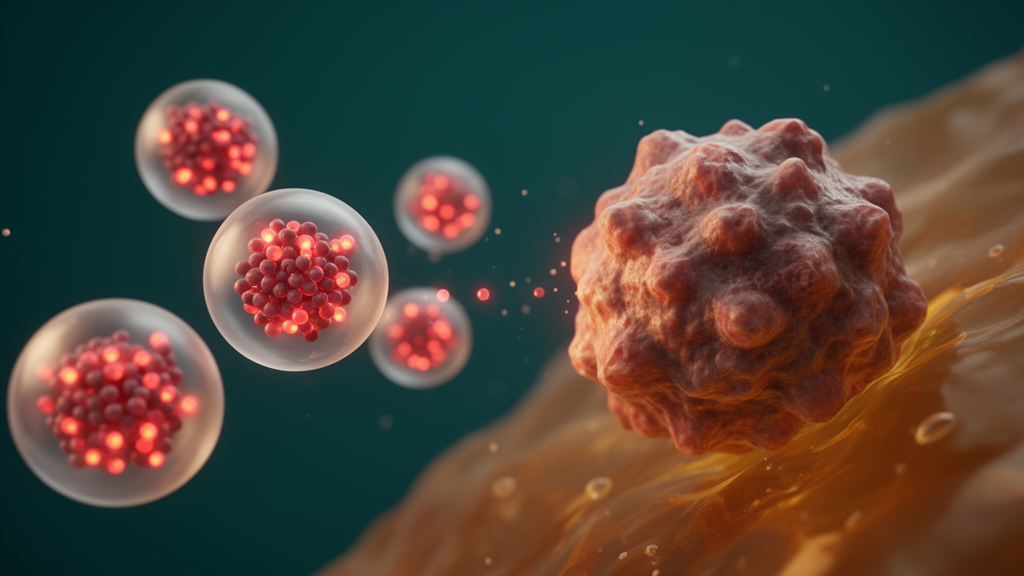
Resveratrol, the natural polyphenol found in grapes, berries, and peanuts, has spent decades tantalizing cancer researchers with laboratory results it cannot reproduce in patients. A systematic review published in Biomedical Materials Science now synthesizes why that gap persists and what nanotechnology might do about it. The review, conducted under PRISMA guidelines with a twenty-year publication window, concludes that resveratrol acts on major cancer-relevant signaling pathways including p53, NF-κB, PI3K/Akt, and MAPK, exerting antioxidant, anti-inflammatory, anti-proliferative, and pro-apoptotic effects in preclinical models. Yet its clinical impact remains constrained by very low bioavailability, rapid metabolism, and poor systemic distribution, and the authors argue that nanoparticle, liposome, and conjugate delivery systems are the most credible route to closing the translational divide.
The pharmacokinetic problem is stark. Once swallowed, resveratrol is poorly absorbed across the intestinal membrane and then rapidly metabolized in the liver and intestines through glucuronidation and sulfation, producing a suite of conjugated metabolites that are generally less active than the parent compound. The review cites systemic bioavailability of roughly half a percent, and a first-pass effect that sharply reduces the amount of active drug reaching circulation. In vitro studies show anticancer activity across a wide concentration range, typically one to one hundred micromolar, with the most pronounced cell-cycle arrest and apoptosis at moderate to high concentrations. Those upper concentrations, the authors note, are often unreachable in living patients because of the bioavailability ceiling, which is precisely the problem the delivery strategies are designed to solve.
Lipid-based carriers lead the field. Liposomes encapsulate resveratrol in their bilayers, shielding it from oxidative degradation and improving uptake. In one highlighted study, Meng and colleagues co-encapsulated resveratrol with paclitaxel in PEGylated liposomes and tested the combination against drug-resistant MCF-7/Adr breast tumor cells. The formulation reduced tumor cell viability in vitro and, in mice bearing drug-resistant tumors, effectively inhibited tumor growth without a distinguishable increase in toxicity, while also improving resveratrol’s pharmacokinetics and tumor uptake. Solid lipid nanoparticles and nanostructured lipid carriers stabilize the molecule within solid or hybrid lipid cores, prolonging circulation and enhancing anticancer efficacy in laboratory and animal models, though they suffer from polymorphic transitions that can expel the drug and reduce loading efficiency. Nanoemulsions boost oral absorption and lymphatic transport but carry surfactant-related toxicity risks and storage stability problems.
Polymeric carriers offer a complementary route based on controlled, sustained release. PLGA nanoparticles protect resveratrol from rapid metabolism and degradation, permitting prolonged systemic exposure; an optimized formulation showed significant cytotoxicity against melanoma cells while maintaining stability. Chitosan-coated systems improve mucosal adhesion and oral uptake. Polymeric micelles, built from amphiphilic block copolymers, solubilize resveratrol in nanoscale particles of roughly twenty to eighty nanometers and improve tumor penetration, but they can disassemble when diluted below the critical micelle concentration, releasing their cargo prematurely. Crosslinked micelles and ultra-low-CMC polymers are under development to address that instability. The review is candid about the weaknesses: acidic degradation of PLGA, residual solvent contamination, and batch variability all complicate reproducibility.
More experimental platforms round out the landscape. PAMAM dendrimers increase resveratrol’s solubility, protect it from enzymatic degradation, and promote tumor cell uptake, with resveratrol-loaded conjugates showing stronger cytotoxicity and apoptosis induction than free resveratrol, but their cationic groups carry inherent toxicity and long-term safety data are lacking. Gold nanoparticle complexes potentiate apoptosis and improve chemosensitivity in pancreatic cancer models while adding imaging functionality, yet unresolved questions about biodistribution, long-term accumulation, and metal-related toxicity remain significant translational barriers. Resveratrol-loaded hydrogels and implantable devices provide localized, sustained release directly at tumor sites, maintaining therapeutic concentrations while minimizing systemic metabolism, though their invasive administration limits them to niche indications such as post-surgical settings. Across all carriers, preclinical evidence consistently shows improved solubility, stability, bioavailability, and bioactivity, but the authors stress that lipid and polymeric systems hold the strongest translational promise given existing precedents in clinical oncology.
The review also catalogs absorption-enhancement and combination strategies that inform carrier design. Co-administration with piperine, which inhibits CYP3A4 and other metabolizing enzymes while enhancing intestinal permeability, increased resveratrol’s plasma bioavailability by more than two hundred percent and produced higher peak concentrations with an extended half-life. Quercetin, by inhibiting the P-glycoprotein efflux pump in the intestine, raised plasma resveratrol concentrations and shortened the time to peak concentration. Dietary fats, exploiting resveratrol’s lipophilicity, can solubilize it in mixed micelles within the gut. On the combination front, resveratrol paired with quercetin inhibited oral cancer cell growth in a dose-dependent manner beyond either monotherapy, inducing DNA damage and activating caspase-dependent apoptosis, while curcumin combinations showed synergistic inhibition of colon cancer cell growth and, in mouse hepatocellular carcinoma cells, jointly suppressed proliferation, induced apoptosis and cell-cycle arrest, and reduced metastatic behavior.
Structural analogs form a second pillar of the optimization effort. Methoxylated derivatives such as pterostilbene, which replaces two hydroxyl groups with methoxy groups, show higher oral bioavailability and greater potency in antioxidant and anticancer assays because methoxy groups resist conjugation. A 2021 study synthesized a panel of methoxy-resveratrol derivatives, including isorhapontigenin, pterostilbene, 4-methoxyresveratrol, piceatannol, and rhapontigenin, and found improved anticancer activity attributed to increased lipophilicity and tissue penetration. Fluorinated analogs showed significantly improved antioxidant activity and suppressed COX-2 expression and pro-inflammatory cytokine production in vitro, while hydroxylation at specific positions can improve aqueous solubility and intracellular stability. Dimeric derivatives such as ε-viniferin often show enhanced antioxidant and anti-inflammatory properties, though dimerization increases molecular size in ways that can reduce absorption.
The clinical record, however, tempers the enthusiasm. In a phase I trial by Patel and colleagues, eight days of resveratrol intervention produced a significant reduction in the Ki-67 proliferation index in dissected colon tissue and measurable levels of resveratrol and its metabolites at the target site, but the short duration could not reveal sustained clinical benefit. A phase II study in relapsed or refractory multiple myeloma tested SRT501, a micronized formulation at five grams per day, aiming to block NF-κB signaling; it produced minimal response, no substantial disease control, and multiple cases of renal toxicity that forced early termination. Pharmacokinetic studies in healthy volunteers confirmed rapid absorption, extensive first-pass metabolism to glucuronide and sulfate conjugates, parent compound levels in the low nanomolar range, and rapid urinary elimination, though doses up to five grams per day were generally well tolerated with mostly mild gastrointestinal effects.
The review’s verdict is measured rather than triumphant. Preclinical evidence for resveratrol nanoformulations shows enhanced tumor uptake, controlled release, and therapeutic synergy, including reversal of multidrug resistance when co-administered with agents such as docetaxel, and mechanistic work reports substantial reductions in phosphorylated Akt, two- to threefold increases in apoptotic cells, and sixty percent fewer lung metastatic nodules in mouse models. But clinical evaluation remains scarce and variable, trial designs are often small, short, and heterogeneous, and surrogate biomarkers rather than hard outcomes dominate the human literature. The authors call for rigorous studies on dosing, safety, long-term performance, and translational feasibility before nanoformulated resveratrol can be positioned as a genuine adjunct in integrative cancer therapy rather than a promising laboratory story.
Subject of Research: Nanotechnology-based delivery strategies for the chemotherapeutic agent resveratrol in cancer treatment
Article Title: Nanotechnological approaches in resveratrol delivery as a chemotherapeutic agent in cancer: advanced delivery strategies
Article References: Ogedjo, M. M., Onoka, I., & Shadrack, D. M. (2026). Nanotechnological approaches in resveratrol delivery as a chemotherapeutic agent in cancer: advanced delivery strategies. Biomedical Materials Science, 1(1), Article 2. https://doi.org/10.1186/s44495-025-00001-y
Image Credits: AI Generated
DOI: 10.1186/s44495-025-00001-y
Keywords: resveratrol, nanoparticles, liposomes, drug delivery, cancer therapy, bioavailability, polyphenols, pterostilbene, combination therapy, clinical trials, chemoresistance, PLGA nanoparticles
News Source: Denise Maddox. (October 29, 2026). Nanoparticle Delivery Systems Aim to Unlock Resveratrol’s Anticancer Potential. Scienmag.



