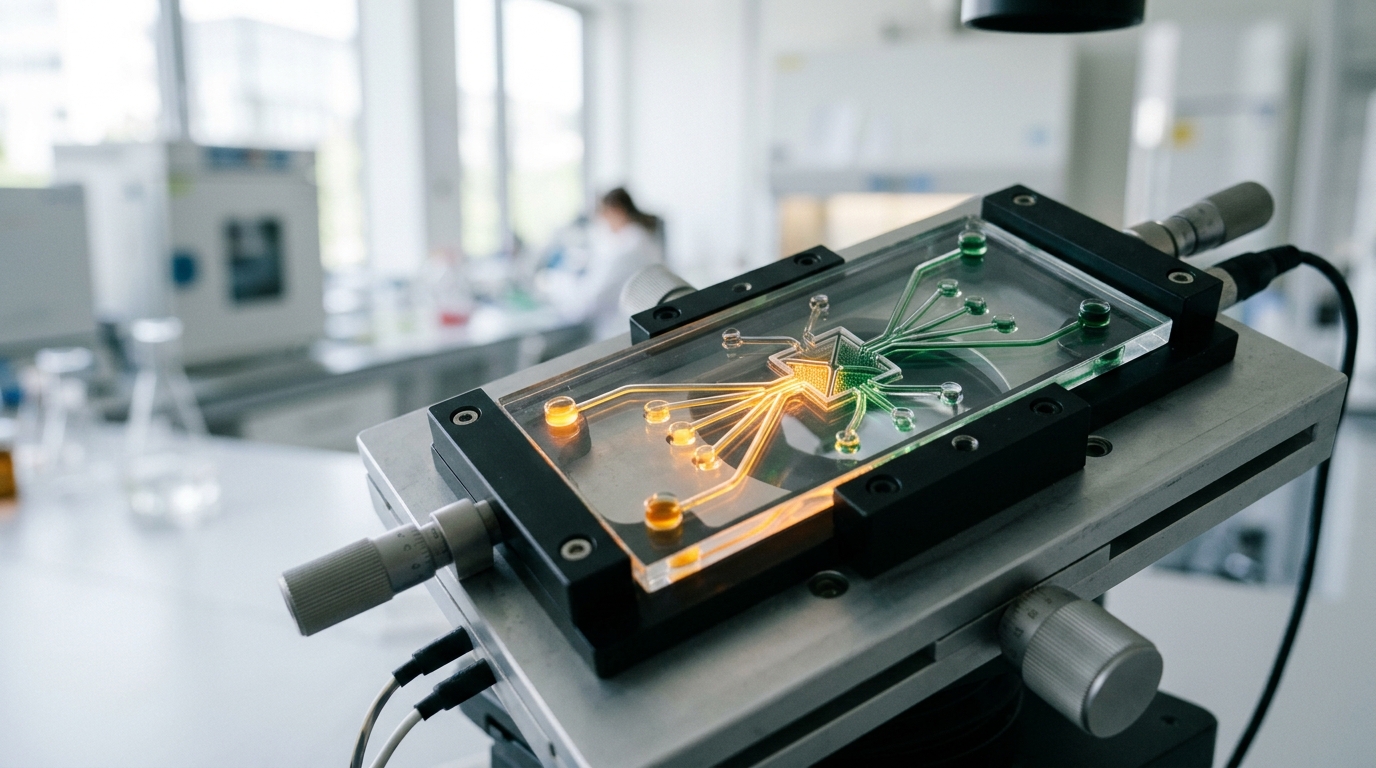
Most of the pathogens that make people sick do not float freely in the bloodstream. They hide inside host cells, particularly the macrophages of the liver, spleen, and lymphoid tissues that make up the body’s reticuloendothelial system. Once there, they are shielded from antibodies and from conventional drug formulations, which distribute medicine according to the physical and chemical properties of the drug itself rather than the location of the infection. A new review published in Discover Pharmaceutical Sciences examines how lipid- and polymer-based nanoscale carriers could change that, by ferrying antimicrobial drugs directly into the intracellular compartments where pathogens replicate and persist.
The review, authored by Heena Maithania and Manoj Gundeti, notes that infectious diseases rank as the second leading cause of death according to the World Health Organization, and that intracellular infections constitute a primary cause of morbidity and mortality within that burden. Pathogens such as bacteria, fungi, viruses, and parasites can escape the host’s immune defenses by adapting to survive within the organs of the reticuloendothelial system. Once inside a host cell, a pathogen can replicate without rapidly destroying the cell or disturbing its functions, enabling long-term survival. Conventional drug delivery struggles to reach effective concentrations in the intracellular compartment, and low drug concentrations at the site of infection not only produce poor efficacy but can also promote resistance, while high doses risk toxic side effects and cost-prohibitive treatment.
Nanocarriers offer a way around this problem by exploiting the body’s own phagocytic machinery. Passive targeting strategies rely on the natural ability of macrophages to engulf particles, and the physicochemical properties of the carriers, including size, shape, hydrophobicity, and surface charge, can be tuned to control where they accumulate in the body. Studies of phospholipid bilayer vesicles ranging from 30 to 400 nanometers showed that smaller particles in the 100 to 200 nanometer range remained in the blood, while particles larger than 250 nanometers accumulated in the liver. Splenic uptake increased as particle size grew, though vesicles smaller than 100 nanometers showed very little splenic uptake. Because many intracellular infections are spleen-resident, splenotropic drug delivery remains a prominent research area, and bypassing the Kupffer cells of the liver, which capture most intravenously injected nanoparticles, is a central focus.
Particle shape matters as much as size. Spherical particles readily form an actin film that facilitates rapid uptake by phagocytosis, whereas non-spherical or asymmetric particles escape phagocytosis because the actin film cannot complete its movement across the particle surface. This shape-dependent evasion of Kupffer cell uptake represents one of the most favorable approaches for redirecting carriers toward the spleen. Surface charge also plays a role: nanocarriers bearing a positive charge display higher cellular uptake than those with neutral hydrophilic surfaces or negative surface moieties, while negatively charged carriers can attach to cationic sites on macrophages. Hydrophobic particles are rapidly cleared from circulation after opsonization by the complement system, but coating solid lipid nanoparticles with hydrophilic PEG chains reduces hydrophobicity and redirects them toward non-hepatic and non-splenic organs.
Active targeting adds a layer of precision by attaching ligands to the nanocarrier surface that bind to receptors on macrophages. Because many microorganisms reside in macrophages, which also serve as a reservoir for those infectious agents, directly targeting these cells could improve treatment and prevention of intracellular infections. Infections themselves alter the pattern of receptor expression on macrophage surfaces, which can be exploited when designing carriers. Once nanoparticles reach the cell, they enter through one of five main endocytosis pathways: clathrin-dependent, caveolin-dependent, clathrin- and caveolin-independent, phagocytosis, or macropinocytosis. After internalization, nanoparticles become trapped in endosomes that fuse with lysosomes, where acidic pH and enzymatic activity degrade the cargo. Endosomal escape strategies, including cationic polymers such as polyethyleneimine, cell-penetrating peptides that induce osmotic swelling and rupture, pH-sensitive hydrazone bonds, and linkers cleaved by endosome-specific enzymes such as cathepsin B, are therefore crucial for delivering drugs to the cytoplasm and other organelles.
The review catalogs several nanocarrier platforms suited to this task. Polymeric nanoparticles built from biodegradable materials such as poly(lactic acid), poly(lactide-co-glycolide), poly(ε-caprolactone), and poly(cyanoacrylate), often with PEG coatings for water solubility, offer ease of synthesis, stability in biological conditions, tunable size and charge, and abundant surface functionalization for targeting ligands. Amphotericin B-loaded polymeric ethyl cellulose nanoparticles showed enhanced oral bioavailability, improved stability, and reduced cytotoxicity for the treatment of parasitic and fungal infections. Solid lipid nanoparticles, meanwhile, provide controlled drug release, protection of encapsulated molecules from degradation, high drug loads, and few carrier-related side effects. They have been tested against experimental tuberculosis, shown to overcome P-glycoprotein efflux in intestinal absorption of tobramycin, and demonstrated promise for transdermal delivery of azole antifungal drugs such as econazole and clotrimazole. Solid lipid nanoparticles carrying the anti-HIV drug atazanavir crossed a human brain microvessel endothelial cell model of the blood-brain barrier with negligible cytotoxicity even at 200 nanomolar drug concentrations, and bypassed P-gp efflux activity in brain cells.
Inorganic nanoparticles, including gold, iron oxide, and mesoporous silica structures, add optical, magnetic, and electrical properties that organic materials cannot match. Gold nanoparticles exhibit photothermal behavior from surface electron oscillations, and monosaccharide coatings influence their uptake by dendritic cells: fucose-coated particles localized in lysosomes, while mannose-coated particles were retained in the endosomal phase. Magnetic iron oxide nanoparticles serve as contrast agents and thermal therapeutics, and mesoporous silica offers high drug loading with controlled release. Yet clinical translation of inorganic carriers remains limited by concerns over solubility, biodegradability, and toxicity.
Preclinical evidence illustrates how these design principles translate into measurable gains. Increasing the size of enrofloxacin-loaded solid lipid nanoparticles from 150 to 605 nanometers raised intracellular localization from 0.336 to 1.147 micrograms per milligram of protein after half an hour of incubation, with encapsulation efficiency 27 to 37 times greater than free drug at the same extracellular concentration. Rifampicin-loaded lipid-polymer hybrid nanoparticles achieved 11.7 percent drug content and 65.7 percent entrapment efficiency, and their increased surface hydrophobicity drove an 18.5-fold reduction in intracellular MRSA bacterial concentration compared with free rifampicin at a similar concentration. Mannose-targeted, pH-responsive liposomes delivering streptomycin showed 2.5 times greater internalization in alveolar macrophages, the major localization site for intracellular pathogens, with enhanced antibacterial efficacy. Surface-modified rifampicin solid lipid nanoparticles with mannose derivatives achieved roughly 80 percent intracellular intake via mannose-receptor-mediated endocytosis, compared with about 20 percent for free rifampicin and about 40 percent for non-targeted carriers. Streptomycin-loaded solid lipid nanoparticles prepared by high-pressure homogenization showed a roughly threefold reduction in minimum inhibitory concentration against intracellular Mycobacterium tuberculosis and 60 times higher intracellular localization than free drug. Ciprofloxacin encapsulated in chitosan nanocapsules extended circulation half-life to 3.17 hours from 0.62 hours for the free drug, with increased concentrations in the liver, blood, spleen, and lymphoid tissue.
Manufacturing these carriers at scale remains a bottleneck. High-shear homogenization, the most widely used technique, forces liquid through a narrow opening at pressures of 100 to 2000 bar and speeds exceeding 1000 kilometers per hour, producing particle breakdown through cavitation and shear stress; lipid concentrations from 5 to 40 percent have been evaluated. Hot homogenization disperses drug in molten lipid before high-pressure processing and yields smaller particles, but is unsuitable for heat-labile drugs. Cold homogenization solidifies the lipid-drug matrix with dry ice or liquid nitrogen before milling, though instant solidification can produce larger, non-uniform particles. Microemulsion-based methods dilute a hot lipid-surfactant mixture into cold water, while solvent-based approaches improve encapsulation of poorly water-soluble molecules and allow ambient processing of thermolabile drugs, though solvent toxicity is a limiting factor. Microfluidization, using single- or dual-channel devices with fixed-geometry interaction chambers, achieves uniform size reduction in fewer passes; dual-channel systems eliminate the coarse emulsion premix step entirely and can process highly viscous premixes with high solid content in a single pass.
Significant hurdles stand between laboratory prototypes and clinical use. A large proportion of intravenously injected nanoparticles is taken up by the liver and other reticuloendothelial organs, positively charged carriers can interact with blood components causing off-target toxicity, and some inorganic nanoparticles cannot be excreted renally, leading to long-term accumulation. Nanoparticles can aggregate in physiological environments or release drug prematurely, and assessment of in vivo performance requires appropriate animal models and toxicology assays. Batch synthesis at laboratory scale produces variations in quality and particle size, and purification from by-products, low yield, storage stability, and degradation during manufacturing all complicate scale-up. The lack of clear safety and regulatory guidelines has also hindered timely clinical translation, since polymer safety and efficacy depend on molecular weight and structure, and appropriate standards must account for chemistry, dose, route of administration, and intended clinical use. The authors conclude that only a handful of nano delivery systems for targeting intracellular macrophages have reached the market, and that continued advancement in large-scale manufacturing techniques would ease production and improve the potential for translation from laboratory to clinic.
Subject of Research: Nanoscale lipid- and polymer-based drug carriers designed to target intracellular pathogens within host cells
Article Title: A concise review on nanoscale carriers to target intracellular infections
Article References: Maithania, H., & Gundeti, M. (2026). A concise review on nanoscale carriers to target intracellular infections. Discover Pharmaceutical Sciences, 2(1), Article 2. https://doi.org/10.1007/s44395-026-00038-4
Image Credits: AI Generated
DOI: 10.1007/s44395-026-00038-4
Keywords: nanocarriers, intracellular infections, drug delivery, solid lipid nanoparticles, polymeric nanoparticles, macrophages, reticuloendothelial system, endosomal escape, targeted therapy, nanomedicine, antimicrobial resistance, microfluidization
News Source: Ophelia Keating. (November 5, 2026). Nanocarriers Aim Drugs at Pathogens Hiding Inside Cells. Scienmag.