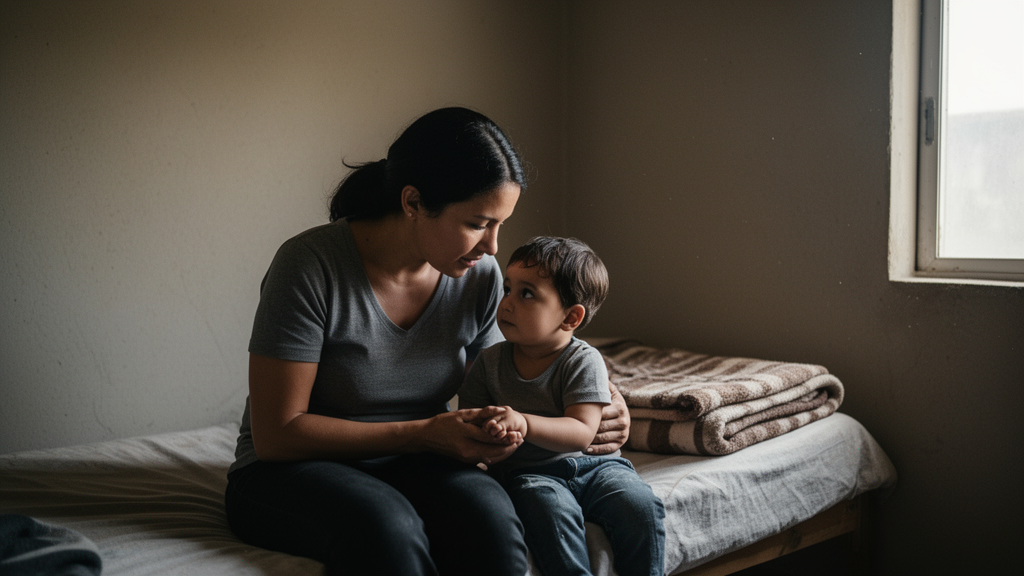
Mothers with lived experience of homelessness in Sweden describe motherhood as both a source of vulnerability and a moral practice through which they sustained family life amid systemic adversity, according to a qualitative study published in the International Journal for Equity in Health.
Researchers conducted narrative interviews with twelve women in Sweden who had experienced homelessness and were mothers of children under eighteen. Participants were recruited through four civil society organisations, and the data were analysed using Lindseth and Norberg’s phenomenological–hermeneutic method, which involved naïve reading, structural analysis, and comprehensive interpretation.
The study took a participatory approach through collaboration with the Women’s Advisory Board for Inclusion Health, a group of women with lived experience of homelessness who contributed as co-researchers to the study design and the interpretation of findings.
Through their interpretation of the narratives, the researchers identified three interrelated themes in the women’s experiences. First, mothers encountered fragmented welfare systems that demanded accountability yet offered limited continuity or trust, compelling them to struggle for recognition and care.
Second, housing instability and separation from children fractured the women’s sense of identity and belonging, revealing how structural insecurity and stigma disrupted maternal roles. Third, mothers sought to protect and reconnect with their children, demonstrating resilience as a relational process rooted in care, responsibility, and love.
The authors conclude that motherhood in the context of homelessness is an existential and moral struggle shaped by structural insecurity that constrains mothers’ agency and undermines their credibility. Maternal resilience, they write, is revealed not just as personal endurance but also as a relational process grounded in connection, care, and responsibility.
The study’s background notes that homelessness is a critical determinant of health that disproportionately affects women and children, and that while adverse health consequences of homelessness are well established, less is known about how mothers sustain care, dignity, and wellbeing under such conditions. Drawing on feminist perspectives and an Inclusion Health framework, the aim was to explore women’s lived experiences of motherhood in the context of homelessness.
Advancing health equity for mothers experiencing homelessness, the authors conclude, requires welfare and health systems that prioritise relational trust, continuity of support, and the recognition of lived experience as legitimate knowledge. As a qualitative interview study with twelve participants in Sweden, the findings reflect the interpreted experiences of this specific group rather than generalisable prevalence estimates, and the article was published as an open access research paper on 29 October 2026.
Subject of Research: Lived experiences of motherhood among women experiencing homelessness in Sweden
Article Title: Striving to protect and reconnect: narratives of motherhood in the context of homelessness
Article References: Carlsson, T., Mattsson, E., Lundström, J. E., Gaber, S. N., & in collaboration with the Ersta Möjlighet, S. S. (2026). Striving to protect and reconnect: narratives of motherhood in the context of homelessness. International Journal for Equity in Health. https://doi.org/10.1186/s12939-026-03087-4
Image Credits: AI Generated
DOI: 10.1186/s12939-026-03087-4
Keywords: homelessness, motherhood, qualitative research, health equity, welfare systems, maternal resilience, Inclusion Health, Sweden, narrative interviews, social determinants of health, Striving, protect
News Source: Courtney Benton. (October 29, 2026). Mothers Experiencing Homelessness Describe Struggling to Protect and Reconnect with Their Children. Scienmag.