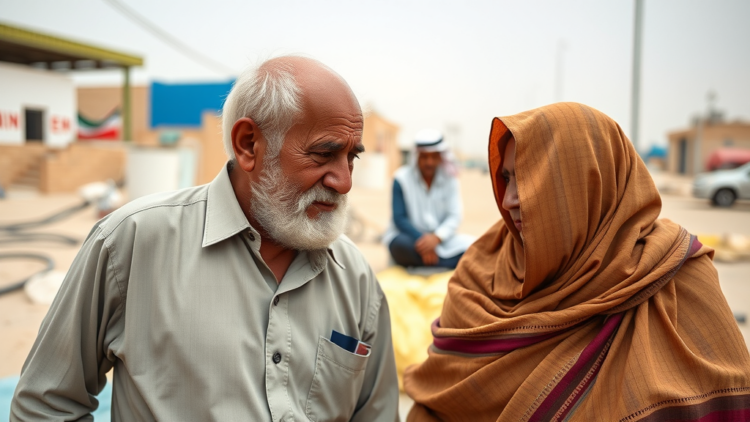
In a groundbreaking study set to reshape our understanding of longevity, researchers Sarikaya Demirbas and Naharci have unveiled pivotal mortality predictors among community-dwelling centenarians via comprehensive geriatric assessments. As the global population ages and the number of centenarians rises, the scientific community eagerly seeks insights into the factors contributing not only to lifespan but also to the quality and trajectories of life beyond a century.
Centered on community-dwelling individuals surpassing 100 years of age, this investigation delves beyond common superficial metrics, employing an exhaustive geriatric evaluation that captures a multifaceted view of health in extreme old age. Comprehensive Geriatric Assessment (CGA), a multidimensional and interdisciplinary diagnostic process, proves essential in identifying medical, psychosocial, and functional challenges that collectively influence mortality risk in this unique demographic segment.
The research highlights the intricate interplay between physiological resilience and vulnerability markers among centenarians. Rather than simply cataloging illnesses, the CGA encompasses cognitive function, nutritional status, psychological well-being, mobility, and the ability to perform daily activities independently. This holistic approach provides a nuanced portrait that single-factor analyses fail to capture, enabling more precise stratification of mortality risk.
One of the study’s striking revelations centers on nutritional markers, which emerged as powerful predictors of survival. Malnutrition and unintentional weight loss, often overshadowed in elderly care, manifest as harbingers of declining health states, underscoring the critical role of sustained nutritional support to enhance longevity.
Cognitive function assessment, a key pillar of the CGA, demonstrated profound correlations with mortality outcomes. Cognitive impairment, even in mild forms, significantly escalated mortality risk, reflecting the integral relationship between brain health and overall survival. This nexus suggests that interventions aimed at preserving cognitive faculties may hold the potential to extend life expectancy in this super-aged group.
Mobility and functional independence painted a clear picture; those maintaining ambulation and self-care capabilities exhibited remarkably better survival rates. Conversely, declines in physical function not only limit quality of life but also serve as bellwethers for mounting physiological stress that can precipitate fatal events.
Psychosocial components, including mood disorders and social engagement, also factored prominently into mortality prediction. Depression and social isolation, frequently underestimated in geriatric populations, were identified as significant determinants of survival, underscoring a pressing need for comprehensive mental health interventions alongside physical health management.
Importantly, the study integrates inflammatory markers and biochemical indicators, providing a biological substrate that complements clinical findings. Elevated inflammatory cytokines correlated with heightened mortality risk, aligning with the growing recognition of chronic inflammation (“inflammaging”) as a fundamental mechanism underpinning aging and age-related diseases.
The implications of this research extend far beyond academic discourse. By distilling prognostic insights into actionable clinical frameworks, practitioners can tailor care plans that address the multifactorial needs of centenarians, potentially transforming therapeutic strategies and resource allocation within aging populations worldwide.
Technological advancements enable routine inclusion of CGA in geriatric practice, but this study pushes boundaries further by demonstrating its applicability in the oldest old—a traditionally understudied cohort. The methodology offers a blueprint for future research and healthcare policy to foster healthier aging trajectories.
Moreover, the data invites a reevaluation of societal and healthcare approaches to centenarian care. Optimizing not only longevity but the conditions that allow individuals to thrive into advanced age constitutes a paradigm shift with profound ethical, social, and economic ramifications.
Future research inspired by these findings may explore interventions targeting modifiable predictors identified through CGA, such as nutritional supplementation, cognitive training, physical rehabilitation, and psychosocial support systems. Such approaches promise to enhance both survival and well-being, aligning medical goals with the aspirations of those reaching the centennial milestone.
As human lifespans continue to push boundaries, understanding the determinants of mortality among centenarians assumes urgent significance. This study provides a comprehensive map highlighting where risks converge and where opportunities for intervention surface within the tapestry of aging.
The unprecedented depth of analysis made possible by comprehensive geriatric assessment offers a dynamic tool not only for clinicians but also for scientists and policymakers aiming to create age-friendly environments. By anchoring interventions in multidimensional health profiles, the endeavor to extend not just life, but the quality of that life, moves into achievable territory.
In summary, Sarikaya Demirbas and Naharci’s investigation transcends traditional geriatric research to chart new pathways in understanding mortality among community-dwelling centenarians. Through detailed assessments integrating clinical, cognitive, functional, psychosocial, and biological data, the study identifies key mortality predictors that demand attention in future healthcare frameworks. This landmark contribution illuminates the complex tapestry of factors shaping human longevity and provides a compelling call to action for the global aging community.
Subject of Research: Mortality predictors in community-dwelling centenarians assessed via comprehensive geriatric evaluations.
Article Title: Mortality predictors in community-dwelling centenarians through comprehensive geriatric assessment.
Article References:
Sarikaya Demirbas, Z., Naharci, M.I. Mortality predictors in community-dwelling centenarians through comprehensive geriatric assessment. BMC Geriatr (2026). https://doi.org/10.1186/s12877-026-07459-x
Image Credits: AI Generated
Tags: cognitive function in centenarianscommunity-dwelling centenarian healthcomprehensive geriatric assessment for elderlyfunctional status and elderly mortalitylongevity factors in extreme old agemobility and independence in centenariansmortality predictors in centenariansmultidisciplinary geriatric evaluationsnutritional status and mortality riskphysiological resilience in aging populationspsychosocial factors affecting elderly survivalquality of life beyond 100 years